
Related videos:
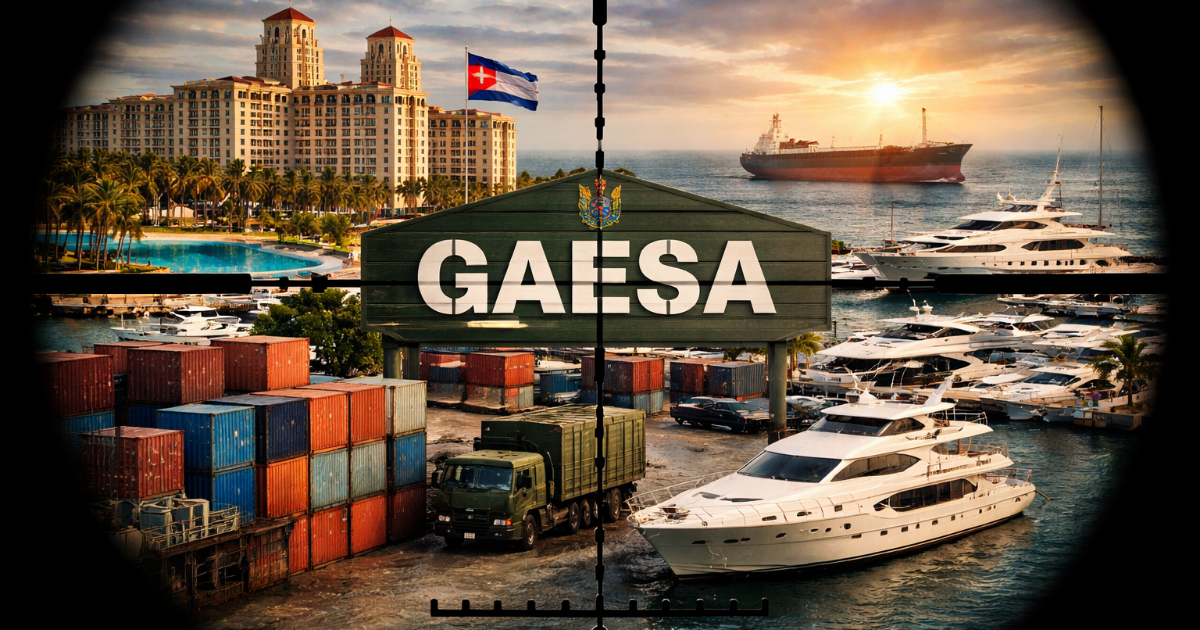
This Friday marks the deadline set by the Trump administration for foreign companies and financial institutions to cease all operations with GAESA, the Cuban military conglomerate, under the threat of being excluded from the U.S. financial system.
The Executive Order 14404, signed by President Donald Trump on May 1, introduced secondary sanctions against foreign actors who maintain business ties with GAESA or entities in which it holds, directly or indirectly, 50% or more of the capital.
The Secretary of State Marco Rubio made the initial designations on May 7, sanctioning the conglomerate, its executive president Ania Guillermina Lastres Morera —a brigadier general of the Revolutionary Armed Forces— and Moa Nickel S.A., a joint venture between the Canadian company Sherritt International and the Cuban state.
The State Department described GAESA as "the core of Cuba's kleptocratic communist system," controlling about 40% of the island's economy and up to $20 billion in illicit assets diverted to hidden bank accounts abroad.
The pressure triggered an unprecedented wave of departures in the Cuban tourism sector in the days leading up to the deadline.
Meliá Hotels International, the largest foreign operator in Cuba with around 33 hotels and 14,000 rooms, announced last Wednesday the immediate cessation of operations at 15 of its properties, acknowledging losses of four million euros in 2024 and an average occupancy rate of 34.1% in the first quarter of 2026.
In its statement to the National Securities Market Commission, the Mallorcan chain acknowledged that "the vast majority of hotels are currently closed and lacking activity due to the energy issues and declining demand that the Republic of Cuba has been experiencing."
Iberostar confirmed on Tuesday the departure of 12 of its 18 hotels linked to Gaviota/GAESA, including the Selection La Habana, the tallest hotel building in Cuba, inaugurated in March 2025 with an investment of 200 million dollars.
The Canadian Blue Diamond Resorts left 62 hotels and over 12,900 rooms effective May 30, while Archipelago International withdrew its six hotels under the Aston brand in Havana, Varadero, Cayo Coco, and Holguín.
In the financial sector, Banco Sabadell and Alto Cedro, an entity associated with the Botín family, also confirmed their readiness to withdraw from Cuba ahead of schedule.
The shipping companies Hapag-Lloyd and CMA CGM, two of the largest in the world, announced on May 14 the suspension of operations for all origins and destinations to and from Cuba, and at least 11 airlines have canceled more than 1,700 flights to the island so far in 2026.
On June 4, the day before the deadline, OFAC drastically tightened the restrictions: formally blocking the Ministry of the Revolutionary Armed Forces and adding to the specially designated nationals list President Miguel Díaz-Canel, his wife Lis Cuesta Peraza, his stepson Manuel Anido Cuesta —a resident of Madrid—, Alejandro Castro Espín, and his son Raúl Alejandro Castro Calis.
The OFAC warned in its FAQ document that “as of June 4, 2026, GAESA, MININT, and MINFAR are all blocked” under Executive Order 14404, and that “individuals engaging in transactions with any entity on that list risk being sanctioned themselves.”
In response to the pressure, the regime broke its silence last Tuesday with an article in Granma titled "Cuba, the GAE, and the United States: Anatomy of a State Calumny," while Foreign Minister Bruno Rodríguez defended the conglomerate, labeling it as having "proven efficiency."
Since January 2026, the Trump administration has imposed over 240 sanctions against the Cuban regime and intercepted at least seven tankers with oil, reducing the island's energy imports by between 80% and 90%.
Rubio summarized Washington’s stance with a warning that also leaves a door open: “The ultimate goal of the sanctions is not to punish, but to encourage a positive change in behavior.”
Filed under: