
Related videos:
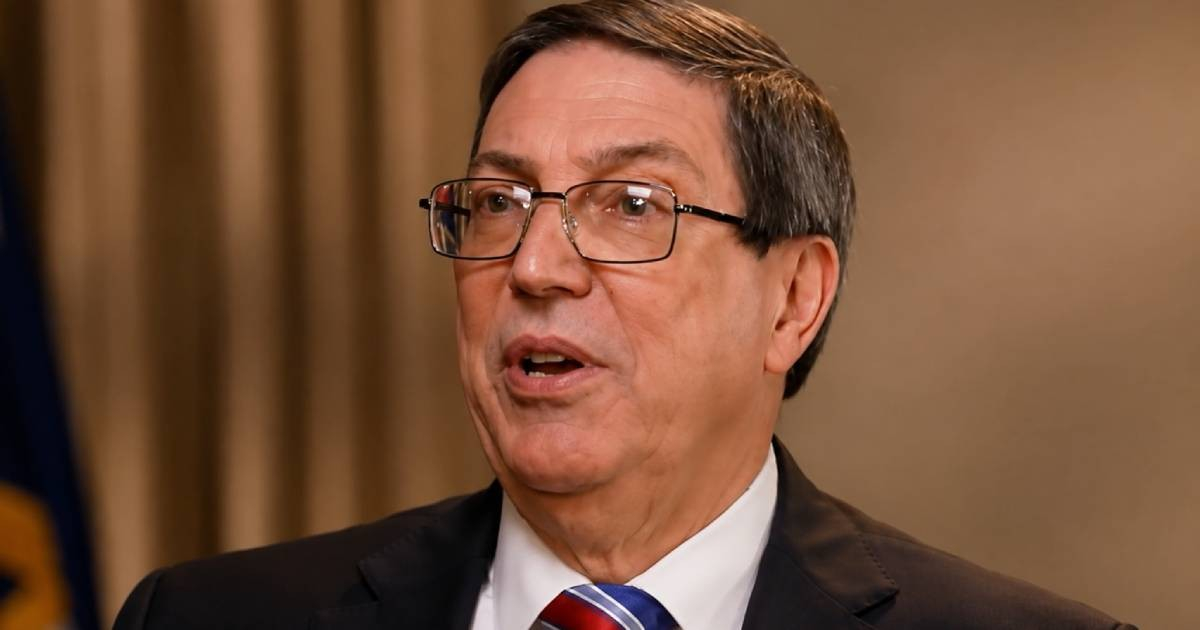
Cuban Foreign Minister Bruno Rodríguez Parrilla posted a message on X this Saturday in which he directly held the United States responsible for the deterioration of child health in Cuba, citing the doubling of the infant mortality rate from 4.0 to 9.9 per thousand live births and the decrease in life expectancy of children with cancer from 85% to 65%.
The chancellor's message arrived a day after the death of Raibel David Gómez Santana, a 10-month-old baby from Sancti Spíritus who passed away without receiving the liver transplant he needed.
"Cuban girls and boys are direct victims of greed, economic suffocation, and American aggression," wrote the regime's representative, who refuses to acknowledge their responsibility in the crisis of the Cuban healthcare system.
Rodríguez described the embargo as a "cruel and indiscriminate collective punishment that causes deaths in our country, primarily among children."
The data cited by the chancellor matches that published in a report by the Center for Economic and Policy Research (CEPR) in April 2026, titled "U.S. Sanctions and the Drastic Increase in Infant Mortality in Cuba," whose authors include Alexander Main, Joe Sammut, Mark Weisbrot, and Guillaume Long.
That study estimates that, had the infant mortality rate from 2018 been maintained, approximately 1,800 fewer babies would have died between 2019 and 2025, and warns that it is “very likely” that the situation has continued to worsen after December 2025.
The deterioration of health indicators in Cuba is a fact that the island's authorities themselves have acknowledged.
The Ministry of Public Health reported a rate of 8.2 per thousand for July 2025, compared to 7.4 in the same period of 2024, and at the end of that year the government acknowledged a rate of between 9.8 and 9.9 per live births, the highest in over two decades.
The capital recorded in January and February of 2026 14 child deaths per thousand live births, also the highest figure for Havana in over twenty years.
However, independent analysts and critical sources point out that the collapse of the Cuban healthcare system stems from internal structural causes: the massive exodus of doctors and nurses, the deterioration of hospital infrastructure, prolonged power outages affecting incubators and neonatal ventilators, corruption, and poor management accumulated over decades of dictatorship.
These causes are compounded by outbreaks of dengue and chikungunya, as well as a widespread shortage of medications and medical supplies. Critical sources also remind us that the U.S. maintains humanitarian exceptions to the embargo that allowed for authorized medical exports exceeding 800 million dollars in 2023.
The tweet from this Saturday is part of a sustained diplomatic campaign by the Cuban regime to internationalize the debate about the embargo. Rodríguez Parrilla denounced before the UN on May 26 the so-called "oil blockade" and warned of a potential "humanitarian catastrophe" on the island.
While the regime points to the embargo as the sole cause, the deterioration of Cuba's healthcare system has accumulated years of collapse acknowledged by the authorities themselves, with maternal mortality also rising to 56.3 per 100,000 live births in July 2025, compared to 37.4 the previous year.
Filed under: