
Related videos:
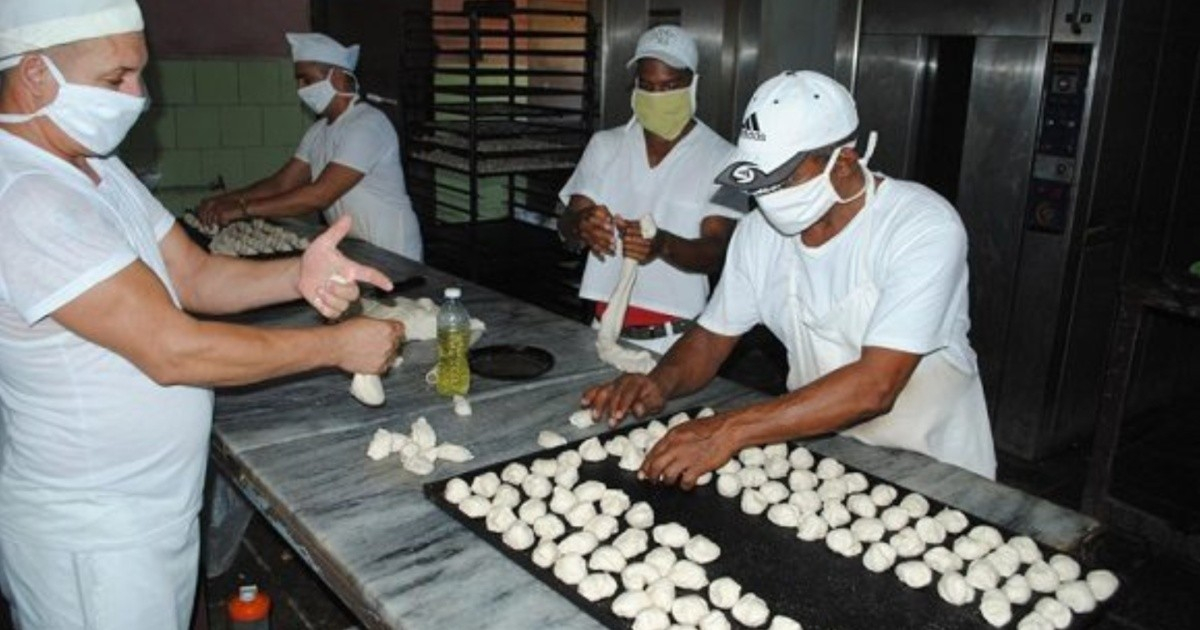
The Minister of Food Industry, Alberto López Díaz, acknowledged this Friday on the television program Mesa Redonda that wheat mills are inactive or operating at minimal capacity, the bread from the regulated supply does not reach the entire population, and basic products such as oil, chicken, and yogurt have not been distributed so far in 2026, according to what the official revealed during the official broadcast.
López Díaz detailed that out of more than six wheat vessels contracted for this year, only one has arrived — which came from the year 2025 — along with two more recent ones, while a shipment of 5,000 tons of flour was removed from the ship before it could set sail. "There were some pressures, it was taken off, and that wheat could not arrive in Cuba," he stated.
The official admitted that the regime is now sourcing wheat from more distant markets and avoids mentioning countries and supplying companies. “We limit ourselves to not mentioning the names of countries and companies due to persecution,” he said.
The wheat crisis has direct consequences for regulated bread. Cuba has five mills for processing wheat—three in Havana, one in Santiago de Cuba, and one in Cienfuegos—but those in Guantánamo and Santiago de Cuba are inactive and depend on sporadic shipments of flour from the capital. In Guantánamo, regulated bread is only available to children aged zero to 13 and prioritized social consumption.
The situation regarding infant formula is equally serious. The minister noted that 1,500 tons per month of powdered milk are needed to support 331,000 children, in addition to liquid milk for another 200,000 minors. In May, the distribution could not be completed due to a lack of fuel. "We have not been able to finish the distribution due to the lack of fuel," he acknowledged.
López Díaz added that the problem persists even when there is money available. "We can’t get it even with payment because it becomes complicated for us. After we make the payment to the suppliers, it gets returned to us because banks and bank branches do not accept payments coming from Cuba," he explained. The government only guarantees milk for 15,026 children with chronic illnesses and over 16,000 pregnant women.
The First Vice President of the Business Group of the Agro-Food Industry, Dayana Matech Vilá, had acknowledged on May 24 that Havana's children have gone over two months without meat or picadillo due to a lack of fuel to transport and process the production coming from Villa Clara and Sancti Spíritus.
The overall picture of the industry is one of severe contraction. In 2025, bread production fell by 100,900 tons, processed rice production declined by 14,300 tons, and 17 companies in the sector closed with losses of 364 million pesos. López Díaz estimated the total losses in the sector due to the embargo at over 450 million dollars just for 2025.
As remedial measures, the MINAL reports 3,800 MWh of installed capacity from renewable sources, over 60 electric tricycles for the distribution of the standard food basket, 12,000 commercial fishing licenses, and more than 2,200 authorizations for private food producers, of which more than 1,600 pertain to small and medium enterprises.
The minister himself summarized the extent of the collapse with a phrase that describes the situation of millions of Cubans: "Without energy, without fuel, it is not possible—in an industry with our technology—to produce food."
Filed under: