
Related videos:
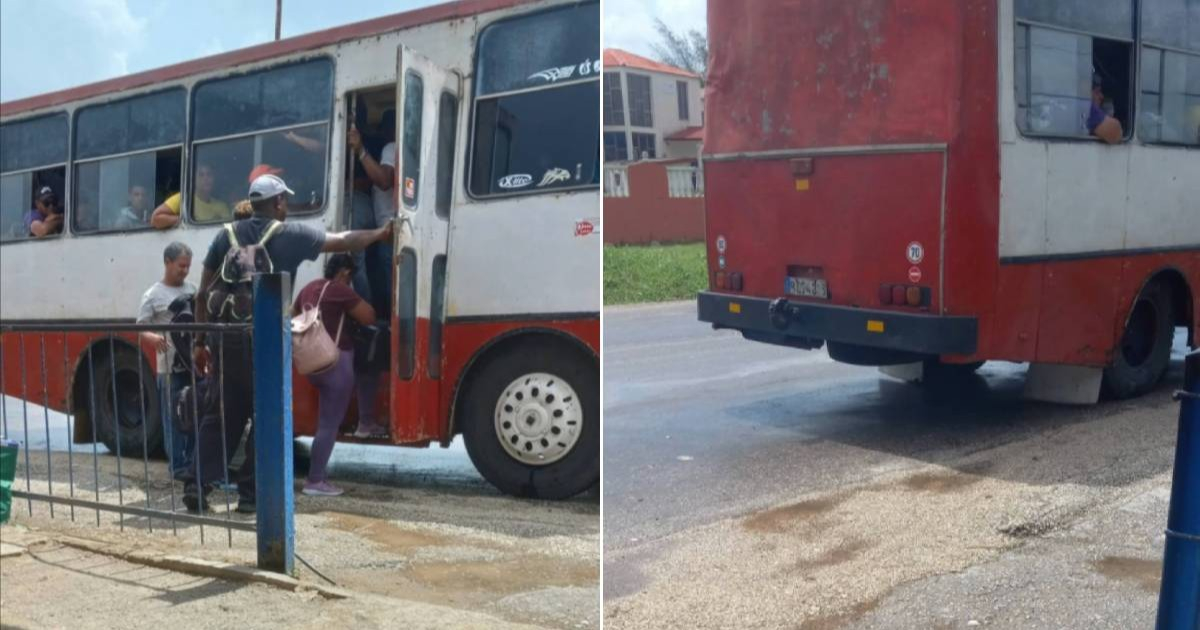
A state transport driver charged 500 Cuban pesos per person at the pickup point known as "the yellows of Ceballos," in the province of Ciego de Ávila, sparking a heated debate on social media about the transportation crisis in Cuba.
The complaint was posted by Yendris Ramón Echemendia Cabrera in the Facebook group REVOLICO CIEGO DE ÁVILA (Classifieds and Sales) and received over 900 reactions, 425 comments, and 21 shares in just a few hours.
The author noted that the price effectively excluded the most vulnerable sectors: "with that price limiting access for women with children, pregnant women, and elderly individuals facing economic difficulties," he wrote, and called for "reflection and awareness" among drivers.
The post divided users between those who condemned the charge and those who defended the driver, arguing the real costs of fuel in the informal market.
"Darling, if he pays for the gas, he has to charge that price, because a liter of gas costs up to 6,000 pesos these days," wrote a user identified as Paquita La del Barrio.
Others pointed directly to the regime as responsible. "Ask the government why they don't provide public transportation. That bus runs on that man's efforts," noted Boris Luis. In the same vein, Elier Sánchez was more straightforward: "The government is entirely to blame for this and everything that's happening, just them. Don’t blame anyone else."
The model of "leased buses" is at the center of the conflict: the State leases the vehicles to the drivers, who bear the costs of fuel, parts, and repairs out of their own pockets. "That happens because no one knows what the drivers have to pay for the cars, and the staff thinks that it comes from the State. They don't realize it comes from the drivers' pockets, that the State doesn't provide anything," Yaniel Jaramillo explained in the comments.
This scenario unfolds in the context of an unprecedented transportation collapse in Ciego de Ávila: in March 2026, only two out of 135 bus routes were operational in the province, and all seven railway routes remained halted due to a lack of fuel.
At the national level, state passenger transport fell by 93% between January and September 2025, and the Ministry of Transport announced a drastic reduction in frequencies of buses, trains, and ferries starting June 18, 2026.
In the informal market, a liter of gasoline was priced between 4,000 and 6,000 Cuban pesos in June 2026, according to recent reports on the price of three liters of gasoline in Cuba.
This is not the first time this type of charge has been reported: in August 2025, a state bus driver in Havana charged 100 pesos per ticket, leaving passengers stranded, which was already seen then as a symptom of the disintegration of the system.
"It’s better to pay those 500 than to sleep at the bus stop for days, months, and years waiting for the State and its reasonable prices," summarized one user bitterly, encapsulating in a single sentence the desperation of millions of Cubans caught between a State that does not provide and costs they cannot bear.
Filed under: