
Related videos:
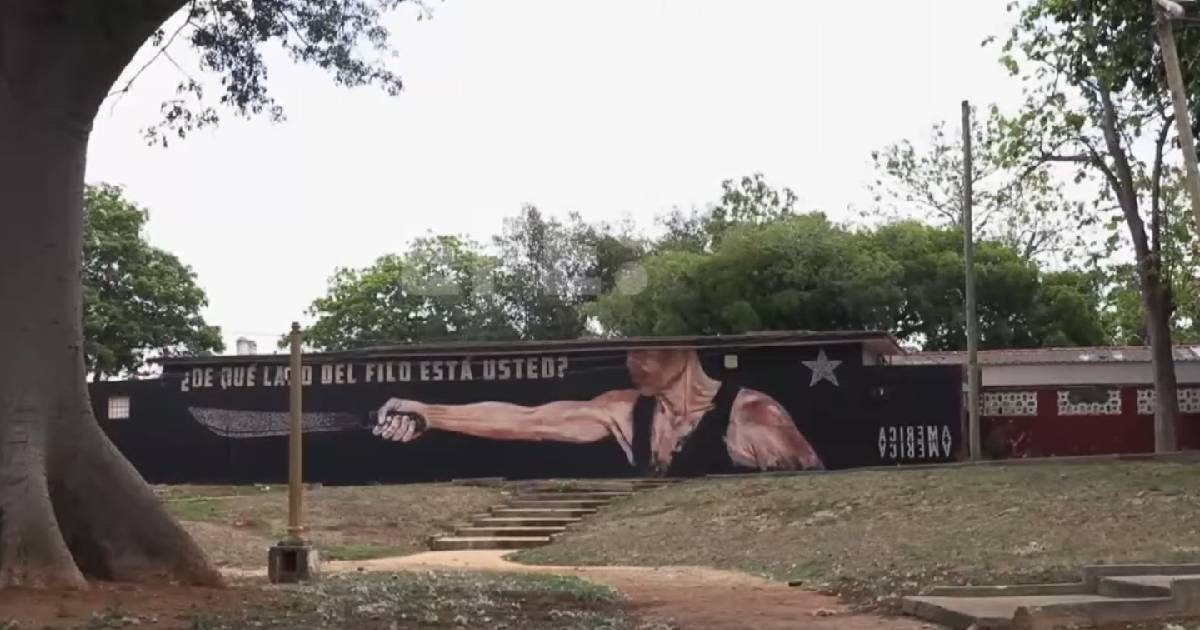
A mural created in a neighborhood of Havana by the Chilean urban artist Sebastián E., known on social media as Rata Virus, has sparked controversy due to its political message and its depiction of the social tension currently experienced in Cuba.
The work depicts the image of a faceless soldier wielding a machete alongside the phrase "Which side of the blade are you on?" It was later intervened by others with graffiti and overlapping messages, further intensifying the debate, reported the news agency EFE on Friday.
The artist explained to that news outlet that he traveled to Cuba after promising former Uruguayan president José Mujica (1935-2025) that he would portray the social reality of the island, to whom he also dedicated a mural.
Rata Virus precisely described what he perceived during his stay on the island. "In Cuba, the fracture is mainly seen in a sense of political tension that translates into fear and uncertainty. People don't know what will happen, especially when you add a little seasoning that is censorship."
The artist delved deeper into his interpretation of power in Cuba. "Generally, the Cuban people are on the edge of the machete, they are in the middle, and the powerful are at the handle of the machete, directing the blade. So, I think the work is interesting because it makes you reflect that whichever side you choose, you will always end up getting cut," he asserted
Rata Virus acknowledged that different sectors interpreted the mural from opposing political positions, which in itself confirms the polarization that it aimed to depict with the work.
The muralist summarized his intention with a phrase that encapsulates the deliberate ambiguity of his work: "Not everything can be seen in black and white."
The mural arrives at a time when Cuba is facing a serious economic and energy crisis, marked by shortages of food, medicine, and fuel, as well as frequent power outages that wear down the population.
International human rights organizations have documented arbitrary detentions, restrictions on freedom of expression, and repression against opponents and protesters, especially following the anti-government demonstrations on July 11, 2021.
The work is also situated within a context of increasing tension between Chile and Cuba. On June 1st, Chilean President José Antonio Kast spoke about a possible intervention by the United States on the island, stating that "there is no democracy in Cuba" and that the people "are suffering under a dictatorship that has lasted for decades."
That stance of the Chilean leader contrasts with sectors of the local left that maintain historical solidarity with the regime in Havana, a rift that has generated episodes of high tension in Chile.
A few days ago, a tense debate about Cuba on the Chilean program Sin Filtros ended in insults and threats of criminal lawsuits among participants.
In January, the Comptroller's Office questioned the University of Chile for hosting a political event in tribute to the Cuban revolution.
Filed under: