
Related videos:
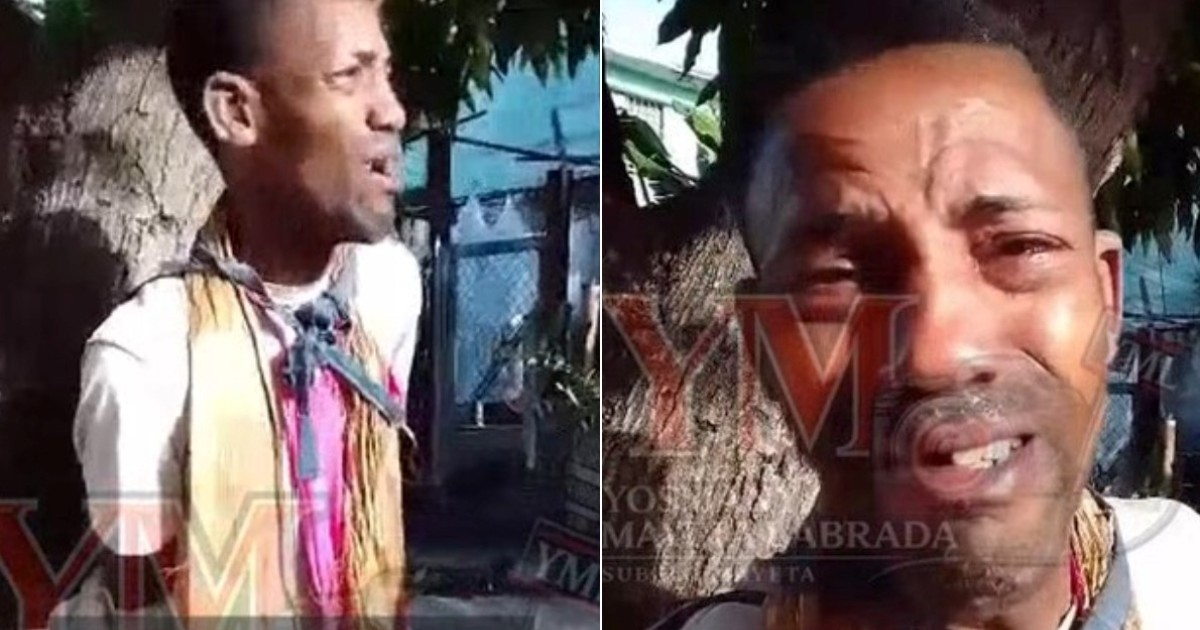
A video shared on Facebook by independent journalist Yosmany Mayeta Labrada shows the moment when a man, captured by neighbors in a neighborhood of Santiago de Cuba, expresses his remorse and vows not to steal again. This has generated a divided reaction among those who are skeptical of his words and those who attribute it to the crisis facing Cuba.
In the clip, the detainee cries before the people holding him and confesses that he stole from a man in the Pastorita neighborhood.
When asked if he will steal again, he replies, "Neither here nor anywhere."
Then she adds, "I don't want to do any of that anymore. Please, I want you to help me with this, but I will not do it anymore."
The reactions in the post reflect a deep social divide. Some internet users flatly reject the remorse expressed under pressure, while others trust in their willingness to change.
"That's just crocodile tears," wrote a user. Another was more straightforward: "They let that crazy guy loose and he robs on the next corner."
Several pointed out that the individual is physically capable of working honestly: "A thief is a thief in every government, whether hungry or not." One even went so far as to propose: "We should give an Oscar for the best performance and interpretation."
Other comments, however, pointed to the economic crisis as a structural cause.
"They are starving that town; that man is malnourished, he is hungry," wrote an internet user. Another added: "The misery that is being experienced is what drives people to do wrong, the desperation to put food on the table."
A third comment noted: "My God, he looks remorseful; that's what hunger does. People need to be given opportunities."
Many users did not excuse the regime's accountability, although they did not justify the theft either. "Díaz-Canel is a tremendous son of a bitch, but no one has to steal; he can clean a yard or carry water, earn his money honestly," wrote one.
Another person pointed out sarcastically, "If he's hungry, he should go eat in prison. Wrongdoing can’t be justified. Why not steal from the state stores?"
The episode fits into a documented and growing pattern in Santiago de Cuba: in the face of impunity and delayed or insufficient police response, citizens take matters into their own hands.
In February of this year, residents of the Vista Hermosa neighborhood detained a man caught attempting to steal from a home.
In April, neighbors of Veguita de Galo captured a young man armed with a machete who threatened a minor and stole a cellphone.
In May, the residents of the Sueño neighborhood detained a 15-year-old teenager who snatched two chains and stated, "I'm a minor; nothing is going to happen to me."
The figures underscore the severity of the phenomenon. The Cuban Citizen Audit Observatory recorded 2,833 verified crimes in Cuba in 2025, a 115% increase compared to 2024 and a 337% rise compared to 2023. The dominant category was theft, with 1,536 cases, representing a 479% increase since 2023.
Santiago de Cuba recorded 323 confirmed crimes that year, ranking among the most affected provinces in the country.
Analysts link this increase to a projected economic contraction of 5% in 2025 and an accumulated 15% since 2020, widespread shortages, and a 20% increase in police desertion, which has likely diminished the response capacity to crime.
Filed under: