
Related videos:
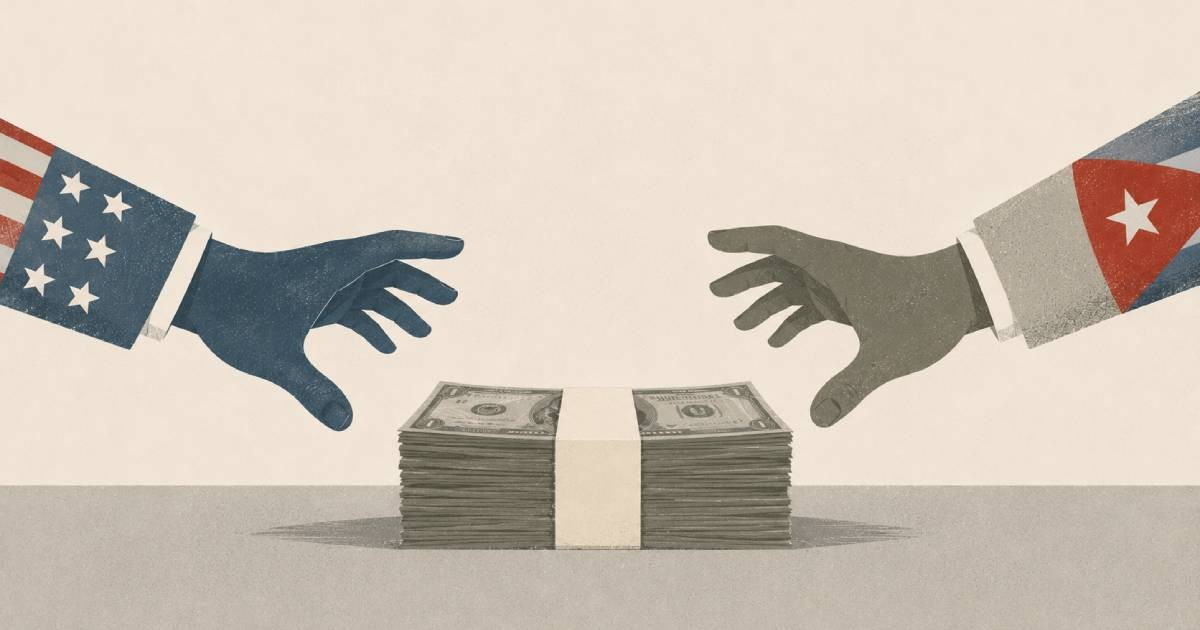
Nearly 6,000 claims from American citizens and businesses for properties confiscated by the Cuban regime now total an estimated value of over $9 billion and have become one of the most persistent and explosive issues in the relations between Washington and Havana, according to a comprehensive report published by CNN last Thursday.
The original value of those claims, certified by the U.S. government, was approximately $1.9 billion in 1960. Applying a simple interest rate of 6% since then, the amount has multiplied to exceed $9 billion today.
The debate has gained new urgency in 2026 under the Trump administration. On May 21, the Supreme Court issued an 8-1 ruling that expands the scope of Title III of the Helms-Burton Act, allowing lawsuits to proceed against those who "traffic" in expropriated properties in Cuba without the need to prove that the plaintiff retained an interest in the property at the time of the trafficking.
Nicolás J. Gutiérrez, president of the National Association of Sugar Mill Owners of Cuba—who has never set foot on the island but represents nearly a thousand families from the diaspora—described the ruling as "the culmination of decades of hard work."
"We have had hope for many years, but we have never, ever, ever, ever, ever faced a situation like this, with so many factors at play that demand change in Cuba," he declared to CNN.
Among these factors is also the formal accusation against Raúl Castro brought by the Department of Justice on May 20 for the shooting down of two planes from Brothers to the Rescue in 1996, which resulted in the death of four Cuban Americans.
Another claimant, the writer Enrique Carrillo, whose family owned a rum company before nationalization, expressed an optimism that he had until recently considered unthinkable: "I never imagined that the recovery of Cuban assets would materialize so soon. I didn't even think it would happen in my lifetime, but that's what's new."
However, experts warn that the path to any real compensation is fraught with obstacles.
The economist Ricardo Torres from American University points out that the issue is "of quite high priority, one of the first that arises whenever both countries come into contact," but he warns that "given the current economic conditions in Cuba, a massive, total, and immediate compensation cannot be contemplated. It would be completely impossible."
Professor Lillian Guerra, director of the Cuba program at the University of Florida, offers a more critical perspective by stating that the claims of the exile community are more about nostalgia for pre-revolutionary Cuba than about the rights of the ordinary Cuban. "Trump is not interested in helping me recover my grandfather's house in Fontanar. He is interested in helping the powerful families seeking revenge to reclaim what they believe is rightfully theirs," she stated.
The Cuban regime, for its part, maintains its own counterclaims regarding the embargo. In 2025, it submitted a report to the United Nations estimating the accumulated losses at approximately 170 billion dollars, and a Cuban court condemned the U.S. government in 1999 to pay 181.1 billion dollars for human damages resulting from decades of militant activity.
Torres proposes the Vietnamese model as a possible solution. Vietnam stopped actively pressing for reparations in the late seventies, paving the way for normalization with the United States. "That's what the Vietnamese did: when the process was reopened, they never mentioned them again," he explained.
But that model is unacceptable to the hardline exiles. Gutiérrez outright rejects it: "We are very distrustful of any kind of agreement with elements of the regime, something akin to what happened in Venezuela. We want to start from scratch."
Gutiérrez believes that this new beginning could come before the midterm elections in November: "We have an administration with a Cuban-American Secretary of State and other Cuban-Americans in key positions. I think measures will be taken before that date."
Filed under: