
Related videos:
The 2026 Atlantic hurricane season officially kicks off this Monday with a moderate forecast that is consistent across all relevant meteorological institutions: activity is expected to be below the historical average, with El Niño as a determining factor, although experts warn that a single cyclone can be devastating.
NOAA, Colorado State University (CSU), and the Cuban Institute of Meteorology (INSMET) are all aligned in the same direction.
The NOAA published on May 21 its official forecast estimating between eight and 14 named storms, three to six hurricanes, and between one and three major hurricanes, with a 55% probability of a below-normal season.
CSU projected 13 named storms in April, six hurricanes, and two major ones, equivalent to 75% of an average season from the period 1991-2020, with a Cyclone Energy Index of 90 units compared to a historical average of 107.
The INSMET forecasted on May 6 a "less active" season with 11 tropical cyclones, five hurricanes, and two of significant intensity for the entire Atlantic basin.
The common mechanism behind all these forecasts is the likely arrival of a moderate to strong El Niño phenomenon between August and October, which increases vertical wind shear over the tropical Atlantic and the Caribbean, hindering the formation and intensification of cyclones.
However, experts emphasize that a moderate forecast does not equate to a lack of danger. "Just one storm is enough to make it a very bad season," warned Ken Graham, director of the National Weather Service of NOAA.
Cuba: moderate risk regarding open wounds
For Cuba, INSMET establishes a 40% probability that at least one hurricane will affect the island in 2026, slightly higher than the historical average of 35%, and a 75% probability of being impacted by a tropical storm.
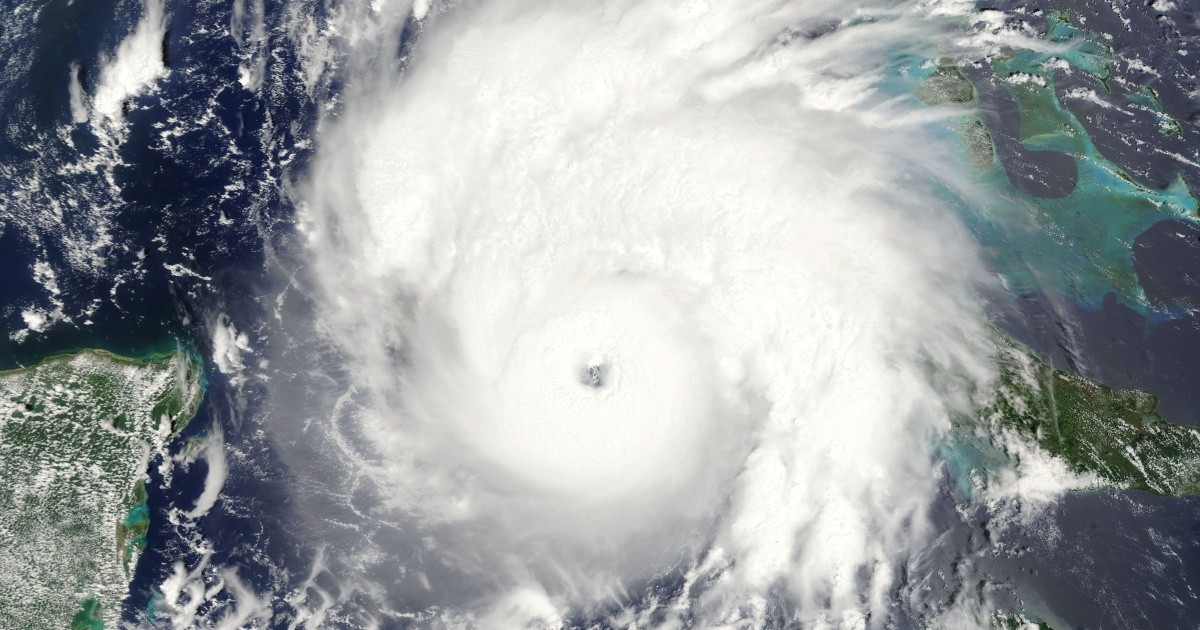
These numbers come as the island is still in the process of recovering from the Hurricane Melissa, which made landfall in eastern Cuba on October 29, 2025, as a category three storm, with sustained winds of 195 km/h.
Melissa was rated as the third most destructive hurricane in Atlantic history: it damaged over 116,000 homes in Santiago de Cuba, Holguín, Granma, and Guantánamo, and affected more than 3.5 million Cubans according to the UN.
This vulnerability is compounded by the fact that the summer of 2026 in Cuba is expected to be hotter than usual, with maximum temperatures above the historical average, which adds pressure on a population that has not yet completed its recovery.
Florida: the World Cup as an additional risk factor
In Florida, authorities gathered this Sunday at the National Hurricane Center in Miami-Dade to issue an urgent call for preparedness, with three main concerns.
The first point is that South Florida has not experienced the direct impact of a hurricane since Irma in 2017, which may have led to overconfidence among the population.
The second is the arrival of thousands of new residents who have never experienced a cyclone and are unaware of the evacuation protocols.
The third one is the FIFA World Cup 2026. Pete Gómez, emergency manager for Miami-Dade, was straightforward: "Thousands of international visitors will arrive in the area during the FIFA World Cup. And these people will come from all over the world and have never experienced an event like this one."
Miami-Dade is already conducting emergency drills at the Hard Rock Stadium, one of the tournament venues, and is maintaining contact with diplomatic representatives to inform foreign visitors on how to respond in the event of a weather emergency.
CSU will update its forecast on June 10, July 8, and August 5; NOAA and INSMET will do the same in August, when the estimates gain accuracy as they approach the historical peak of the season.
Filed under: