
Related videos:
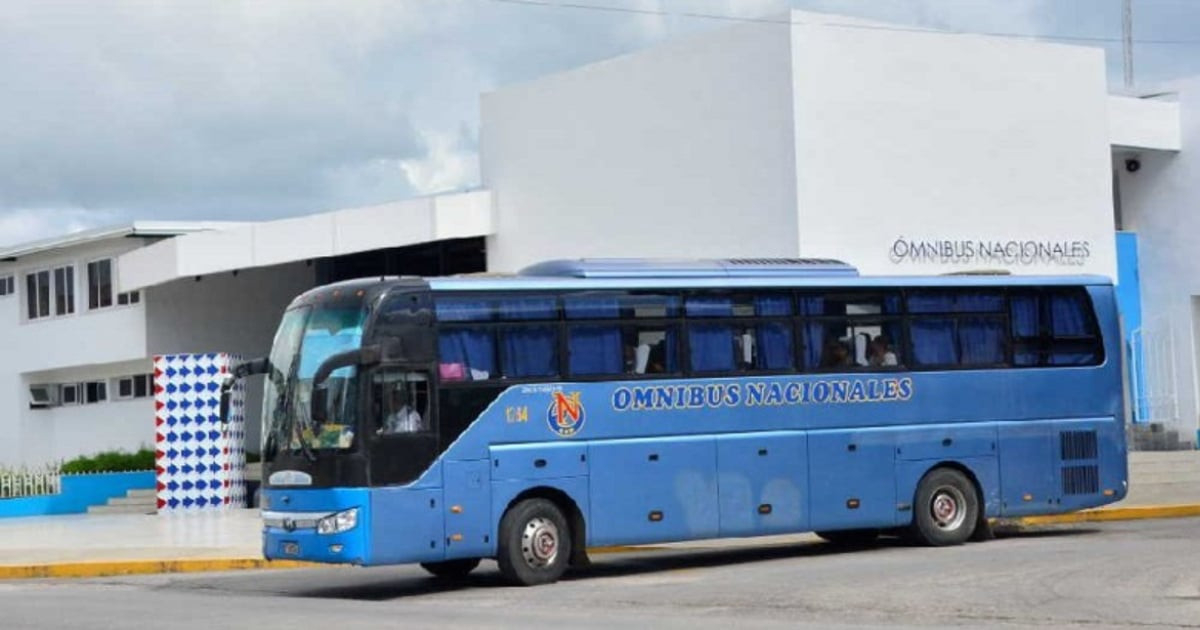
The Cuban regime announced a new procedure for assigning the scarce interprovincial bus and train tickets, which, according to an official representative, will be similar to the one applied during the COVID-19 pandemic, when the government required permits for traveling between provinces, a measure that recalls the mobility restrictions of that period.
The Deputy Minister of Transport Luis Ladrón de Guevara made the announcement last Monday during a visit to Las Tunas, where he explained that the measure aims to "reorganize and adjust the service to the context of almost total fuel shortage."
The new system eliminates ticket sales through the Viajero Agency and the Viajando application, transferring control of available seats to provincial commissions that will decide who can travel and who cannot.
Each province will organize its own working group to allocate resources, prioritizing cases involving the death of a family member, medical shifts, hospital discharges, consular procedures, and assistance for scientific activities.
The most advanced case is that of Villa Clara, where a provincial commission will decide who can leave starting from June 18, based at the Santa Clara Interprovincial Bus Terminal.
Juan Carlos Ferriol, representative of the Ministry of Transportation in that province, confirmed that the procedure "will be similar to the one implemented during the COVID-19 pandemic," which makes the comparison an official fact.
The commission will serve the public from Monday to Thursday between 8:00 a.m. and noon. Requests must be submitted one week in advance, and the lists of authorized individuals will be published every Friday at the bus terminal, the train station, and the digital platforms of the Ministry of Transportation.
The service frequencies that will take effect on June 18 are minimal: the Yutong buses will operate only three times a week between Santa Clara and Havana—Tuesdays, Thursdays, and Saturdays at 1:00 a.m.—while the trains will run only once every 16 days.
The deterioration of interprovincial transportation in Cuba is structural and is continuously worsening: in December 2025, only 219 of the 558 existing interprovincial buses remained operational.
In Ciego de Ávila, out of 135 bus routes, only two were operating in March 2026, and in 2024, Ómnibus Nacionales ended the year operating only 36% of the trips it had in 2019.
Despite the extent of the restrictions, Deputy Minister Ladrón de Guevara stated in Las Tunas that "there are no limitations on mobility throughout the national territory" and that "everyone who wishes to travel by other means can do so freely, without any restrictions."
The statement sparked backlash on social media. "Soon we'll need permission to go to the bathroom," wrote one internet user, while another questioned the transparency of the system: "The priorities will be the same as everywhere, the law of the strongest (MONEY)."
The transportation authorities in each province will inform, through official channels, the details on how the new system will operate in their respective areas in the coming days.
Filed under: