
Related videos:
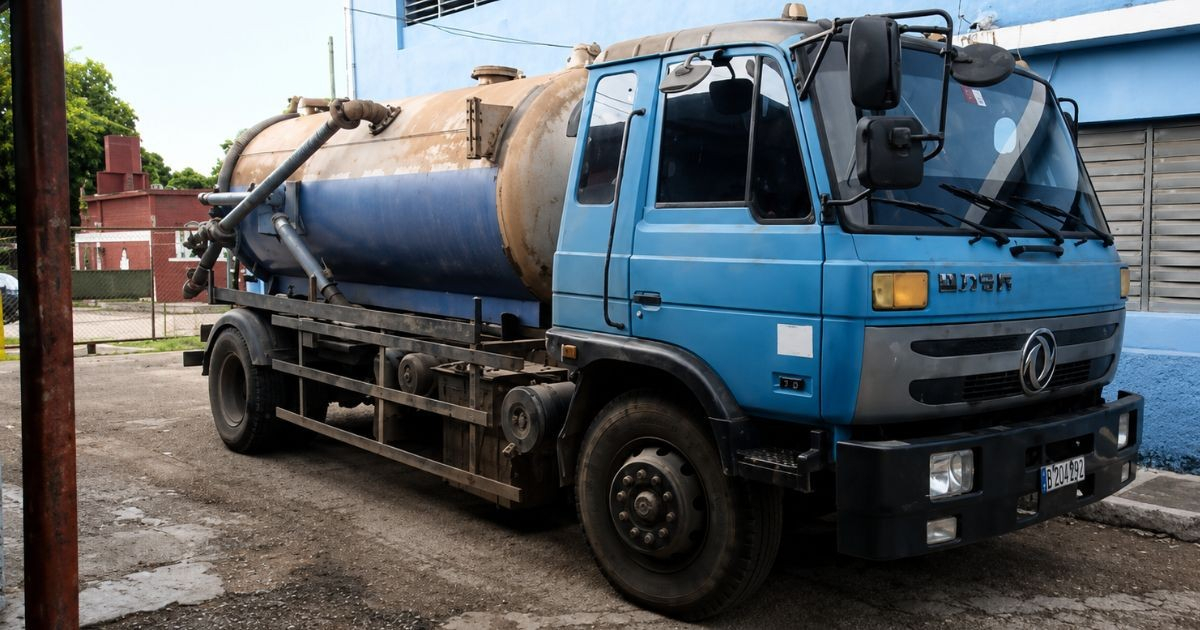
The detention of a tanker truck carrying 6,000 liters of fuel oil in Yaguajay, Sancti Spíritus, triggered an investigation for possible sabotage in Ciego de Ávila, with four suspects held in provisional custody in that province, according to a report on Tuesday by the newspaper Invasor.
The vehicle, officially designated for the cleaning of pits and owned by the Empresa de Acueducto y Alcantarillado de Villa Clara, was intercepted in the locality of Calienes, at the border between the municipalities of Chambas and Yaguajay, while transporting fuel from the oil wells of the Faja Pina, in the municipality of Ciro Redondo, Ciego de Ávila.
The lieutenant colonel Duvier Cabrales Pérez, head of the Ministry of the Interior in Yaguajay, revealed that authorities already had prior suspicions: "We had already presumed from information that two previous trips had been made with suspicious behavior, as it involved a tank intended for the cleaning of pits."
The amount of fuel was confirmed in coordination with the representative of CUPET in the municipality.
Following the arrest, the investigative process expanded to Ciego de Ávila, where a preparatory phase file was opened for possible sabotage, a legal classification in Cuba that can carry penalties of up to 30 years in prison, life imprisonment, or even the death penalty in cases of serious consequences.
Initially, a charge of receiving stolen property was filed, although Cabrales Pérez emphasized that the process "can also accommodate other types of offenses, such as embezzlement or even burglary."
Among those involved are two drivers who presumably do not belong to the entity that owns the vehicle, and a primary accused identified as a self-employed worker engaged in the manufacturing of blinds, doors, and aluminum implements, who claimed to have purchased the fuel for use in his private activity.
The industrial origin of fuel oil —stemming from the initial refining process of oil wells— makes this justification virtually untenable and suggests an organized network with access to the state-controlled extraction sector.
The official was direct in pointing out the responsibilities of the system: "We're talking about fuel, and clearly, that came from the state sector, where the cracks in internal control, the protection of resources, their management, and their final destination become evident."
The case arises in the context of a fuel crisis that has driven up prices in the black market, which increased from between 700 and 1,500 pesos per liter in January 2026 to between 4,000 and 6,000 pesos in March and April, turning fuel diversion into a highly lucrative business.
The theft of fuel from the state sector is a structural problem on the island: in 2025, the Ministry of the Interior reported having recovered 350,000 liters of stolen fuel just between January and August of that year.
In March 2026, a court in Ciego de Ávila sentenced two men to nine and seven years in prison for stealing 50,000 screws for solar panels, classified as sabotage. In April, three men were prosecuted for the same offense after stealing dielectric oil from transformers in Jatibonico, Sancti Spíritus.
The investigative process is ongoing in Ciego de Ávila, and according to the authorities, more details will be provided as it progresses, "including procedural guarantees, as established by law."
Filed under: