
Related videos:
The president Donald Trump announced this Wednesday that the United States would strike Iran again "hard" during the course of that same day.
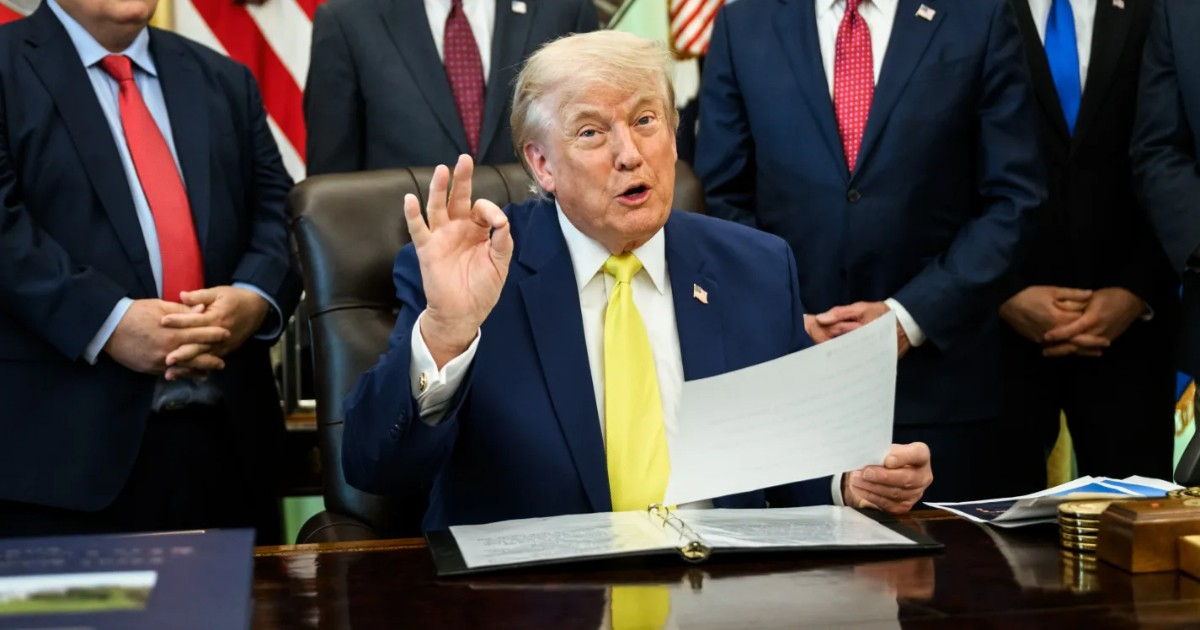
“We hit them hard yesterday and today we are going to hit them hard again,” Trump declared to the media during a press appearance in the Oval Office where he signed the American Security Act, a piece of legislation worth approximately $70 billion to immediately and fully fund the Department of Homeland Security.
The statements come at a time marked by speculation about a possible breakdown in talks between Washington and Tehran following the military escalation of the previous day, when U.S. forces attacked several locations in southern Iran in retaliation for the downing of an Apache helicopter that was patrolling the Strait of Hormuz, with both pilots reported safe.
Iran responded with airstrikes against 21 U.S. military targets in the Middle East, including in Jordan, Kuwait, and Bahrain, something denied by Washington.
Iranian authorities reported that American attacks destroyed communication towers and two desalination plants in the Sirik area, leaving 20,000 people without access to drinking water.
Trump also revealed that the United States had been transporting oil through the Strait of Hormuz without Iran's knowledge. "Do you know who doesn’t know? Iran, until right now. The other night, we took out 22 ships, late at night and without lights, because they don’t have radar, because we shattered it," the president explained.
The president also accused Iran of negotiating in bad faith. "We were very close to an agreement, but they keep stringing us along. They continue to take us for fools because, you know what? They dealt with very stupid presidents," he stated.
Hours earlier, Trump had posted on his social media platform Truth Social that "the Iranian military is a complete disaster" and that its Navy and Air Force "barely exist anymore."
"The Middle Eastern thug is DEAD. They took too long to negotiate a deal that would have greatly benefited them; now they will have to face the consequences," he wrote.
In another post, he described the naval blockade imposed in the Strait of Hormuz as "the most successful in the history of naval warfare" and stated that Iran "is rapidly becoming a failed state."
The night from Tuesday to Wednesday was described as the worst in terms of attacks since the ceasefire established on April 8, in the context of the armed conflict that began on February 28, 2026, with the Epic Fury Operation.
On the Iranian side, the spokesperson for the Foreign Ministry, Ismail Bagaei, announced that Tehran will review "the current situation" of the negotiations with the United States, warning that "the diplomatic process does not occur in a vacuum, and to advance any diplomatic process, a minimum climate is needed to work."
Negotiations between both countries had progressed toward a preliminary agreement on May 28 to extend the ceasefire for 60 days, but Iran suspended them on June 1 citing Israeli attacks in Lebanon, leaving the central point of disagreement unresolved: the length of the moratorium on uranium enrichment, which Washington sought to be 20 years while Tehran offered between five and 15.
Filed under: