
Related videos:
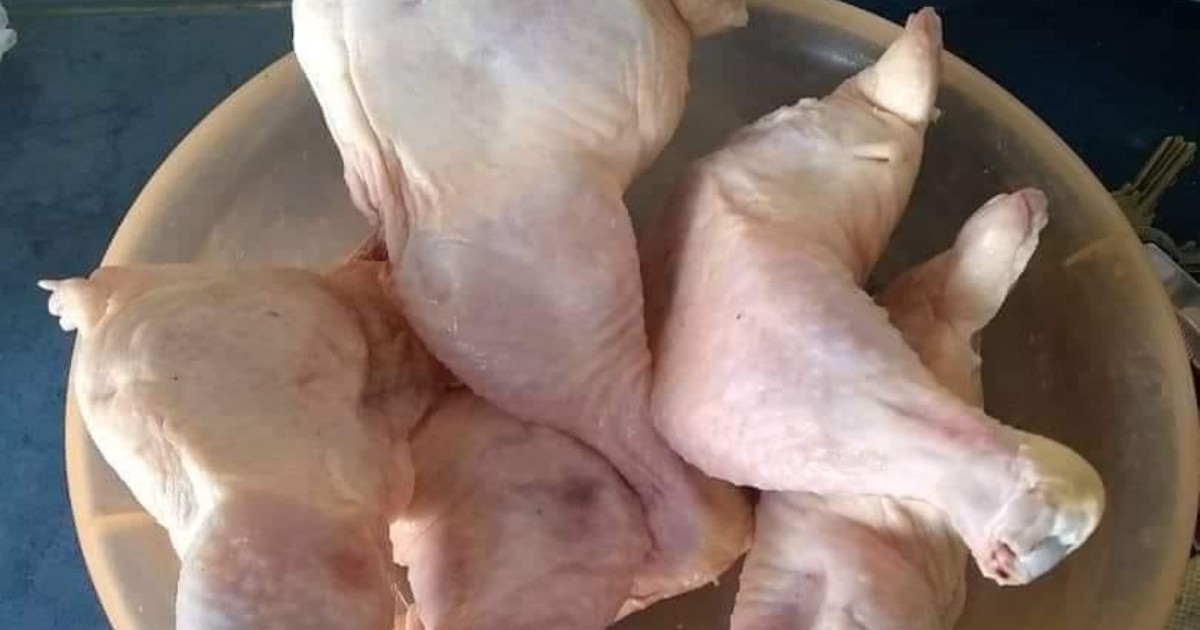
Monthly exports of chicken meat from United States to Cuba rebounded in April 2026, exceeding the levels of January of that year, according to data from the U.S. Department of Agriculture (USDA), despite the tightening of sanctions driven by the Trump administration.
The increase contrasts with the decline recorded in February 2026, when chicken exports plummeted by 21% in value and 19.6% in tons compared to January, a direct blow from the executive order signed by Trump on January 29, 2026, which authorized secondary tariffs under the Helms-Burton Act.
The analysis, shared by the Facebook page "El Estado como tal," notes that "the recovery of U.S. exports was supported by the downward trend in the FOB unit value of chicken exported to Cuba, which began in July 2025."
In April 2026, the price per kilogram was $1.21, down from the peak of $1.39 recorded in March 2025, according to USDA data. This decrease in costs would have enabled state entities, cooperatives, and Cuban MIPYMES to resume and expand their purchases.
According to the same source, "American chicken is the main source of the most consumed meat protein in Cuba" and mitigates "the profound national agricultural crisis, for which no near solution is in sight."
The overall landscape of bilateral agricultural trade is indeed showing the impact of the sanctions: U.S. agricultural exports to Cuba fell by 20% in the first quarter of 2026, dropping from 129.8 million dollars in the same period of 2025 to 102.8 million. However, by March 2026, a slight year-on-year rebound of 0.85% was already recorded, with 36.9 million dollars exported.
This trade flow operates under a legal framework that makes it resilient to cycles of political tension. The Trade Sanctions Reform and Export Enhancement Act of 2000 allows for the sale of food and agricultural products to Cuba on a cash basis, even under the embargo, which has sustained the channel for decades.
Cuba's dependence on American chicken is structural. Between January and August 2024, Cuba imported almost 170,000 tons of chicken meat from the U.S., and in 2022, that product accounted for over 85% of the 328.5 million dollars that the island spent on American food.
The Trump administration has maintained pressure: in addition to the executive order from January, it announced a new sanctions package on May 1, 2026, and implemented specific measures against GAESA, the military-business conglomerate of the regime, on the seventh of that same month.
Despite this context, USDA data confirms that the Cuban regime continues to purchase chicken from its main political adversary, evidence that the island's food crisis forces the dictatorship to keep this commercial channel open regardless of the diplomatic cost.
Filed under: