
Related videos:
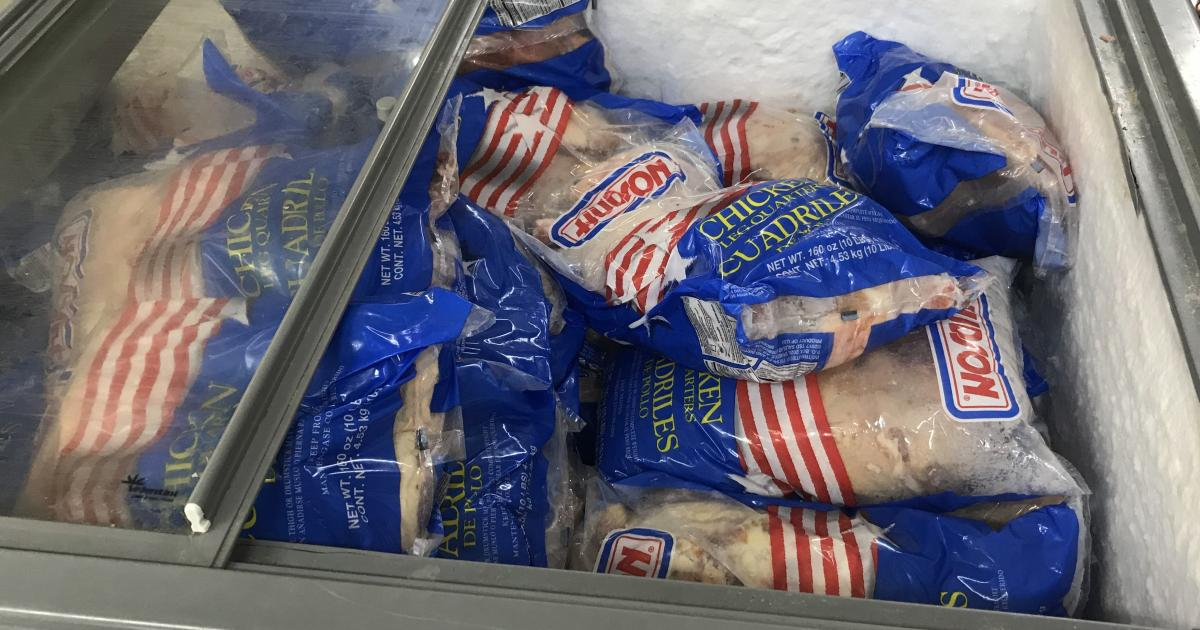
U.S. chicken exports to Cuba saw a significant decline in February 2026, amid a backdrop of worsening bilateral relations.
According to data cited by Cuban economist Pedro Monreal, shipments of the product —the main source of meat protein for the island's population— fell by 21% in value and 19.6% in volume compared to the previous month.
This decline reflects the immediate impact of new political tensions on a vital trade flow for domestic consumption in Cuba.
Imported chicken from the United States has been a staple in the diet of Cubans for years, amid a profound national agricultural crisis that restricts internal food production.
Monreal emphasizes that these imports have served as a compensatory mechanism in light of the state agricultural system's inability to ensure supply.
"The contraction in exports occurred despite the decrease in the value of chicken per kilogram ($1.20 in February compared to $1.23 in January), within the context of a downward trend in the unit FOB value (free on board at the port of shipment) that began in July 2025," explained the economist.
The figures from the U.S. Department of Agriculture include all exports destined for Cuba, regardless of whether they are handled by state entities, cooperatives, or small and medium-sized enterprises. This demonstrates that the decline is not attributable to a single economic actor, but rather to a broader phenomenon linked to the political and financial context.
The decline in chicken shipments adds pressure to the already fragile food security on the island, where the scarcity and high cost of food continue to directly impact the population.
Filed under: