
Related videos:
The Cuban regime continues to mobilize international support in response to what it perceives as a growing threat of confrontation with the United States. This time, the message reached the Parliament of The Bahamas through a letter in which Havana warns about the risk of "direct military aggression" by Washington.
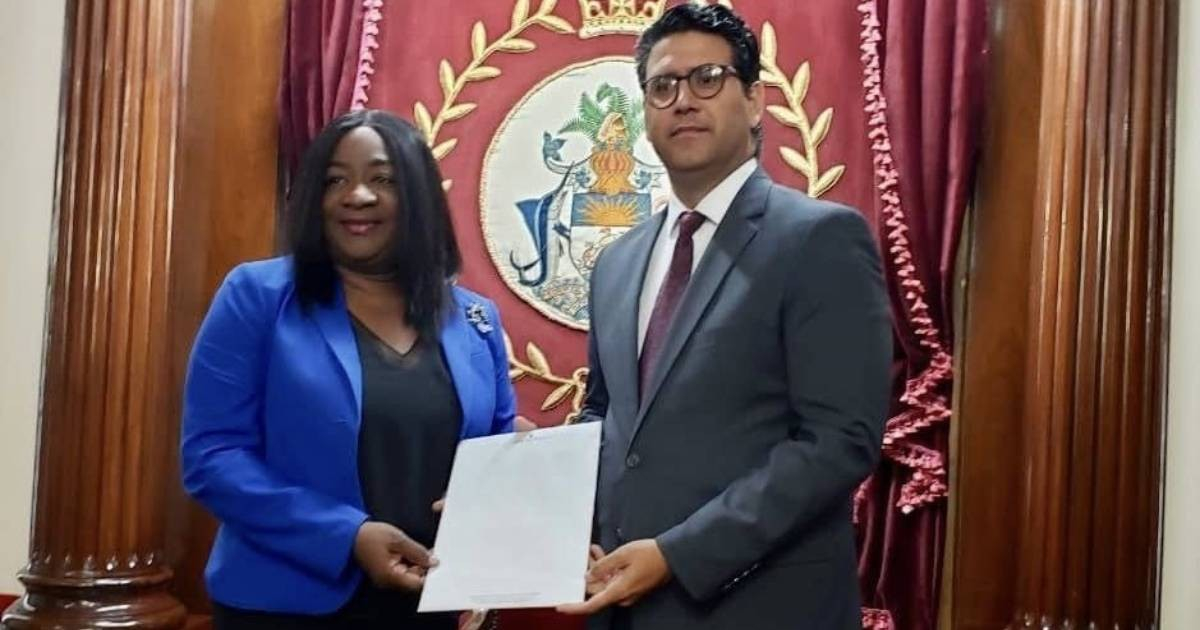
According to information from the Cuban Foreign Ministry, the document, signed by Esteban Lazo Hernández, president of the National Assembly of People's Power, was presented by the Cuban ambassador in Nassau, Juan Carlos Marcof Sánchez, to Patricia Deveaux, president of the House of Assembly, and to Lashell Adderley, president of the Bahamian Senate.
According to the National Assembly reported, the letter expresses the regime's concern over what it describes as a "real threat of direct military aggression" against Cuba and condemns the recent measures taken by the administration of Donald Trump.
In the letter, Lazo argues that the new U.S. executive orders "intensify the economic, commercial, and financial blockade, strengthen the energy siege, and expand the implementation of unilateral coercive measures" against the island.
The text also reaffirms Cuba's commitment to national sovereignty, peace, and international law, while expressing gratitude for the demonstrations of solidarity received from governments, parliaments, and international organizations.
The delivery of the letter is part of a diplomatic campaign initiated by the regime since the end of May to denounce what it considers an increase in American pressure.
On May 27, the Cuban Parliament reported that Lazo had sent similar communications to about a dozen international interparliamentary organizations, including the Inter-Parliamentary Union, PARLATINO, PARLASUR, and ParlAmericas, requesting support and statements against a potential military action by the United States.
In those letters, the Cuban authorities warned that an intervention could trigger a "humanitarian catastrophe" with repercussions for the entire region.
The diplomatic offensive coincides with one of the most tense moments between Washington and Havana in recent years.
In January, the Trump administration declared Cuba an "unusual and extraordinary threat" to U.S. national security. Months later, the rhetoric between both governments hardened again amid reports of Cuba's alleged acquisition of over 300 military drones from Russia and Iran.
Precisely this Wednesday, U.S. Secretary of Defense, Pete Hegseth, visited the Guantanamo Naval Base and issued new warnings directed at the Cuban government.
During his visit to the military facility, Hegseth stated that it would be "reckless" for Cuba to attempt to acquire weaponry capable of reaching the base or continental U.S. territory and asserted that such an action would lead to a confrontation that Havana "would not be equipped to handle."
The head of the Pentagon also emphasized that “the future of Cuba is in the hands of its own leaders” and reiterated that the United States will remain prepared for any scenario.
The statements come just a few days after the Department of Justice filed charges against Raúl Castro for the downing of the Brothers to the Rescue planes in 1996 and amid increasing concerns in Washington about Cuba's military cooperation with Russia and Iran.
From Havana, the authorities have rejected those accusations and maintain that the real problem lies in the pressure policy promoted by the United States.
The day before the delivery of the letter, Cuban Deputy Minister of Foreign Affairs Carlos Fernández de Cossío stated that if the U.S. were to end its "aggression", "the supposed problem of Cuba would no longer be discussed."
Both Bahamian parliamentarians reaffirmed the historical ties of friendship and cooperation between their countries and expressed their willingness to continue strengthening the bonds between the two nations, which have maintained diplomatic relations since 1974.
Filed under: