
Related videos:
While millions of Cubans face power outages of up to 23 hours a day, food shortages, and the rapid deterioration of basic services, the Basque Government has approved new financial aid for Cuba aimed at funding development projects in Havana.
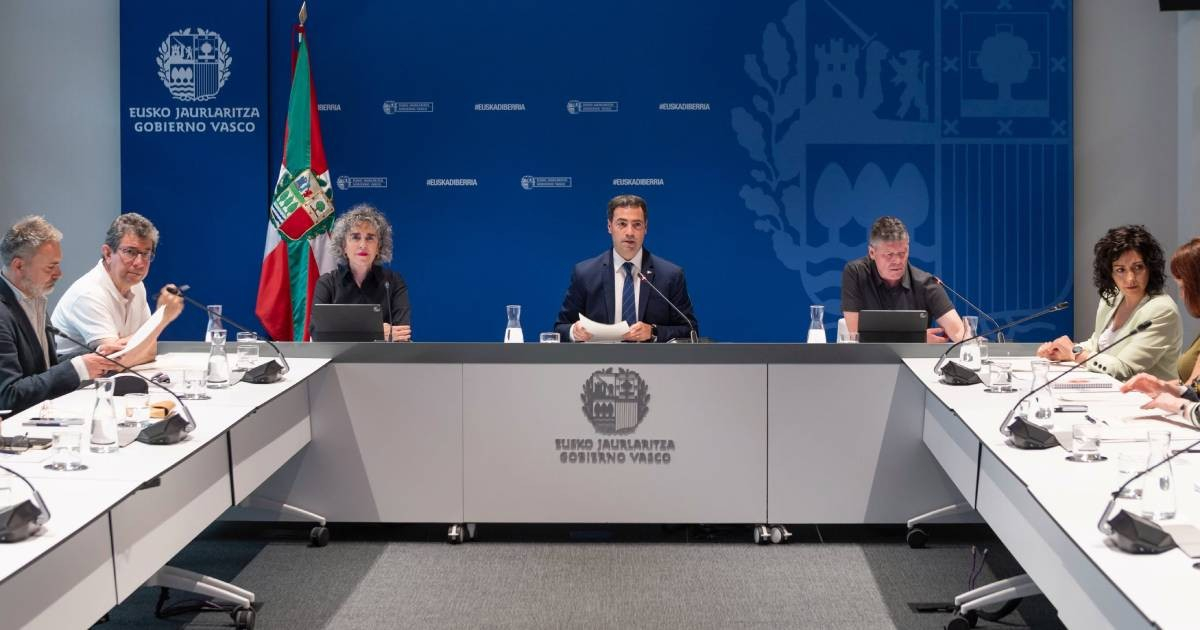
According to the Spanish media Diario Euskadi, the Basque Government Council authorized a direct grant of 250,000 euros this week to the United Nations Development Program (UNDP) in Cuba, as part of an international cooperation package valued at 350,000 euros.
The funds will be channeled through eLankidetza, the Basque Agency for Development Cooperation, and will be allocated to the project "Havana's Progress Towards Its Future: Comprehensive Implementation and Monitoring of the Provincial Development Strategy for Havana."
The initiative aims to support the implementation of a plan designed by the Cuban authorities to promote the development of the capital through actions related to institutional, economic, social, cultural, and environmental sustainability.
The approved funding will be distributed over two budgetary periods: 150,000 euros in 2026 and another 100,000 euros in 2027.
However, the financial support could be even greater. The General Secretariat for External Action and Euskadi Global is currently processing another grant for the same amount for the same project, which would raise the total support to 500,000 euros.
The decision comes at an especially delicate time for Cuba. The very documentation cited by Diario Euskadi acknowledges that Havana is facing significant challenges related to institutional coordination, access to energy resources, waste management, housing issues, and attracting investments.
This diagnosis aligns with the current situation on the island. During May, the national electric system recorded historic deficits exceeding 2,100 megawatts, while large areas of the country suffered prolonged power outages. At the same time, the depreciation of the Cuban peso continued to accelerate in the informal market, where the euro was trading between 610 and 620 pesos.
The new aid is part of a cooperative relationship that has lasted for more than three decades between the Basque Country and Cuba, and is currently supported by a Memorandum of Understanding signed between eLankidetza and the Ministry of Foreign Trade and Foreign Investment of Cuba (MINCEX), which is valid until 2028.
However, Basque support for projects linked to the island has been surrounded by controversies in recent years.
In March of this year, Cuban activist Amelia Calzadilla appeared before the Basque Parliament to denounce the political and social situation in the country. During her speech, she stated that "the dictatorship is leading Cuba towards a mass extermination, slow, painful, and in silence" and reminded them of the existence of around 1,200 political prisoners.
Critics have also pointed to the management of previous cooperation funds. Various sectors have questioned whether resources channeled through the Euskadi-Cuba association ended up financing initiatives that are characterized by their opponents as mechanisms for promoting the official narrative of the regime. The organization was the subject of a judicial investigation in Spain in 2021.
Of the total assistance approved this week by the Basque Government, the remaining 100,000 euros will be allocated to the United Nations Office for the Coordination of Humanitarian Affairs (OCHA), which manages the Central Emergency Response Fund for Sudan, currently regarded by the UN as the site of the greatest humanitarian crisis on the planet.
The decision regarding Cuba occurs in a complex international context for Havana. Just a few days earlier, the United Kingdom announced the suspension of the ratification process for a cooperation agreement signed with the Cuban government in 2023, demonstrating the increasing tensions surrounding international relations with the regime.
Despite this, the Basque Government continues to support cooperation programs on the island and reinforces its financial backing for development projects initiated from the Cuban capital.
Filed under: