
Related videos:
The kicked off this Thursday with the opening ceremony at the Estadio Azteca in Mexico City, but millions of Cubans were unable to watch the event because Tele Rebelde, the official channel assigned to broadcast the tournament, only aired about 10 minutes of the inauguration and then switched its programming to cycling and women's volleyball.
While the entire world was watching the show featuring performances by Shakira, Maná, and other artists, and the opening match between Mexico and South Africa was taking place at the Azteca, Cuban social media erupted with complaints and outrage.
"For some reason, of course, they didn't say it, they broadcasted 10 minutes of the inauguration and that was it; they switched to cycling and goodbye World Cup," Carlos Santana wrote on Facebook.
At 3:08 PM on Thursday, Tele Rebelde was broadcasting women's volleyball, while its HD signal was airing a cycling race. "Tele Rebelde was showing a bike race at that time. Unbelievable," summarized Maria Emilkis Garcia Vila.
"The only country in the world where the opening match of the World Cup was not seen was Cuba," stated Gilberto Hernandez Miteff, in a comment that captured the widespread sentiment.
The official proposal to alleviate the situation was for Cubans to follow the tournament through Picta, the state streaming platform that broadcasts the signal from Tele Rebelde on mobile devices and computers.
Apklis, the Cuban app store, posted an announcement on social media inviting people to "experience the passion of football" through that channel.
The response was an avalanche of sarcasm. "With what current, with what connection?" Marilyn Leyva asked.
"We're going to connect it to the coal," Minerva Reyes joked.
"I either laugh or cry, depending on how the World Cup looks; I know, let's gather at someone's place who has solar panels," wrote Yudesky Vega.
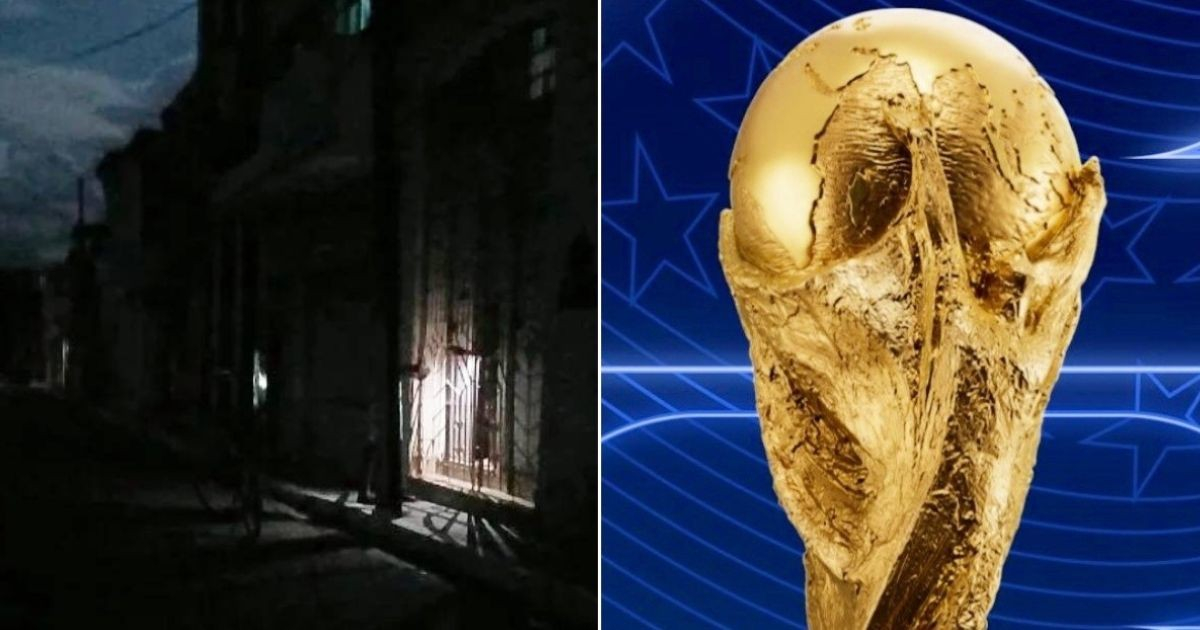
The background is the worst electrical crisis Cuba has faced in years: on Thursday, the deficit exceeded 2,000 MW, with blackouts affecting more than 65% of the country.
A user reported more than 52 consecutive hours without electricity in their area.
"What football, what football, if we don't even have electricity to cook," wrote Elaine Marrero Castellano.
In addition, ETECSA provides only 300 MB of national bonus, which is insufficient for video streaming, and many radio bases lack electrical backup.
As a temporary measure, Matanzas announced that it would broadcast the World Cup on the Multivisión channel in analog signal for the municipalities outside the provincial capital, due to "technological difficulties associated with the Jacán Transmitter."
The Capitán San Luis Stadium also provided a giant screen, although it warned that the broadcast would be "subject to weather conditions, connectivity, and power supply."
In 2021, Cuban television admitted it did not have the funds to acquire the broadcasting rights for the Euro Cup and the Copa América, and only reached partial agreements after public pressure. Five years later, the issue is no longer just about rights: it is about electricity, signal, and infrastructure.
"The whole world was able to enjoy that beautiful show today, but as always here in this country, no one could enjoy it," wrote Eliannys Estrada, in a statement that encapsulated the frustration of millions of Cubans over the most inaccessible World Cup in their history.
Filed under: