
Related videos:
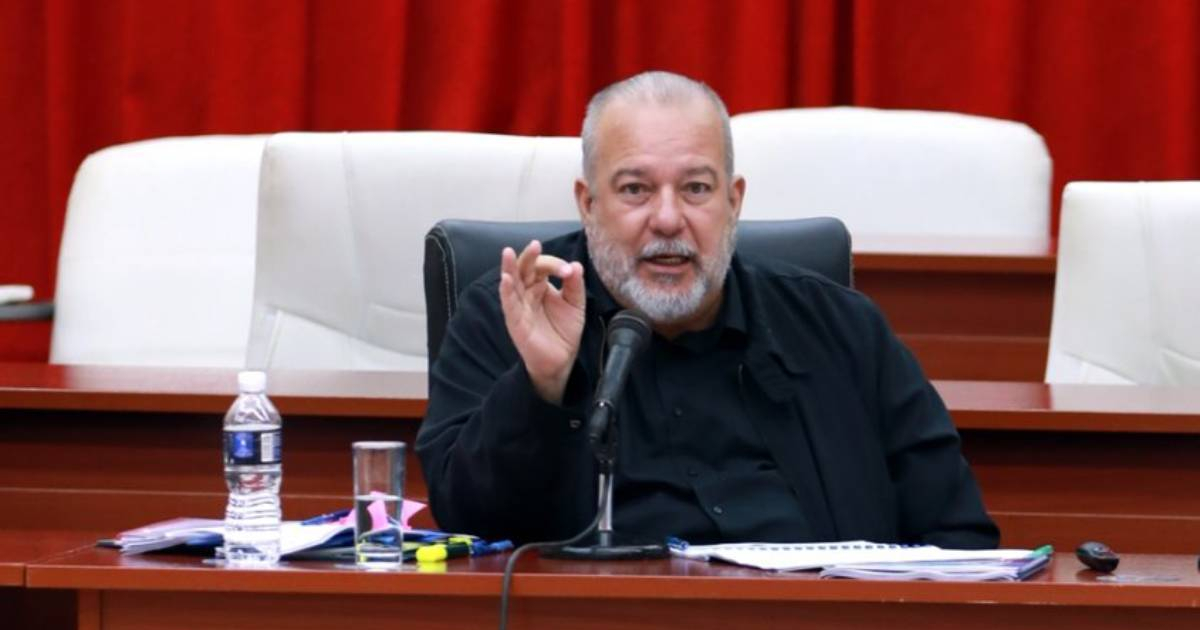
Cuban Prime Minister Manuel Marrero Cruz described on Thursday the sanction announced against the Cuba-Petróleo Union (CUPET) as a “new attack by the U.S. government against our people,” referring to the state-owned company that holds a monopoly on the import, refining, and distribution of fuels on the island.
The measure was announced by Secretary of State Marco Rubio under Executive Order 14404, signed by President Donald Trump on May 1, 2026, and implemented through the Office of Foreign Assets Control (OFAC).
In his reaction published on social media, Marrero Cruz denounced that the sanction represents "another twist of the screw on the energy blockade and its cruel impact on vital services and the daily lives of Cubans."
The designation blocks the assets and interests of CUPET under U.S. jurisdiction and prohibits transactions by individuals or companies subject to U.S. law with the Cuban state oil company.
Washington also warned that foreign companies and financial institutions operating with CUPET could be exposed to secondary sanctions for doing business with the oil company.
Rubio justified the measure by stating that the leaders of the Cuban regime have diverted energy resources to enrich themselves, reserving supplies for security and military forces while the population suffers blackouts.
"We will continue to undermine the regime's ability to sustain its corrupt and repressive agenda," stated the Secretary of State.
The sanction against CUPET is the second major measure by the Trump administration against Cuban entities in less than five weeks, following the designation of the Business Administration Group S.A. (GAESA) on May 7, 2026, which also included its CEO Ania Guillermina Lastres Morera and Moa Nickel S.A.
The measure comes amid an unprecedented energy crisis in Cuba: in May 2026, a record electricity generation deficit of 2,174 MW was recorded, with areas of the country suffering more than 20 hours a day without electricity, including Havana and eastern provinces like Granma.
On March 16, 2026, there was also a total disconnection of the national electric system, exacerbated by a lack of fuel and the deterioration of the thermoelectric plants.
The announcement coincided with the case of Vanguard Energy, a company from Coral Gables that had signed a contract to send over 250,000 barrels of fuel to Cuba.
The State Department denied on Wednesday that it had authorized that operation, and Miami-Dade revoked the business license of Vanguard Energy this very Thursday, coinciding with the sanction on CUPET.
A former OFAC advisor clarified that the designation of CUPET changes the legal landscape for any company intending to do business with the Cuban oil company, definitively closing any legal loophole for such operations.
At the end of 2025, the Cuban Minister of Energy Vicente de la O Levy had admitted that "2026 will be difficult, although slightly better than 2025," a projection that the facts have overwhelmingly disproven.
Filed under: