
Related videos:
The Florida Supreme Court rejected a request for a temporary injunction against the new congressional district map drawn by Republicans, allowing the new districts to be used in the upcoming midterm elections in November, reported NBC Miami.
The decision represents another victory for the Republican Party in a national redistricting effort aimed at helping the party maintain its narrow majority in the House of Representatives, where it currently holds a 217-212 lead over the Democrats.
The attorneys for the voters who filed the lawsuit pointed out that the new districts violate a state constitutional provision that prohibits partisan manipulation of electoral districts, and that the court should instruct the state to continue using the same districts from previous elections.
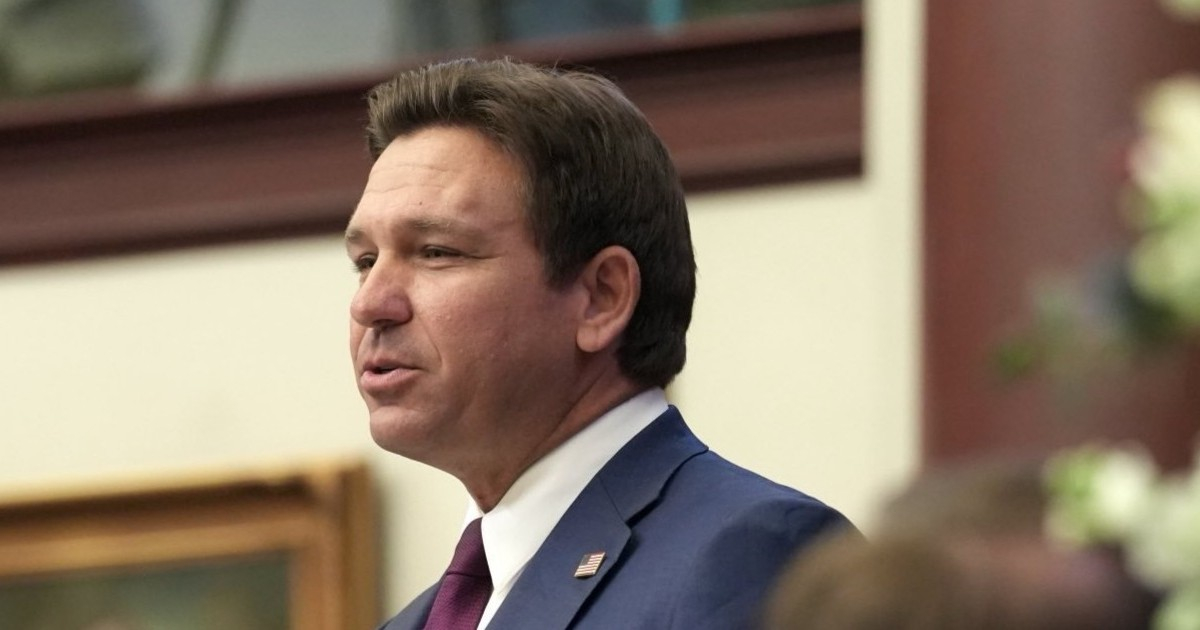
The Republicans already hold 20 of Florida's 28 seats in the House of Representatives. The new map, enacted by Governor Ron DeSantis, could enhance the Republican Party's chances of winning four additional seats, increasing their advantage to 24-4.
The process was extraordinarily expedited: DeSantis presented his proposal in April through an official memorandum, the state House approved it at the end of that month with a vote of 83 in favor and 28 against, the Senate ratified it the same day with a vote of 21 to 17, and DeSantis signed it on May 4, writing on X: "Signed, sealed, and delivered."
The new design modifies 21 of the 28 congressional districts in the state, and its legislative approval occurred about an hour after the U.S. Supreme Court weakened the Federal Voting Rights Act of 1965 by overturning a majority-Black district in Louisiana.
Florida is one of at least ten Republican-led states that have conducted redistricting as part of President Donald Trump's plan to try to maintain the majority in the House of Representatives in November.
The opposition, for their part, cited the Fair Districts Amendment, passed by Florida voters in 2010, which explicitly prohibits the drawing of districts with the intention of favoring or disadvantaging a political party.
The lawyer Chris Shenton, who represented several challenging groups, noted that 82% of voters in Republican districts remain in the same districts under the new map, compared to only 41% of voters in Democratic districts.
The plaintiffs argued before the court that the new districts are among the most extreme cases of partisan manipulation of electoral districts enacted in any state over the past fifty years.
The state attorneys, on the other hand, defended the map as a "cause for celebration" during the 250th anniversary of the United States, stating that it is "perhaps for the first time in Florida's history, a truly impartial map in terms of color."
The ruling of the Florida Supreme Court does not address the core of the dispute; the lawsuit regarding whether the map violates the Fair Districts Amendment will continue in the lower courts.
Nikki Fried, president of the Florida Democratic Party, warned: "We will not back down and allow Ron DeSantis to violate the Florida Constitution. These maps are unconstitutional and violate the Fair Districts Amendment of 2010. The fight has just begun."
Filed under: