
Related videos:
A new wave of thefts and sabotage against ETECSA's infrastructure left three cellular radio bases completely out of service in Santiago de Cuba this week, depriving thousands of users in their coverage areas of mobile service and internet.
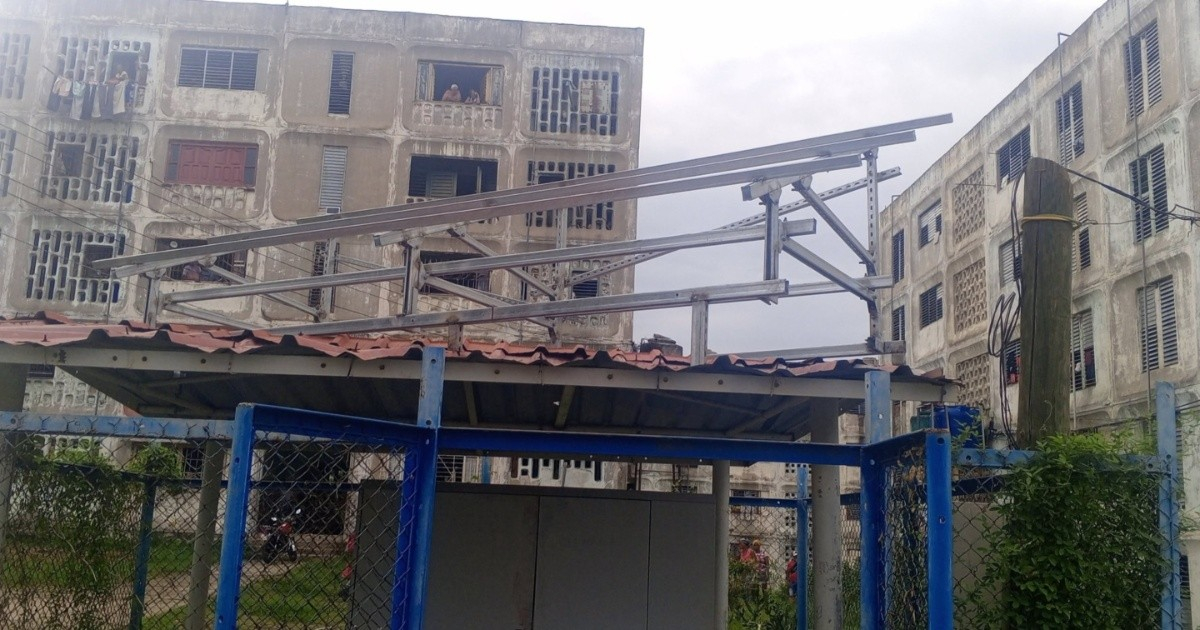
According to the public complaint made by engineer Luis Enrique Torres Almarales, an employee of ETECSA in the province, during the early hours of last Sunday, criminals stole two panels from Cabinet 3 of the Micro 9 neighborhood.
Throughout the week, they also cut fiber optic cables, electrical power cables, and stole the breakers from three radio bases: RBS Micro 4, RBS Ave Los Pinos, and RBS Micro 9.
"On the morning of Sunday, June 7, two panels were stolen from Cabinet 3 of Rpto Micro 9, and during the week, power cables, feed wires, and the breakers from three cell base stations: RBS Micro 4, RBS Ave Los Pinos, and RBS Micro 9 were cut and stolen, leaving them out of service," wrote Torres Almarales on Facebook.
The engineer did not hesitate to describe the events as something more than vandalism: "These recent acts, more than vandalism, I consider to be sabotage and pure counter-revolution. At times, it seems to me that there are organized and paid groups to sabotage the little we can achieve with sacrifice."
Torres Almarales also questioned the reasoning behind the cable theft: "What objective do they pursue by stealing a few meters of fiber optic cable? Who is going to buy it? It all seems to have been done with the premeditated and conscious intention of taking the Radio Base out of service."
This week's events are not isolated. On June 6, four panels had already been stolen from Cabinet 3 of the Micro 7 neighborhood, marking the third such attack in just over a month in the province.
Previously, on May 30, four solar panels were stolen from the cabinet in Reparto Flores, next to a primary school, and on May 1, a panel was stolen from the Integrated Cabinet micro 9-2, leaving over 560 users without service for more than ten hours during the night.
In 2025, Santiago de Cuba had already seen at least 17 vandalized radio bases, with theft of batteries, rectifiers, and destruction of wiring.
Torres Almarales warned that ETECSA, already constrained by the import crisis, now must allocate its limited resources to repair damages instead of expanding services: "Our company faces the same limitations in resources and the importation of equipment that prevent it from developing and installing new services that the people are demanding."
Regarding the institutional response, the engineer was emphatic: "We have filed several reports about a large number of incidents that occurred previously, and so far, no official arrests have been confirmed."
The report sparked a strong reaction on social media. "The police are no longer here to protect the people from crime... they could even steal the very dome of the Capitol and it would be like nothing happened... but if a can or a pot makes a noise... then they show up quickly," wrote a user.
Others called for harsher penalties: "If they don't carry out exemplary trials with sentences that make people think twice before committing crimes, everything will remain the same," pointed out another commentator.
A user recalled the precedent from the 90s: "At that time, the State began to conduct trials with exemplary sanctions... that's when the thefts stopped. They should do the same now."
The Cuban Penal Code classifies sabotage of infrastructure under Article 125, with penalties ranging from seven to 15 years, and Article 126 for aggravated cases, which contemplates up to life imprisonment. In May 2025, the Ruling 475 of the People's Supreme Court intensified the penal treatment of these attacks, categorizing them as sabotage. However, the public perception is that laws exist but are not enforced, and that impunity fosters recidivism.
Filed under: