
Related videos:
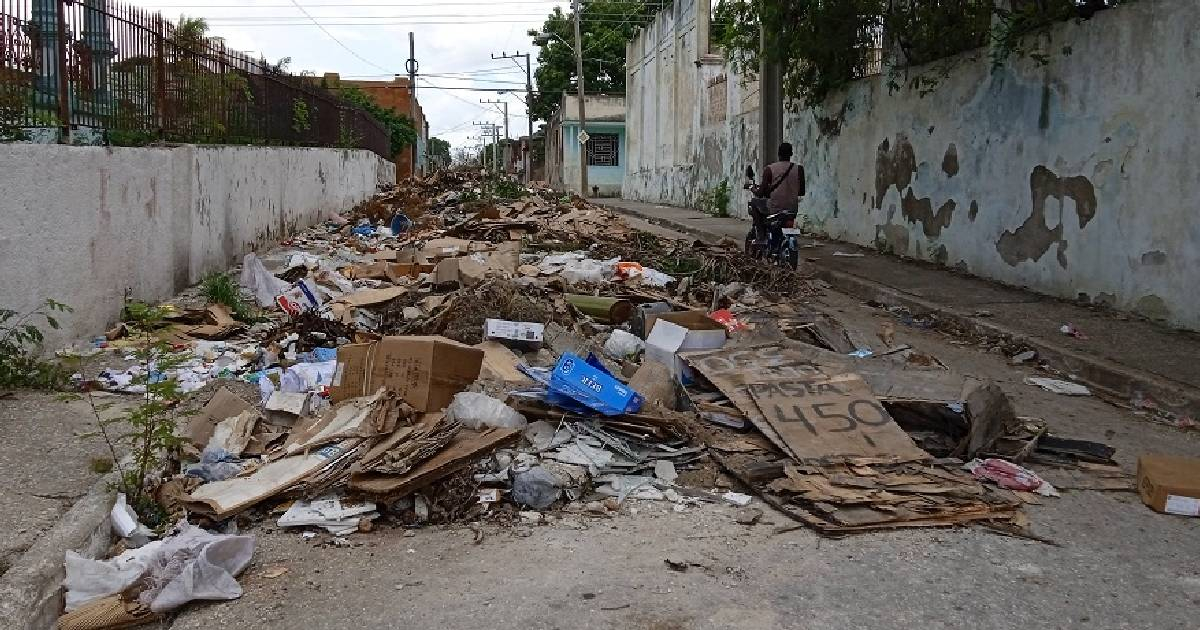
Due to the lack of fuel to operate the specialized waste collection equipment, the authorities in Guantánamo are reorganizing solid waste collection with the support of cart pushers and animal-drawn carts in various popular councils of the city.
The measure was discussed this Saturday during the so-called Vitality Meeting, chaired by Yoel Pérez García, the First Secretary of the Communist Party in the province, Alis Azahares, the provincial governor, and with the participation of provincial directors and municipal administrative structures via audioconference.
According to the report from the official newspaper Venceremos, in addition to strengthening waste collection, efforts are being made to designate areas for the disposal of waste.
Despite these actions, the authorities themselves admitted that the current state of the city requires greater efforts. The first secretary of the PCC called for transforming the urban landscape through cleaning efforts, clearing of green areas, pruning of trees, gardening, and painting of bridges.
The situation is also concerning due to its health implications. During the meeting, health authorities urged the need to strengthen targeted control in homes, workplaces, and communities as part of the strategy to combat the proliferation of vectors and reduce epidemiological risks.
The decision to rely on hand carts for garbage collection reflects the ongoing impact that the fuel shortage continues to have on basic services that previously depended on motorized equipment.
While authorities are calling for citizen participation to enhance the city's image, the accumulation of waste and material limitations continue to be visible challenges in the capital of Guantánamo.
In April, a project was announced to introduce electric tricycles with solar panels in Guantánamo, managed by the micro, small, and medium-sized enterprise R&R Soltec, as an alternative solution.
In November 2025, after Hurricane Melissa, a dump in front of San Rafael Cemetery was spreading "from corner to corner," even though just days before, about 15 truckloads had been used to clean the area.
The energy crisis further exacerbates the situation. On Thursday, Guantánamo was left in the dark due to a fault in the 110 kV line that connects it to Santiago de Cuba, with some areas experiencing up to 29 hours without electricity.
In the same meeting, Joaquín Díaz Castillo, director of the Electric Company in Guantánamo, reported that the partial solution to that breakdown "allows for the lighting of different circuits for an average of three hours," although he warned about the failure of several transformers in municipalities such as Maisí and Niceto Pérez, which seriously impacts the electrical service.
The National Electric Union acknowledged the eight damaged transformers in Guantánamo on June 7 with no available equipment to repair them, a situation that keeps several municipalities experiencing blackouts of up to twenty hours.
Filed under: