
Related videos:
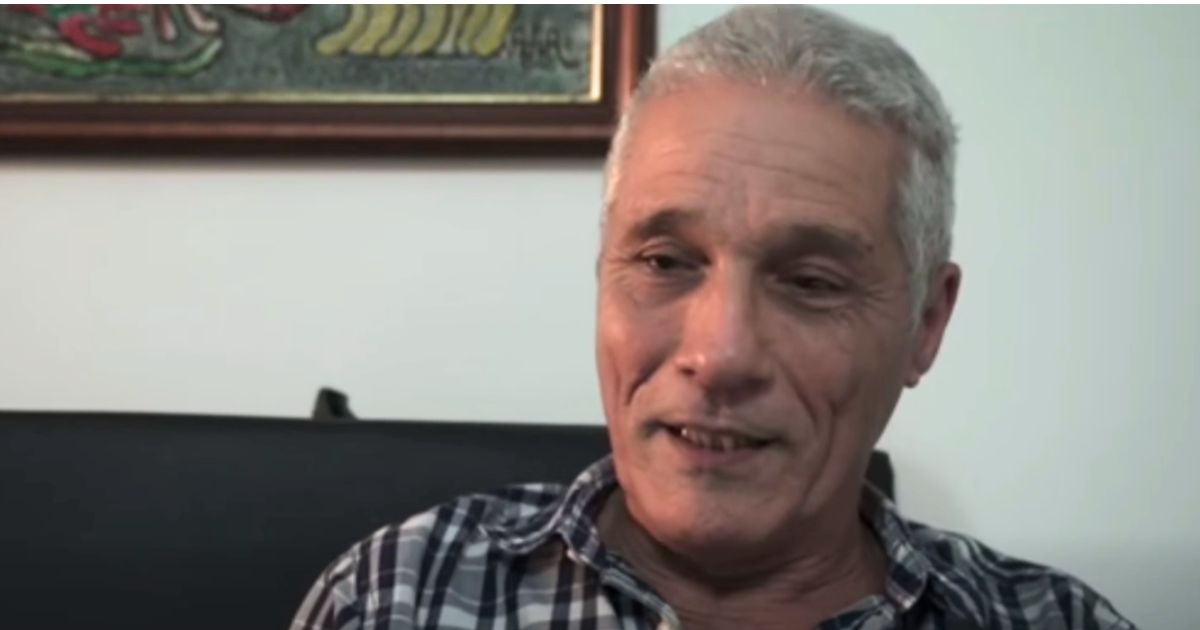
The prominent Cuban writer, linguist, and translator Rodolfo Alpízar Castillo published a message on Facebook addressed to President Miguel Díaz-Canel this Saturday, outlining five specific political demands — presented in the form of hashtags — in direct response to the leader's statements regarding his willingness to listen to "new ideas."
The day before, Díaz-Canel announced on the state television program Revista Buenos Días a package of economic reforms, stating that "the country cannot continue to function the same way" and that he would consider new proposals. However, the leader himself clarified that the measures were already "consensuated" and ready to be approved by the Political Bureau and the National Assembly in July, which fundamentally contradicts his call for citizen suggestions.
Alpízar spoke with precision: "The president stated that he is open to new ideas. There are some very important, essential ones that many of us are trying to ensure he hears, listens to, considers, and applies for the good of all, including the rulers."
The first demand is #AmnistíaYa. The writer argues that "without broad, sincere, and fair amnesty, many wounds will remain open and hinder the great dialogue among Cubans that our homeland urgently needs." The call is supported by documented figures: organizations like Prisoners Defenders reported between 1,042 and 1,250 political prisoners in Cuba in 2026. The mass pardon announced by the regime in April benefited 2,010 people, but only two of them were identified political prisoners, according to human rights reports.
The second demand is , which recognizes the rights to assembly and demonstration, but conditions them on "respect for public order and compliance with the provisions established by law," which in practice allows for systematic restriction. Alpízar is emphatic: "A government that fails to uphold the mandates of its own constitution cannot present itself as a valid interlocutor to the citizenry."
Under the hashtag #PatriaSinPenaDeMuerte, the writer warns that "a country with the death penalty for political reasons will never be able to live in harmony." The fourth demand, #TransparenciaYa, is based on a simple premise: "Only with transparency can the trust of the citizenry be earned." And the fifth, #PlebiscitoYa, addresses the heart of the issue: "Only with a clear and auditable plebiscite can the true opinions of the people and their desires for the future of the homeland be known."
The closing of Alpízar's message is a direct challenge to the regime: "No one has the right to speak on behalf of the people without knowing their true opinion. Stop speaking for us; ask first what we want and what we think of you. Would you dare?"
The voice of Alpízar carries a particular symbolic weight as it comes from within the very cultural system of Cuba, from someone who has even served as vice president of the Section of Literary Translators of the National Union of Writers and Artists of Cuba (UNEAC). Among his accolades are the Aurora Borealis Award from the International Federation of Translators in 2011; the Distinction for National Culture in 2013; and the Laureate Seal (2014), awarded by the National Culture Union, according to EcuRed. He is not an outspoken opponent in exile, but rather a figure recognized by the regime's own institutions.
His message adds to a wave of critical reactions on social media in response to Díaz-Canel's call for ideas to save Cuba from the crisis, with many Cubans sarcastically responding that the best suggestion would be for the ruler and the Communist Party to relinquish power. Alpízar, on the other hand, chose a more proactive and structured tone, articulating demands that extend far beyond economic issues and touch on the political core of the system.
The economic reforms announced by Díaz-Canel came days after Secretary of State Marco Rubio imposed new sanctions against CUPET, the Cuban state oil company, and analysts point out that they follow the historical pattern of the regime: acute crisis, announcement of minimal openings, and no substantial structural changes. Alpízar, with his final statement, sums up what many Cubans think: "To speak in the name of the people, one must consult them first!"
Filed under: