
Related videos:
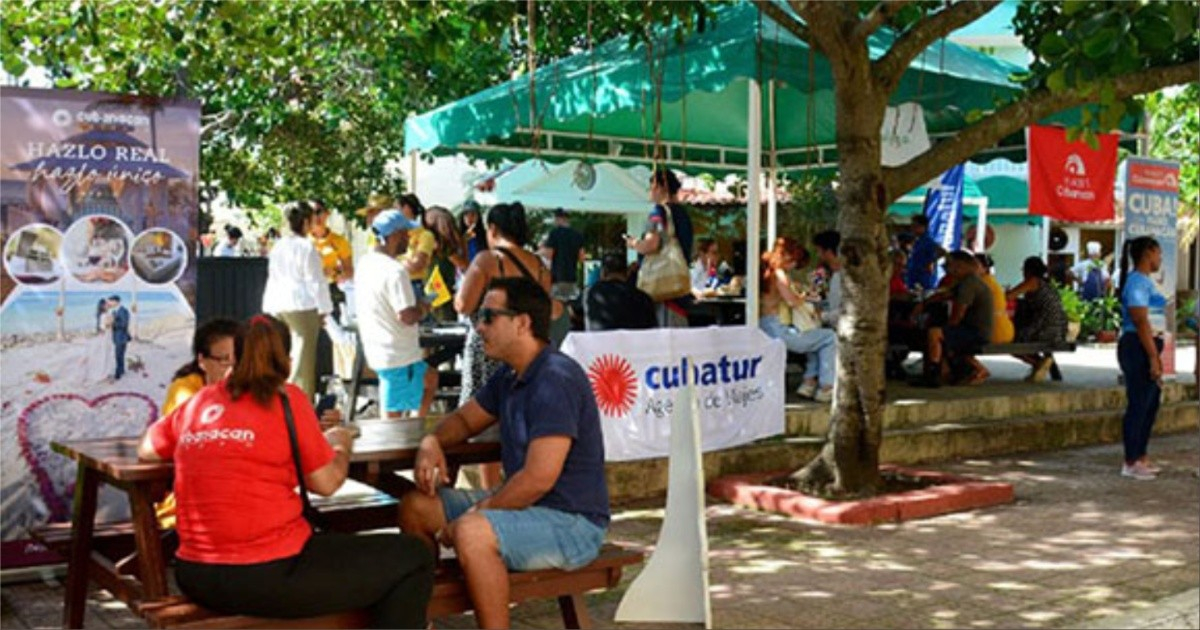
The Cubanacán Group organized a summer tourist fair—entitled "Gran Outlet"—this Saturday on the boulevard of the Comodoro hotel in Havana, while the Cuban population endures power outages lasting over 30 hours, hunger, and lack of drinking water, which economists described as "nonsensical" and "a joke."
The event brought together state agencies Ecotur, Habanatur, San Cristóbal, Cubatour, and Viajes Cubanacán, along with receptive agencies from the Ministry of Tourism, and took place amidst the worst collapse of Cuban tourism in decades.
During the fair, state agencies promoted destinations such as Varadero, Viñales, and the Zapata Swamp, with the star attraction being the reopening of the Brisas del Caribe hotel, scheduled for June 26, offering free stays for children aged zero to 12.
The official coverage of the event itself acknowledged, without further explanation, that the proposals were presented "despite the current context."
The economist and journalist Dimas Castellanos had no qualms in describing the event: "It seems like a joke. Before the pandemic, tourism was already declining due to a lack of quality, supplies, treatment, and many tourists—who are the best advertisement when things go wrong—decide not to return to that country, which happens in any country."
Castellanos also noted that the decline has accelerated after the pandemic, in direct contrast to neighboring countries: "Santo Domingo has turned tourism into a source of foreign exchange and an important factor in the growth of Gross Domestic Product."
The figures support this reading: in the first quarter of 2026, only 328,608 international tourists arrived in Cuba, a decrease of 55.8% compared to the same period in 2025, with a hotel occupancy rate of around 21.5% that sometimes falls below 10%.
The collapse of the Canadian market illustrates the magnitude of the disaster: in March 2026, only 511 Canadian tourists arrived, compared to 98,663 in the same month of 2025, a drop of 99.48%.
The main Canadian airlines have suspended their flights to Cuba indefinitely, with tentative return dates not before October or November 2026.
This is compounded by the massive exit of international hotel chains: Meliá announced the closure of 15 hotels and Blue Diamond Resorts left 62 properties with over 12,900 rooms.
The economist Orlando Freyre Santana was even more direct: "That summer promotional fair is nothing more than a desperate attempt by the regime to market its tourist product, which is constantly declining. Foreign tourists are not coming, and Cubans are only thinking about surviving amid the harsh shortages they face. The event must have been a failure."
The fair took place the day after Díaz-Canel announced apackage of emergency economic reforms that includes decentralization, opening up the currency market, and a gradual elimination of subsidies, implicitly acknowledging the severity of a situation where the economy has contracted by 23% since 2019.
Castellanos pointed directly at the military structure that controls the sector as the underlying obstacle: “Until there are structural changes in Cuba, until GAESA disappears, which controls most of those hotels and wealth, the country will continue to decline. Fortunately, the crisis has reached a point where changes will soon occur in Cuba, and tourism will then rise when conditions start to change, especially the political and economic ones.”
Filed under: