
Related videos:
The Prime Minister of Namibia, Tjitunga Elijah Ngurare, made a public appeal to citizens, businesses, and institutions in his country to support a humanitarian aid campaign for Cuba, amid the deep economic and energy crisis the island is experiencing.
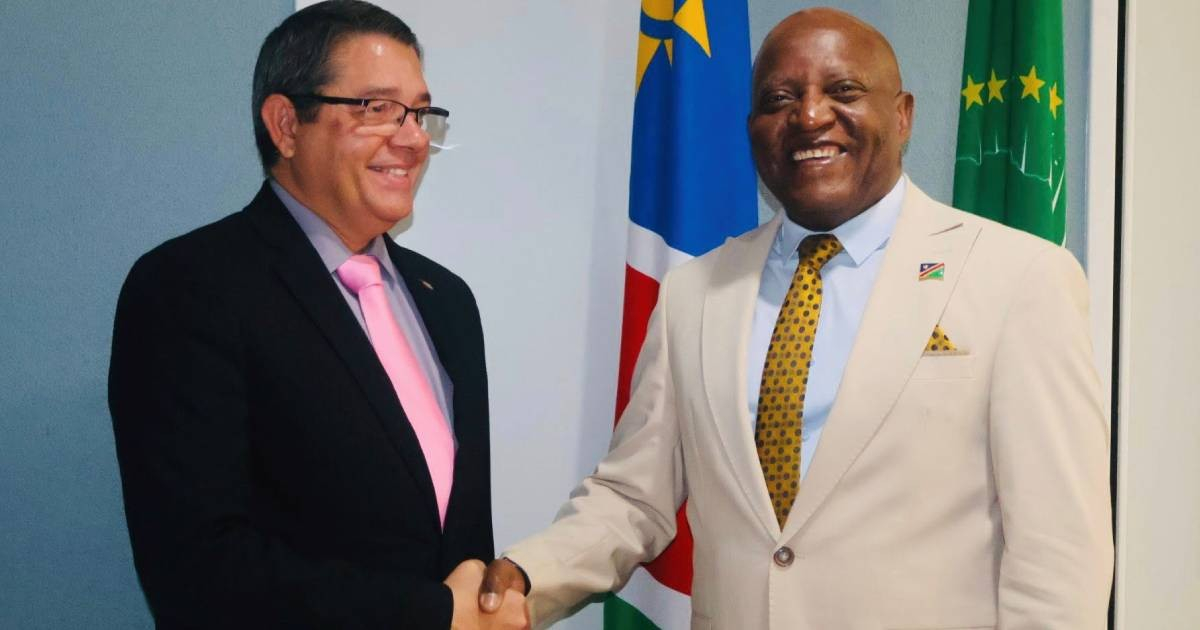
During a meeting held last week in Windhoek with the Cuban ambassador, Sergio de la Uz, Ngurare called upon the historical ties between both nations and advocated for the necessity of reciprocating the support provided by Cuba during the African liberation struggles, according to a statement from the leader's office.
"They came to die for us, and therefore it would be very selfish of us to forget. We stand with you during this difficult time," affirmed the Namibian leader.
Ngurare expressed concern about the situation currently facing the Cuban population and denounced the humanitarian consequences of the crisis.
"This is evil. Cuba is facing a humanitarian crisis that is accompanied by unprecedented social and economic difficulties. Communities can last 48 hours without electricity. Hospitals lack critical medications. Surgeries are often suspended due to medical shortages," he stated.
The solidarity campaign was launched this year by the Namibia-Cuba Friendship Association and the Sam Nujoma Foundation with the aim of raising funds for the purchase of medicine and other essential supplies for the island. So far, the initiative has gathered more than 700,000 Namibian dollars, equivalent to about 43,000 US dollars. Ngurare himself contributed a donation of 5,000 Namibian dollars.
The mobilization is part of a broader effort supported by political and social sectors in Namibia. In April, the President of the National Assembly, Saara Kuugongelwa-Amadhila, endorsed a national solidarity campaign involving public institutions, businesses, religious organizations, and civil society to collect aid for the Cuban people.
The Prime Minister attributed Cuba's difficulties to the U.S. embargo and reiterated Namibia's historical position in favor of lifting the sanctions against the island.
In May, Namibia's President Netumbo Nandi-Ndaitwah described the United States' energy embargo as "unacceptable" and "very unfortunate," which prompted a public thank you from Díaz-Canel, who stated that Cuba "is not alone."
The ties between the two countries date back to Cuba's involvement in Africa during the 1970s and 1980s. Thousands of Cuban military personnel and aid workers were present in the region during the conflicts that preceded Namibia's independence, an episode that continues to hold a central place in the political memory of the African nation.
"Cuba is being suffocated to death. Cubans died and shed their precious blood for our freedom. We must support Cuba as a matter of principle," concluded Ngurare.
Filed under: