
Related videos:
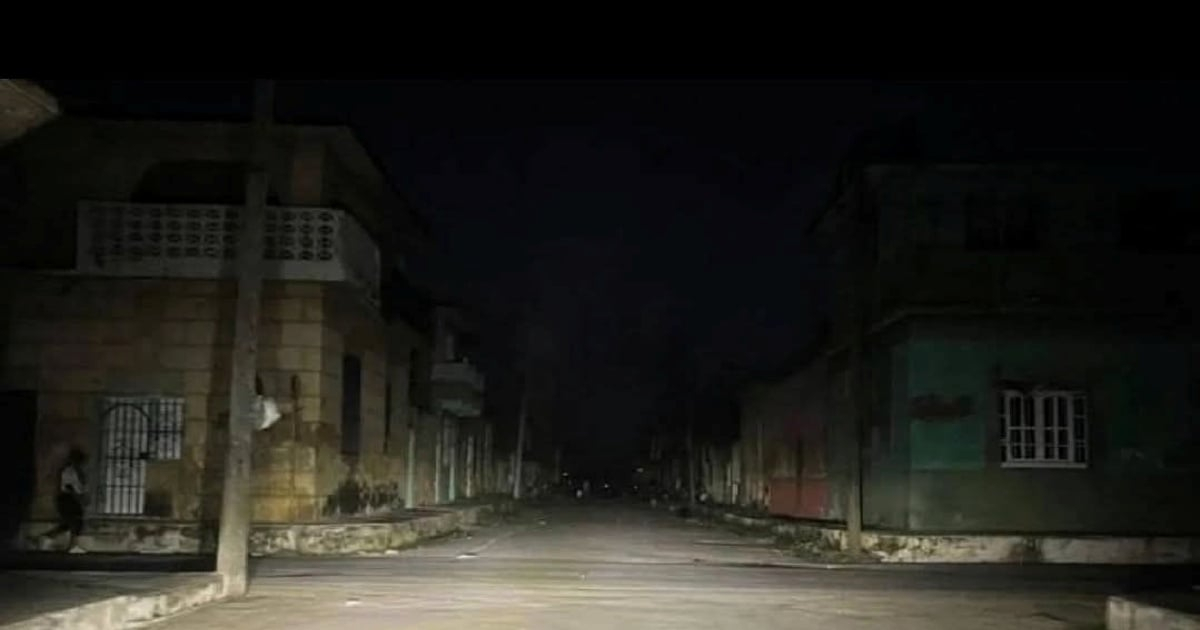
The Santiago de Cuba Electric Company announced a new blackout schedule in which each residential block will receive only one or two power intervals per day, lasting approximately one to two hours, meaning that residents of Santiago will be without electricity for 22 hours or more each day.
The new organization, officially announced, divides the service into 9 blocks: eight correspond to controllable circuits with scheduled outages, while the ninth groups the circuits that supply vital centers —hospitals and water pumping stations— which will only be disconnected during peak hours when the conditions of the National Electric System (SEN) require it.
The entity attributes the crisis to "the fuel shortage, associated with the worsening of the economic, commercial, and financial blockade imposed by the United States Government, as well as the aging and breakdowns affecting several thermal generation units."
The situation described in the official statement is, in fact, worse than acknowledged.
Last Monday, the Electric Union reported a availability of only 995 MW against a demand of 3,050 MW, with a projected deficit of up to 2,085 MW during peak nighttime hours, exacerbated by the 15th breakdown of the year of the Antonio Guiteras thermoelectric plant.
On that same day, the maximum real impact of the system reached 1,882 MW at 9:50 PM.
The precariousness of the service in Santiago de Cuba is not new.
On May 31, Lester Salvador Cedeño, director of the provincial Electric Company, publicly admitted that "we can end up with less than two hours of service," acknowledging that in many cases they can only provide one hour and 30 minutes or one hour and 45 minutes per block.
In June, several neighborhoods in the city reported outages lasting 40 to 50 consecutive hours, which triggered protests in different parts of the province.
Residents of San Ricardo took to the streets last Sunday after several days without electricity, and the José Martí District experienced a protest last Friday with residents demanding electricity, food, and freedom.
The crisis has structural roots that date back at least to 2024. In October of that year, the Electric Company reported only three hours of electricity and 21 hours of blackout in several areas of the province; in November, it promised to ensure at least five hours daily, a promise it was unable to fulfill.
In April 2026, the UN the Cuban energy crisis as one with systemic humanitarian impact, affecting health, water, sanitation, food, education, transportation, and telecommunications.
The Electric Company warned that "the adherence to this schedule will depend on the daily behavior of the SEN, which means that adjustments may be made to the planned times and blocks," which in practice means that even the limited hours of power announced are not guaranteed.
Filed under: