
Related videos:
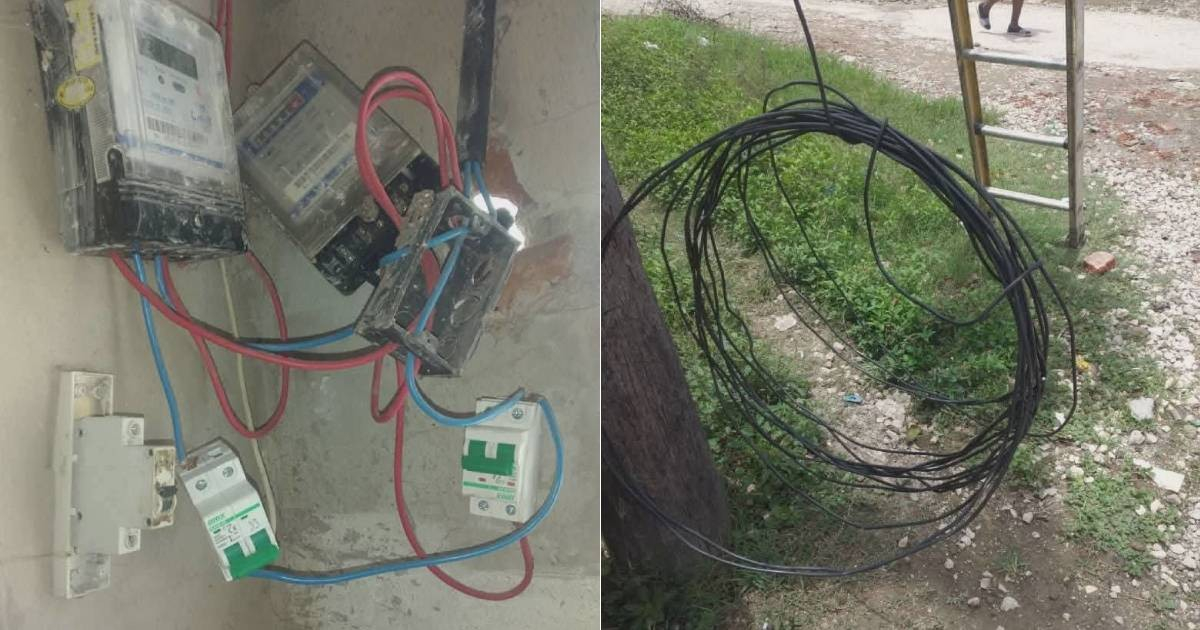
The Electric Company of Guantánamo reported on Monday the detection of several homes in the central and southern areas of the city that were illegally connected to the electrical system to benefit from service in prioritized circuits.
According to the entity's explanation through the Unión Eléctrica (UNE), the properties had been fraudulently connected to a double circuit near blackout-protected areas, a practice that allowed their occupants to access electricity without authorization while much of the province faces prolonged service outages.
Those responsible have been made available to the authorities, while investigations and inspections in the area continue.
The company stated that these connections cause overloads in the network and can lead to failures in transformers and other electrical equipment.
"This type of practice, in addition to being illegal, causes overloads, damage to transformers, and directly affects the electrical service of whole communities, including vital centers," the entity stated.
The report comes just hours after a similar operation carried out in Santiago de Cuba, where nearly 30 homes had been illegally connected to circuit 10, a line that supplies important hospital centers in the province.
According to Santiago authorities, the illegal connections caused irreversible damage to transformers located in the Trocha and Cristina area. During the operation, approximately 1,000 meters of illegally installed electrical connections were recovered.
The operations are taking place amid one of the most critical phases of the Cuban energy crisis.
In Guantánamo, the situation has been particularly severe over the past few weeks. On June 7, the UNE itself acknowledged that eight transformers remained damaged in various municipalities of the province, with no replacement equipment available for their repair. In places like Baracoa, Maisí, El Salvador, and Manuel Tames, residents reported interruptions of up to 20 consecutive hours.
Four days later, a malfunction in the 110-kilovolt line connecting Guantánamo to Santiago de Cuba left the entire province without electricity, causing blackouts that lasted more than 24 hours in some areas.
The crisis continues to worsen. This Monday, the UNE reported an availability of just 995 megawatts against a national demand of 3,050 MW, with a projected deficit exceeding 2,000 MW during peak hours.
This was compounded by a new outage of the Antonio Guiteras thermoelectric plant, the country's main generator, due to a leak in the boiler. This marks the fifteenth malfunction reported by the plant this year.
In this context, the operations against illegal connections also reflect an increasingly visible reality: while blackouts multiply and the electrical infrastructure deteriorates, some Cubans seek alternatives to escape the outages that characterize the daily lives of millions of families on the island.
Independent journalist Yosmany Mayeta Labrada questioned the underlying motives of these interventions and recalled that many official responses tend to emerge only when social unrest is already undeniable.
"The question that remains open is why so often these solutions only come into effect when silence is no longer an option," he wrote.
Filed under: