
Related videos:
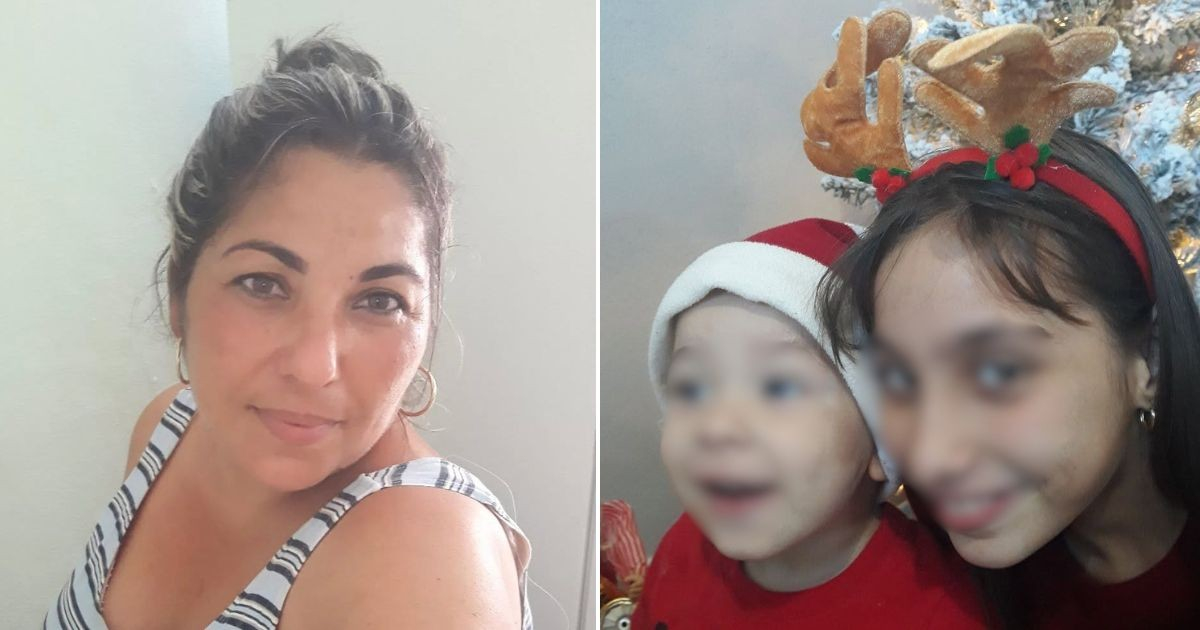
Yanet Bermúdez, mother of two children in Manacas, Santo Domingo municipality, Villa Clara, posted on Facebook a heartbreaking appeal to the Cuban government, in which she denounces that her eldest daughter, aged 10, suffers from type 1 diabetes and is at risk of death due to the accumulation of State failures: 20 days without water from the aqueduct, no insulin at the pharmacy, and no basic medical supplies.
"I have gone 20 days without the water service providing me with water. It's not that it isn't raining. It's that you are not supplying it. My daughter needs water so she doesn't die of hypoglycemia," wrote Bermúdez, addressing the director of the water service, the delegate, the president, and the public health officials in the area directly.
The situation you describe is a chain of simultaneous collapses.
The pharmacy refrigerator in Manacas has been broken for months, and no one is fixing it, making it impossible to store insulin in an area where temperatures exceed 35 degrees.
"Right now there is no insulin anywhere. If there were, the heat of over 35 degrees would destroy it before I could get it home," the mother warned.
This is compounded by the complete lack of monitoring supplies.
"I don't have biosensors to measure their glucose levels. I don't have cotton. I don't have alcohol. I guess whether my daughter is going to live or die," wrote Bermúdez.
The family also does not have their own refrigerator to keep the milk that the doctors prescribed for episodes of hypoglycemia, nor have they received the chicken, fish, or plantains from the prescribed medical diet.
Without transportation available to reach the hospital, treatments are delayed and complications progress.
The case is not an isolated one. In June 2026, Lian Alejandro García Fernández, a three-year-old boy with type 1 diabetes in Matanzas, had gone more than 30 days without receiving the milk prescribed in his medical diet, confirming that this pattern is repeating in various provinces.
It is estimated that around one thousand children in Cuba suffer from type 1 diabetes and depend on insulin to survive.
In Villa Clara, the water crisis is structural. In May 2026, the Cuban government acknowledged —referring to it as "dissatisfaction"— a crisis that left neighborhoods in Santa Clara without service for between 30 and 90 days, caused by the paralysis of the Minerva-Ochoíta system and a historic lack of investment in infrastructure.
In Manacas, citizen reports confirm simultaneous outages of water, electricity, and mobile signal.
At the national level, the OPS/OMS classified the health situation in Cuba as an "unprecedented crisis," with 56% of essential medicines in short supply and restrictions on 60% of the medication list. The Cuban Minister of Health acknowledged before the Parliament in July 2025 a "historically unprecedented structural crisis" in the system.
Bermúdez was direct in pointing out responsibilities: "This is not a complaint. It is a warning. If my daughter dies today, it will be with your names on my lips. You are to blame. The pharmacy without a refrigerator. The water supply without water. The insulin that doesn’t arrive. The supplies that are not delivered."
His message concluded with a question that encapsulates the desperation of thousands of Cuban families in the same situation: "Gentlemen of the Cuban government: I am not asking for luxuries. I ask for water. I ask for cold for the insulin. I ask for biosensors. I ask that you stop killing my daughter with your indifference. How many more deaths do you need to take action?"
Filed under: