
Related videos:
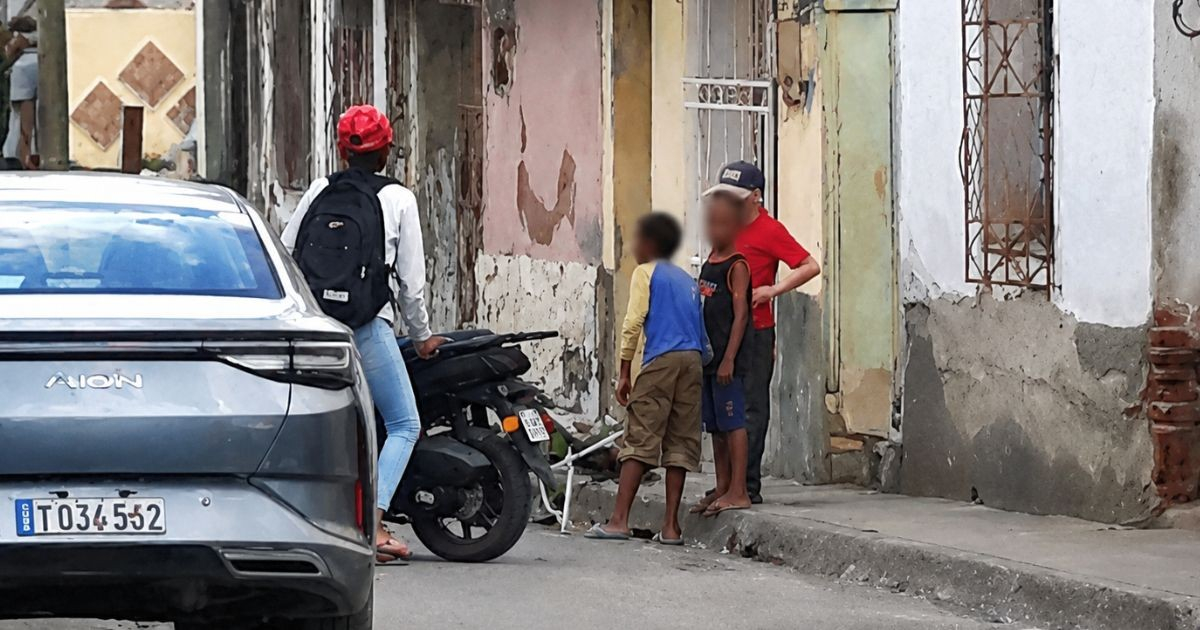
A photograph taken on the streets of Las Tunas sparked a debate on social media this Tuesday, showing two children between the ages of eight and ten pushing a wheelbarrow loaded with bananas, dressed in tattered clothes and in precarious conditions.
The image was posted in the Facebook group "What you need in Las Tunas" by a user identified as Luis Vargas.
The author of the post described the scene with indignation: “Children between 8 and 10 years old often seen on the streets of Las Tunas with a stroller selling bananas. Dirty and in torn clothing.”
Vargas also reported a second case: a similar minor who asks for money at all hours near the Pediatric hospital in the city and who, he suspects, does not attend school.
The point that sparked the greatest controversy was the stance of the whistleblower himself. Vargas argued that the Cuban regime considers minors as a "priority 1" and placed the responsibility on the families, deeming it "unthinkable" that parents would allow such a situation.
The commentators' reaction was immediate and largely opposed to that interpretation. "You don’t know the situation of those children. And if you had children in your care, you would know that for the government, children are not a priority, and they certainly don’t take care of or attend to them," responded one of the users.
Others pointed out the specific material conditions that drive minors to work.
"There are times when parents work all day just to afford a single meal for the family. As a result, the children themselves beg their parents to let them do something so they can at least buy a glass of milk or a pair of shoes," wrote another commenter.
Several users noted that the state-subsidized milk is cut off after seven years, and that a pair of "the most basic" shoes costs 5,000 Cuban pesos, while a pair of second-hand pants hovers around 2,000 pesos, figures that are unattainable with state salaries.
"Children are the number one priority, since when? They take away the milk when they turn 7, many have nothing to eat for breakfast," questioned another internet user.
A commentator who claimed to know the minors confirmed that they are two brothers and a cousin who roam the neighborhood daily: "They lead a hard, tough life. I've even given them clothes and sandals. It's a shame, but they struggle to be able to eat."
The controversy arises just four days after the Young Communist Union (UJC) publicly denied the existence of child labor in Cuba "thanks to the Revolution," a statement that also sparked widespread backlash on social media.
The contrast between that official discourse and the images from Las Tunas encapsulates the debate that is being repeated across the island.
The case is not isolated. On June 10, a ten-year-old Cuban boy went out to sell coquitos to support his mother and three siblings.
In April 2026, another minor was selling polvorones in a park in Santiago de Cuba. In May, a 14-year-old teenager was looking for a job to help his family.
Miguel Díaz-Canel acknowledged in April 2025 the existence of begging and informal work involving children in Cuba, while the prime minister recognized that more than 310,000 people live in poverty or social vulnerability that same year.
Las Tunas, one of the provinces hardest hit by the crisis, has lost 11.5% of its population in eight years, with 53,510 fewer inhabitants just between 2022 and 2024.
Since 2025, Cuba has a law that explicitly prohibits child labor and the begging of minors. However, the reality on its streets tells a different story.
Filed under: