
Related videos:
The Cuban regime responded harshly this Thursday to the sanctions announced by Marco Rubio against CUPET, the state company that controls the import, refining, and distribution of fuels on the island, with high-ranking officials labeling the measure as "collective punishment" and accusing the Secretary of State of lying.
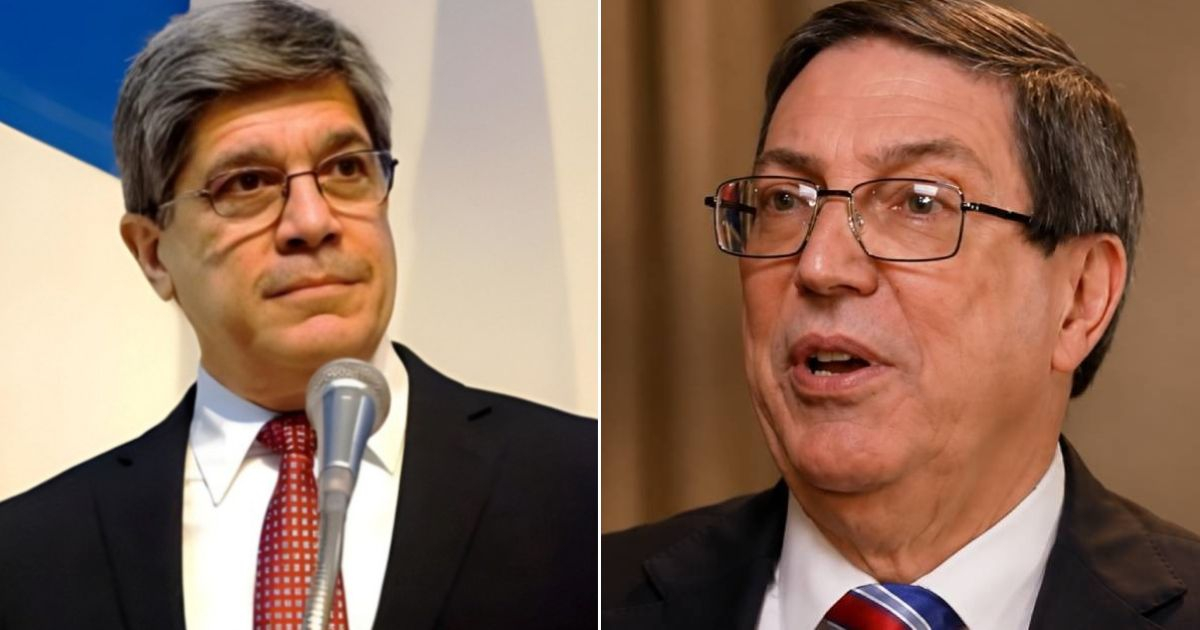
Carlos Fernández de Cossío, Deputy Minister of Foreign Affairs, was the first to react on his X account: "The leaders of the U.S. regime adopt a shameful attitude by imposing collective punishment on Cuba. They feel the need to lie, as the Secretary of State does, to come up with absurd excuses that justify denying an entire nation access to fuel."
Minutes later, Chancellor Bruno Rodríguez Parrilla escalated the tone of the attacks against Rubio, attributing the sanctions to "conquest ambitions, presidential aspirations, and vengeful feelings of the elitist clique that propelled his political career."
Rodríguez Parrilla added that Rubio doesn't resort to "excuses prepared by his State Department, but rather to usual and vulgar lies, among the most aggressive, uncultured, and furious of Cuba's enemies."
In the comments on Cossío's tweet, diplomat Johana Tablada de la Torre joined in the criticism: "It is absolutely shameful to witness the impunity with which the Secretary of State lies to everyone while abusing the people of Cuba to try to subjugate them and drag our countries into an unnecessary confrontation for the purposes of domination and plunder."
Rubio, for his part, justified the action by stating that the regime has weaponized energy as a tool of repression: "The regime has stolen and hoarded the available fuel, using it for the Castro family's private jet, for the security forces deployed to repress the Cuban people, to keep empty tourist hotels illuminated, and to transport people on buses for fake protests," while Cubans "suffered blackouts and waited weeks to fill their tanks."
The sanctions against CUPET come at the worst energy moment Cuba has experienced in decades.
Since January 2026, the island lost its Venezuelan supply following the capture of Nicolás Maduro and the Mexican, due to fears of U.S. tariffs, which led to an electrical deficit reaching a record of 2,153 MW on May 13, resulting in blackouts of up to 22 hours a day in Havana.
This is the second major action under Executive Order 14404 in less than five weeks, following the sanctions against GAESA on May 7, the military conglomerate that controls approximately 70% of the Cuban economy.
The measure also effectively cancels the agreement that Vanguard Energy, a company based in Coral Gables, had signed with a Cuban importing agency to send more than 250,000 barrels of gasoline and diesel per trip, described as the largest shipment of American fuel to Cuba since the Eisenhower era.
"The president Trump desires a new future for the Cuban people with greater freedom and economic and political opportunities," Rubio stated while announcing the sanctions. "Until then, we will continue to undermine the communist regime's ability to use its energy trade to promote its corrupt agenda and violently suppress the Cuban people."
Filed under: