
Related videos:
Brazilian security forces rescued 189 Cubans in the state of Roraima, in northern Brazil, within a single week, and arrested at least seven suspected "coyotes" for facilitating the illegal entry of immigrants into the country from Guyana, according to reports from the Federal Police.
The rescues took place between June 8 and June 14 along the BR-401, a road that connects Bonfim, a border municipality with Guyana, to Boa Vista, the capital of the state, and at the Macuxis bridge, which links the municipality of Cantá with that city.
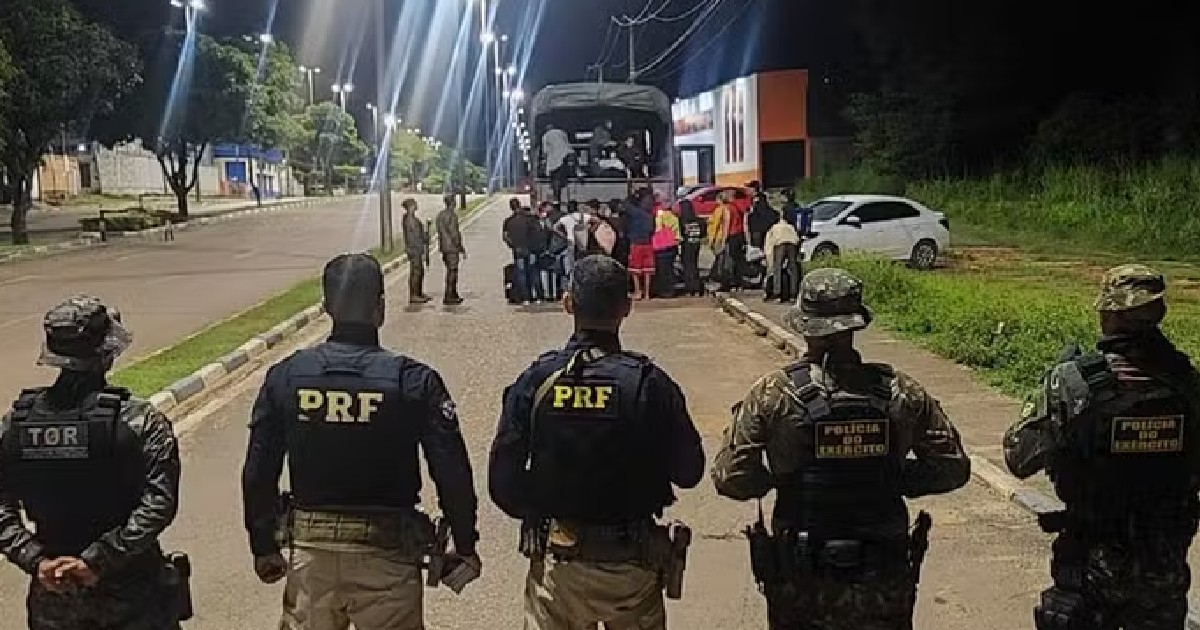
The largest operation took place on Monday, June 8, when the Federal Highway Police (PRF) rescued 108 Cubans in a single day on the BR-401, the largest rescue recorded in a single day in the state of Roraima.
Among the migrants found that day were elderly individuals, a pregnant woman, and at least a dozen children under the age of 10, some of whom had respiratory issues. Many had gone several days without food.
The rescues on June 8, part of the Safe Route Operation, occurred at three different times: first, three vehicles with 39 Cubans in overcrowded conditions were intercepted; then, a driver transporting eight more people was arrested; and finally, following a suspicious vehicle led agents to a house in Cantá where they found 61 Cubans cramped together. Five human traffickers were arrested.
According to the PRF, migrants paid up to 2,800 dollars to traffickers for transportation to Brazil.
Agent Isaías Magalhães explained the logic of the criminal network: "Many of these individuals do not have Boa Vista as their final destination. The capital serves only as a transit point. This criminal network charges for the entire package, from the departure from Cuba to the final destination within Brazil."
In the early hours of June 11, 43 more Cubans were rescued while crossing on foot the Macuxis bridge in Cantá, heading towards the capital, Boa Vista. Initially, the Military Police intercepted 35 individuals on the road, and hours later, the PRF found eight more in the same location. According to authorities, the migrants exhibited signs of vulnerability, indicating they may have been taken in by traffickers.
“I had gone five days without sleeping and without eating anything, just a little bit of water, some crackers, to be able to get here, walking, through puddles, rivers, wherever I could until I got here,” shared a Cuban interviewed by the television network O Globo after one of the rescues.
On the same day, June 11, the Federal Police of Brazil launched the Operation Northern Connection, which included the execution of four search and seizure warrants—three in Boa Vista and one in Bonfim—against a group that facilitated the illegal entry of Cubans for payment. The institution stated that those under investigation operated "in a structured and recurrent manner, in violation of Brazilian immigration laws."
The most commonly used route by Cuban migrants to reach Brazil starts with a flight from the island to Georgetown, the capital of Guyana — the only country in the region that does not require a visa for Cubans — then continues by land to the city of Lethem; afterward, it involves the clandestine crossing of the Tacutu River into the state of Roraima, from where the immigrants continue their journey by road to locations in southern Brazil, such as Curitiba.
This trend is part of an accelerating movement: in the first quarter of 2026, more than 13,000 Cubans applied for asylum in Brazil, accounting for 58% of all applications in the country during that period, with Roraima receiving 57% of those requests.
In 2025, asylum applications from Cubans in Brazil reached 41,900, an 88% increase compared to the previous year, driven by the economic collapse on the island and the closure of migration routes to the United States. Brazil currently hosts about 84,000 Cubans, although for many it serves as a transit country: over 11,000 crossed into Uruguay between January and October 2025, averaging thirty per day.
Filed under: