
Related videos:
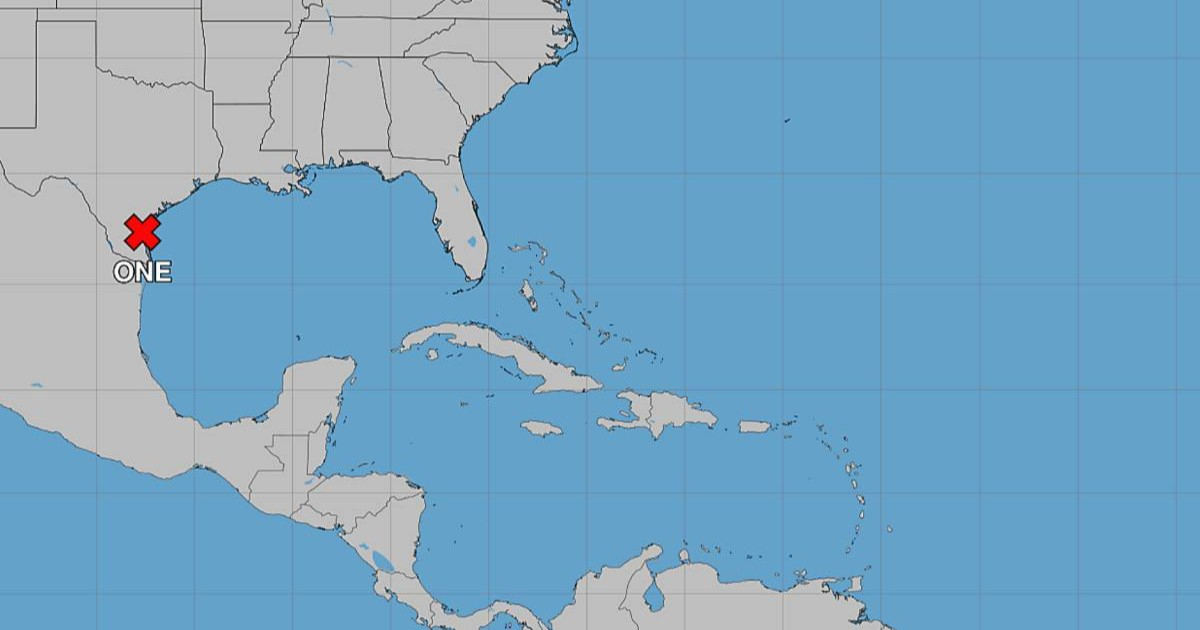
The National Hurricane Center (NHC) of the United States issued its first official notices of the 2026 Atlantic hurricane season on Tuesday for the Potential Tropical Cyclone One, a system that is already causing dangerous flash flooding in parts of Texas and Louisiana and could make landfall in the far eastern part of Texas or southwestern Louisiana early Thursday morning.
At 4:00 PM Central Time, the system was located at coordinates 27.3°N 97.6°W, approximately 105 km southwest of Corpus Christi, Texas, moving northeast at just six miles per hour, with maximum sustained winds of 30 mph and a minimum pressure of 1,005 mb.
The NHC issued a Tropical Storm Warning for the coast of Louisiana between Sabine Pass and Morgan City, and a Tropical Storm Watch from Sargent, Texas, to Sabine Pass.
The main threat of the system is not the winds but the torrential rains. The NHC warned of accumulations between five and ten inches of rain, with isolated totals nearing 20 inches, capable of triggering dangerous flash and urban flooding from the high coast of Texas to much of central and southern Louisiana, Mississippi, and Alabama over several days.
"We are facing several days of dangerous and potentially deadly flash flooding along portions of the Gulf Coast, from the mid and upper regions of Texas to much of central Louisiana, central and southern Mississippi, extending into central Alabama over the coming days," the NHC warned in a video update released this Tuesday.
The predicted storm surge between Port Bolivar, Texas, and Morgan City, Louisiana, could reach between two and four feet above ground level if the peak coincides with high tide.
The NHC ruled out that the system will reach hurricane intensity before making landfall, as it will only have about 24 hours over open waters of the Gulf.
The meteorological agency also issued a specific warning about nighttime risks: "Remember that most deaths from flash floods occur in vehicles at night. Enable wireless emergency alerts on your smartphone, have a NOAA weather radio, and please stay safe."
The Institute of Meteorology of Cuba (INSMET) confirmed this Tuesday that the system does not pose a danger to the island. According to the Cuban agency, the area of low pressure is located very close to the northeast coast of Mexico and the southern shoreline of Texas, with strong storm centers that have already caused heavy rainfall from northeastern Mexico to southwestern Louisiana.
INSMET indicated that in the next 12 to 24 hours, the system will move towards the northwestern waters of the Gulf, where it will encounter "slightly favorable ocean-atmospheric conditions for its development and formation, potentially becoming a tropical cyclone during the afternoon today or in the early hours of Wednesday."
This is the first official notice of the 2026 Atlantic hurricane season, which began on June 1st. The NOAA forecasted in May a season below normal, with between eight and 14 named storms, three to six hurricanes, and one to three major hurricanes, with a 55% probability of below-average activity.
The designation "Potential Tropical Cyclone" is a category that the NHC uses when a system is not yet organized as a tropical cyclone but is already generating coastal hazards that warrant the issuance of alerts. Jefferson Parish in Louisiana has issued a flood warning in effect until Friday morning.
Filed under: