
Related videos:
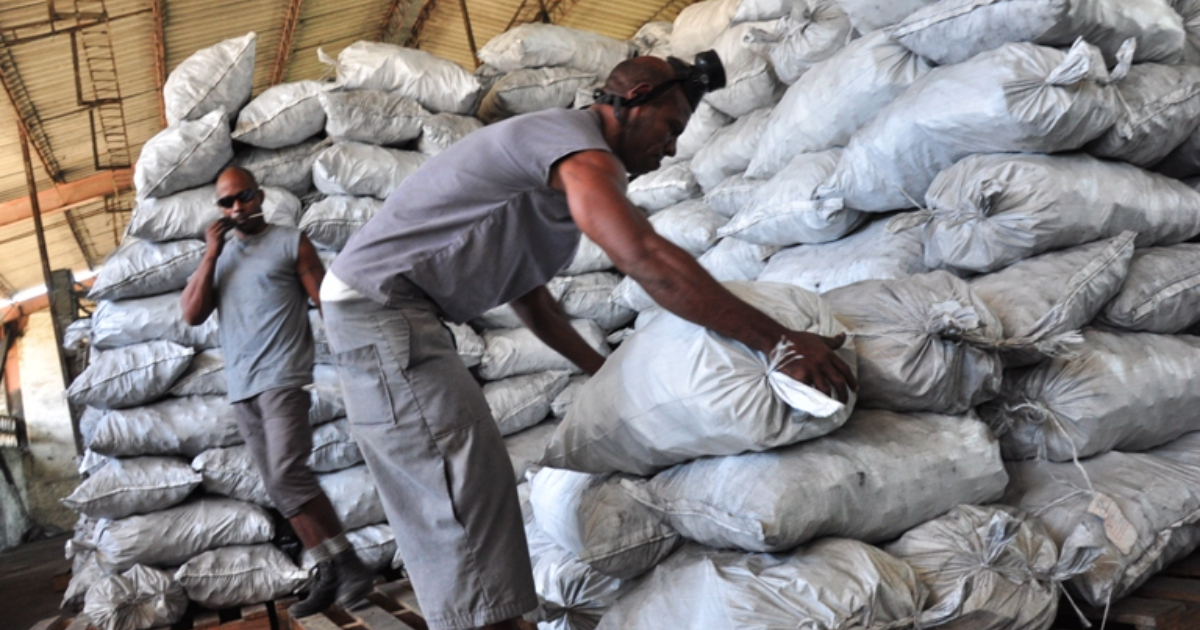
The Cuban writer and researcher Sayli Alba Álvarez published a text titled "Stoicism" on her Facebook profile this Wednesday, in which she denounces the absurdity of working in Cuba when the salary does not exceed 5,000 pesos per month, while a bag of charcoal costs 4,200 pesos and a bottle of oil costs 1,800 pesos.
“What's the logic and point of working if my salary doesn't reach 5,000 pesos? Where do I find the motivation to go to work and then not get paid?” wrote the author, a resident of Sancti Spíritus, in a post that is widely circulating on social media.
Alba describes an economic trap affecting thousands of state employees: the bank holds the funds on the card, does not allow cash withdrawals, and private businesses reject transfers.
"The bank keeps our money, they pay us a virtual salary on a card, and no one accepts payments by transfer, nor does the bank allow us to withdraw the money, while business owners mock the laws and inspectors, and we are caught in the middle," he pointed out.
This problem is systemic: the regime promoted banking to reduce the use of cash, but the informal market — where essential products are obtained — mostly operates in cash, leaving Cubans without real access to their money and forcing private businesses to impose surcharges or remove payment codes.
The writer also recounts that she had been without electricity for more than 40 hours at the time of writing her post, taking advantage of a brief window of internet connectivity.
"I have been without electricity for over 40 hours and I don’t know what miracle of the spirit has happened, but I have had connection for half an hour now," he wrote.
Alba also criticized ETECSA, the state telecommunications company, which increased its data rates and limited top-ups in Cuban pesos without this resulting in any improvement in service.
"ETECSA raised prices for the people, limited the purchase of data, claiming it was to improve technology, but we have no connection, no Internet, and no communication through landlines or any other means," he reported.
This criticism adds to the one made by actor Jorge Toirac in early June when he publicly asked where the collected money from that rate increase was, given that the service had not improved.
The writer directs her criticism specifically at Cuban professionals, whom she describes as the most affected by the crisis.
"The Cuban State was never able to solve the problem of professionals in Cuba; those of us who receive the least resources of all kinds, those of us with the most miserable salaries, are the ones who studied," he stated.
Alba, who holds the National Award for Cultural Research (2019) and has an academic career at the University of Sancti Spíritus, is not an anonymous voice: her denunciation comes from an intellectual with published work and recognition within the Cuban cultural system itself.
“The State lost all connection with the economy and production and left us in the hands of individuals, who became capitalists through the mode of production,” he concluded, before closing with a literary image that summarizes his stance: “I said I wouldn’t write anything about this sad reality, but I have a voice and although it doesn’t change anything, my discourse is like the man who cast stars into the sea...”
Filed under: