
Related videos:
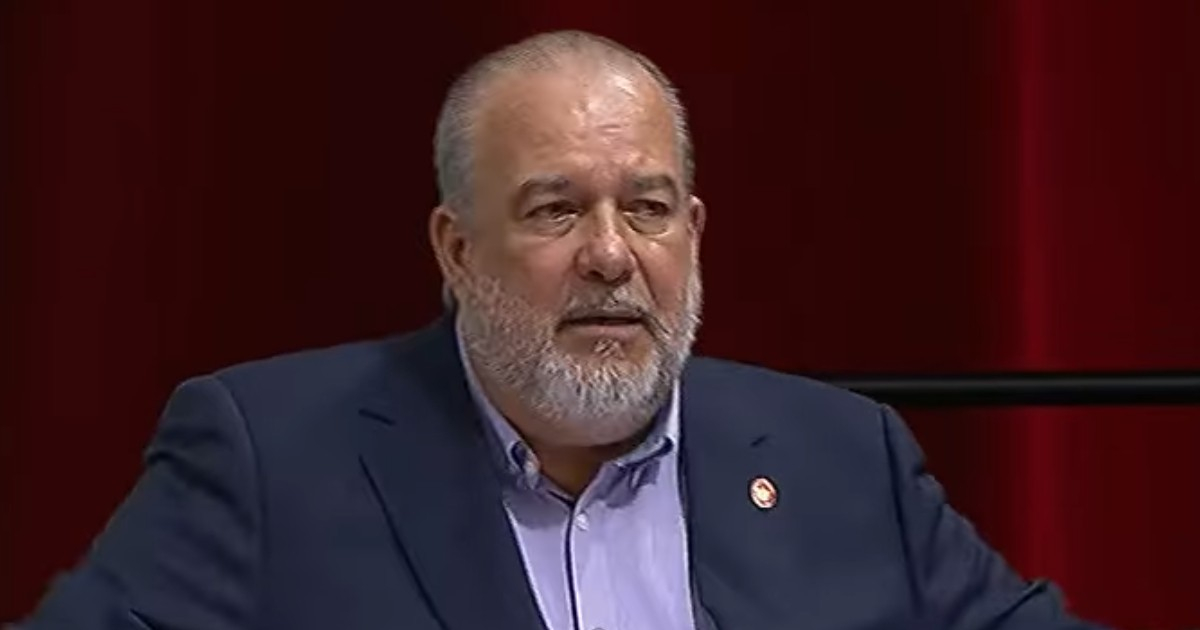
The announcement by Prime Minister Manuel Marrero regarding the opening of Cuba to foreign fast food franchises triggered a flood of comments on social media that, rather than enthusiasm, reflect incredulity, irony, and a question that is repeated like a refrain: “Where is the blockade?”
On Thursday, Marrero announced that the regime will allow the creation of national chains of restaurants, cafés, and burger joints, and that it will invite international brands to set up in the island. "A small or medium-sized enterprise, someone, a foreign investment that wants to establish a network of restaurants, cafés, burger joints, or any service will be permitted, in order to expand services to the population," the official declared. This measure is part of a package of 176 economic measures approved by the Extraordinary Plenary of the Central Committee of the Communist Party of Cuba.
The civic reaction on Facebook was immediate and powerful. The thread of comments turned into a gauge of the accumulated distrust over decades.
The most recurring theme was the contradiction with the official discourse about the embargo. “Now you can have multiple companies, open private chains of restaurants and stores. So all of that couldn’t be done because of the ‘BLOCKADE’? Whose was it?” wrote one user. Another was more direct: “So whose touted blockade was it?” A third summarized the sentiment with a phrase that circulated widely: “Until Donald Trump finally lifted the blockade and restrictions... after more than 70 years inciting hatred only to end up admitting that the blockade was always internal.”
The second major topic was purchasing power. The Cuban minimum wage is 3,210 pesos per month, equivalent to about 4.68 dollars, while the basic basket is estimated to be over 50,000 pesos. "With my salary of 2,960 CUP, I will be able to afford the luxury of eating a McDonald's with embarrassment when that moment arrives," wrote a Cuban. Another asked bluntly, "Will retirees be able to afford a McDonald's, or a bucket of chicken from KFC? Will the children of accountants, engineers, and doctors be able to enjoy a Happy Meal?"
The fear of expropriation also dominated the debate. "If I can imagine a KFC, etc... and after six months everything is up and running and producing, the revolutionary socialists come and say, 'We're expropriating this; it now goes to the government,'" a commentator predicted, recalling the history of confiscations that began in 1959. Another summarized the historical contradiction: "What they should have left alone since '59 (THE PRIVATE) they took away, only to try to put it back now."
The lack of basic infrastructure generated another wave of irony. “With electricity? How do they cook hamburgers without electricity? How funny!” wrote a user, referring to the power outages that exceed 20 hours a day in some Cuban provinces. Another commented: “No business can operate in a country where there is electricity for only two hours.”
There were also voices that found a positive side, albeit a nuanced one. “At least the chains will need to hire people, and those Cubans will see some real money,” noted a commentator. But even that optimism was accompanied by doubts about what currency salaries would be paid in, a question that was repeated dozens of times without an official answer.
Before this announcement, no foreign fast food franchise officially operated in Cuba. What existed were private businesses that mimicked international brands with adapted names, such as "Starcafé" or "Burger Queen," opened in Havana in 2023 and 2024 respectively. Miguel Díaz-Canel himself acknowledged this week that "there are obstacles that do not come from outside or from blockades. There is slowness, bureaucracy, rules that hinder those who want to produce, and decisions that we have postponed," an admission that Cubans on social media did not let go without comment.
Filed under: