
Related videos:
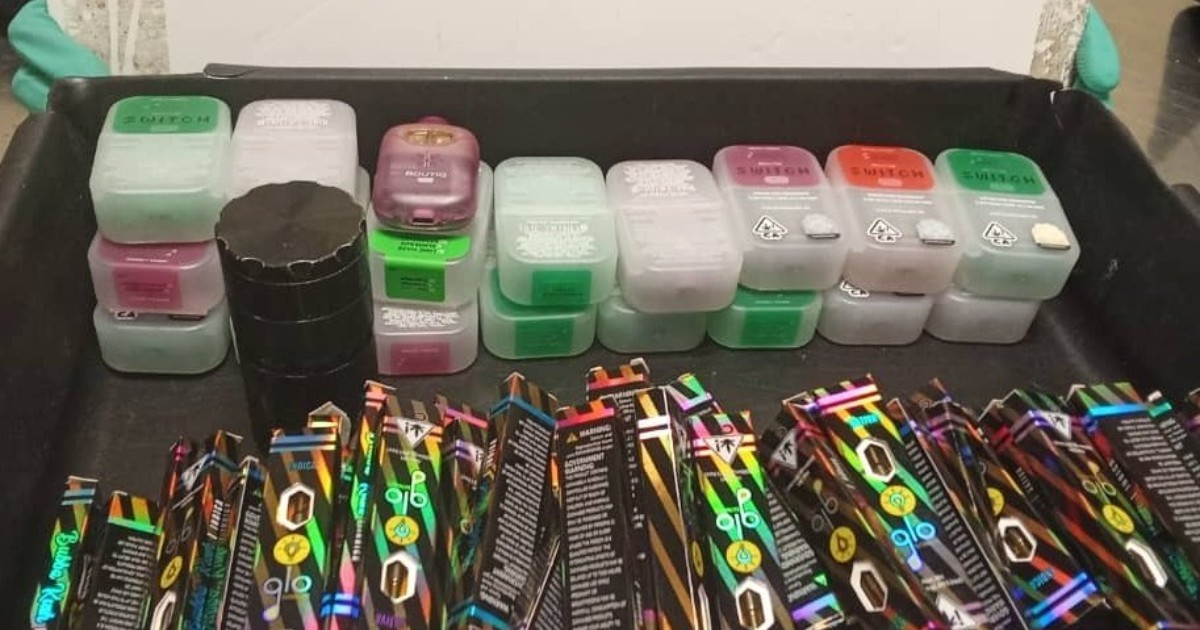
The Cuban Customs intercepted 86 products containing marijuana on Friday at the José Martí International Airport in Havana: 68 electronic cigarettes filled with the drug's extract and 18 cigars with the same substance, all originating from the United States.
The discovery was reported by Wiliam Pérez González, Deputy Chief of the General Customs of the Republic, through his official account on X: "68 electronic cigarettes with marijuana extract and 18 cigars containing the same DRUG were detected at Havana Airport from the USA. The passenger was processed for Drug Trafficking in a joint effort by #AduanadeCuba and the anti-drug agency #FronteraSegura."
The images published by the official show vaping devices from brands like RAZ Switch, Dabwoods, and glo, with visible THC warnings on the packaging, as well as a grinder with plant material, a vial with reddish liquid —possibly concentrated extract— and a detection dog inspecting the passenger's luggage.
These products are legally marketed in U.S. states where cannabis is regulated, such as California, whose labels appear on the confiscated items.
However, its introduction to Cuba has been strictly prohibited since the decree of July 21, 2020, which banned the import, possession, and transport of marijuana and its derivatives, including extracts in vaporizers.
The operation was carried out as part of the Safe Border program, a joint initiative between the General Customs of the Republic and the anti-drug agency of the Ministry of the Interior.
In 2024, that program resulted in the arrest of 94 individuals and the seizure of over 90 kilograms of drugs just at airports, according to the state media Juventud Rebelde.
This is not the first time that electronic cigarettes have been used as a method of concealment.
In July 2025, Customs had already detected drugs hidden in gummies and vapes, describing it at the time as an "unconventional" method. Other recent cases included cocaine hidden in cans of tuna, methamphetamine in baseball bats, methamphetamine in a package of rice, and narcotics transported inside a passenger's body.
The route between the U.S. and Cuba has been identified as the main entry point for drugs into the country.
In 2025, authorities thwarted 31 air trafficking operations and seized 27 kilograms of substances from 11 countries, with the U.S. being the main source.
Under the Cuban Penal Code, drug trafficking can result in penalties ranging from four to 30 years of imprisonment, life imprisonment, or even the death penalty in aggravated cases.
Filed under: