
Related videos:
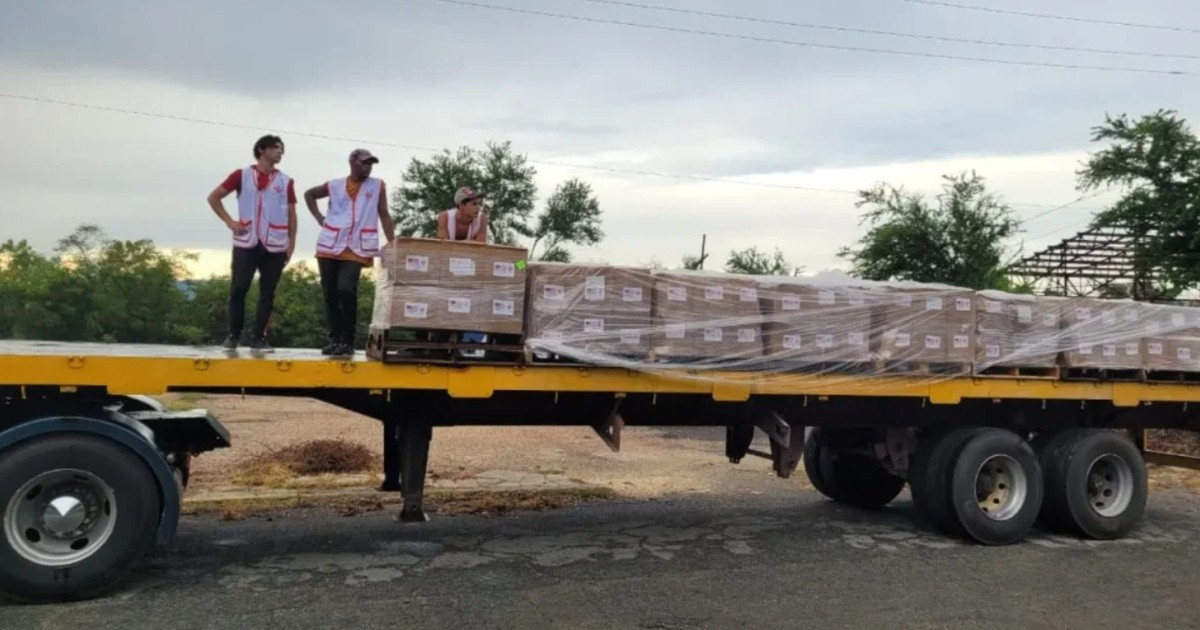
Months after Hurricane Melissa devastated eastern Cuba, humanitarian aid sent by the United States reaches the most remote communities on the island in the only possible way: in ox-drawn carts, due to the chronic fuel shortage that paralyzes any other means of transportation. This is documented in a report by AFP published by France24 from the hamlet of Hongolosongo, in the province of Santiago de Cuba.
That small town with just 130 inhabitants, located near the area of El Cobre, is one of the distribution points for Cáritas Cuba, the Catholic NGO that acts as an intermediary between Washington and those affected. Washington chose to channel all its assistance through this organization and other independent NGOs, refusing to deliver funds directly to the regime.
The packages distributed by Cáritas contain rice, beans, oil, canned goods, hygiene products, and chlorine tablets for purifying water. In Hongolosongo, fewer than half of the households are connected to the electrical grid, and only a minority have access to running water. Many families have yet to repair their roofs, eight months after the cyclone.
One of the beneficiaries is Teodardo Debardet, who returns to his wooden house on a modified bicycle that serves as a wheelchair. Amputated from both legs due to a workplace accident and with only two fingers on each hand because of an illness, he lost his roof and bathroom when Melissa struck the area with winds of 195 km/h in October 2025. "I am very grateful," he states.
The head of Cáritas in El Cobre, Katia Simón, describes the logistical difficulties her team encounters each time they need to reach these isolated communities: "It becomes a bit challenging because we have to find transportation, secure fuel, and see who can take us there." When gasoline and diesel are in short supply —which happens frequently— the goods are transported by ox-drawn carts.
Despite the conditions, the aid is welcomed with relief. "We receive this help very well, no matter where it comes from... if it’s from the people of the United States, that’s fine," says 63-year-old Osmany Vedey. Cáritas accompanies each delivery with medical consultations, hairdressing sessions, and recreational activities for the children.
Since the U.S. initially allocated 3 million dollars after the passage of Melissa, the aid has grown to a total of 9 million dollars, of which Caritas had utilized 82% by May 8, 2026, benefiting approximately 8,800 families in five eastern provinces.
In May 2026, the Department of State additionally offered 100 million dollars for Cuba: 60 million channeled through the Catholic Church and 40 million by other independent NGOs. The regime stated it was "reviewing" the offer without confirming its acceptance, and Foreign Minister Bruno Rodríguez went so far as to deny having formally received the proposal, describing it as a "tale."
Díaz-Canel, for his part, has emphasized that lifting the U.S. embargo, in place since 1962, would be "easier and more efficient" than any shipment of humanitarian aid. However, last May, he principally agreed to receive it, citing fuels, food, and medicine as priorities.
Filed under: