
Related videos:
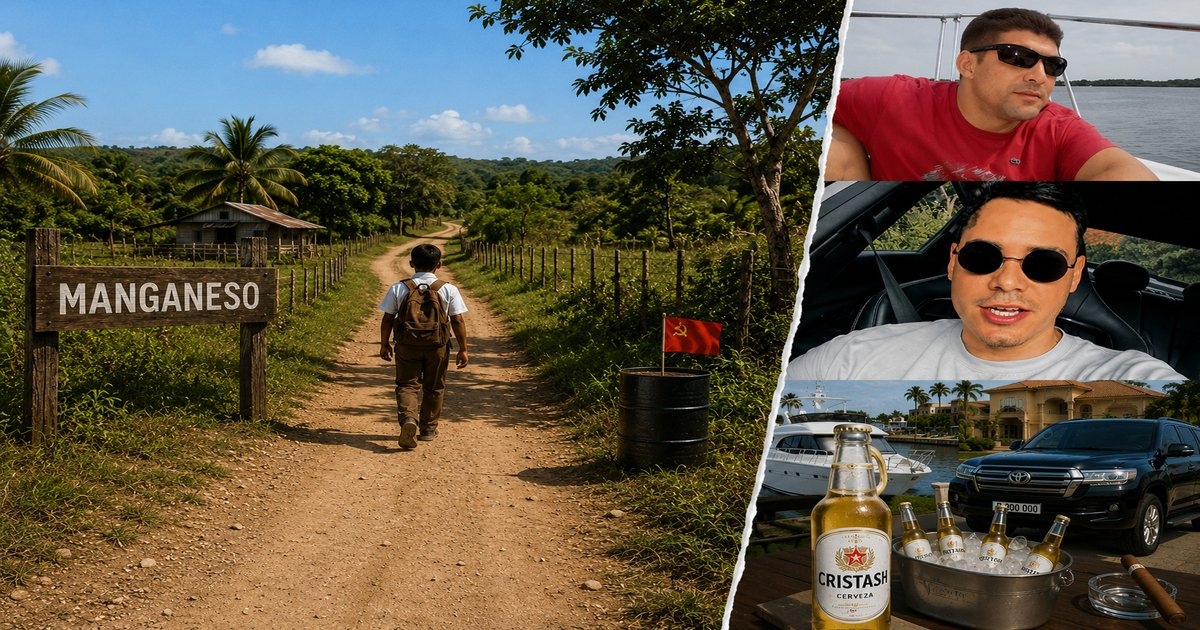
I was born in a rural area called Manganeso, about fourteen kilometers north of Palma Soriano, in the province of Santiago de Cuba. The Máximo Gómez basic secondary school in Palmarito de Cauto was four and a half kilometers from my home. In the eighties, I often walked that route back and forth because the transportation just wouldn't arrive on time or would fail altogether. And this happened when Cuba was enjoying the massive Soviet subsidy: by the mid-eighties, it was receiving around 13 million tons of oil and its derivatives annually. So, riding a kilometer and a half today to attend school is not a big deal, unless you compare it with the privileges of the children of the communist leaders, for whom there is no "blockade" of any kind.
In the 1990s, with the start of the so-called Special Period following the end of that subsidy, walking four, five, or more kilometers became the routine for most students in my region. This was also true in many other rural areas of the country. That is why I have just read with concern the recent article in The New York Times titled "The U.S. Blockade on Cuba Forces Children to Miss School," regarding the impact that the current fuel shortage is having on Cuban schools.
The report correctly describes children and teachers without transportation, reduced schedules, closed boarding schools, power outages, and paralyzed universities. The U.S. oil pressure exacerbates a real calamity. However, it is a mistake to present this pressure as the fundamental explanation for the educational ruin. It may be the accelerator of the crisis to address the issue once and for all, but it is not its root cause.
Since 1961, the communist state has monopolized education. My parents, like all Cuban parents, were never able to choose the education they wanted for me: there was no diversity of schools, no independent teaching, and no freedom of curriculum. In the classrooms, the goal was not just to teach how to read, calculate, or think: it was to shape political obedience. Marxist-Leninist ideological training, the cult of power, and the fear of dissent invaded the school. When I left for secondary school, my mother was very frightened, thinking about what problems I would face in the classroom for expressing what could not be said in public.
I studied in a hostile environment. A critical opinion could lead to harassment, reprisals, and the fear of ending up in a juvenile correction facility. For those who dissent openly and persistently, the path to university is closed off by records, ideological discrimination, and expulsions. In school, the children of dissidents were, and continue to be, easily targeted and subjected to scrutiny and strictness that are not applied with the same severity to other students.
The experiment of the "schools in the countryside" revealed another side of that social engineering: adolescents separated from their families, forced to balance studies with agricultural work, and subjected to constant political control. In too many cases, the distance from parents, lack of supervision, and impunity deteriorated coexistence: abuses, corruption, early pregnancies, and a broken moral. It was not an experience worthy of being presented as an educational model.
Cuba launched a literacy campaign and expanded access to education; denying this would be absurd. However, literacy does not equate to education in freedom, nor does a free university equate to a university open to independent thought. Moreover, quality had been deteriorating for decades due to meager salaries, the exodus of teachers, dogmatism, and neglect of resources.
The abundance of fuel may return some buses to the roads. It will not restore to parents their right to choose, nor to students their right to think and speak without fear. The true reconstruction of Cuban education requires putting an end to the state and political monopoly over the consciousness of our children.
The article from The New York Times says nothing about this, and it is more damaging to any educational system than the lack of fuel. This report reminds me of those editorials from this important media outlet, highly favorable to rapprochement with the Castro-communist regime and quite biased, published between October 12 and December 15, 2014.
Filed under:
Opinion article: Las declaraciones y opiniones expresadas en este artículo son de exclusiva responsabilidad de su autor y no representan necesariamente el punto de vista de CiberCuba.