
Related videos:
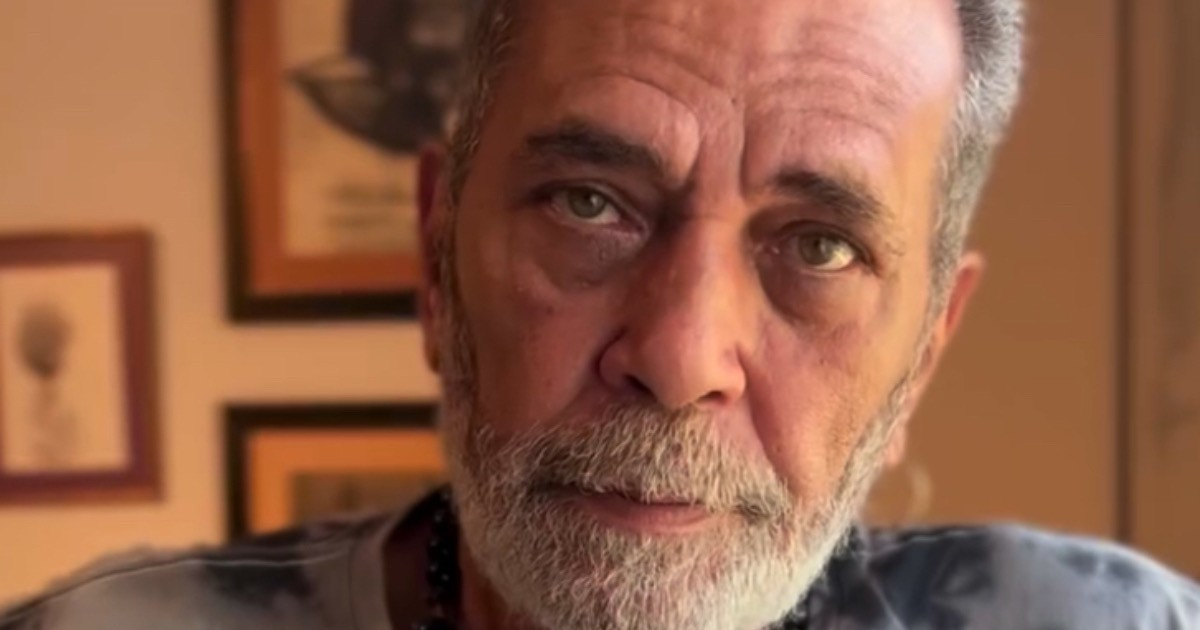
The Cuban actor Luis Alberto García directly confronted the regime this Monday with a straightforward question: do they have any plans to alleviate the electrical crisis during July and August, the months of highest heat and peak electricity demand on the island?
In a post on his Facebook profile, García wrote: "Let's see... guys from the measures: three hours of power are not enough to cool the food that one manages to get by sheer effort after being thawed for more than 20 hours of outages that pile up one after the other and that's why they are killing us! Do you have anything in mind to make our lives a bit less miserable for July and August? And for the rest of our days?"
The message summarizes months of frustration: three hours of electricity are insufficient to keep the food that Cubans obtain with great effort from spoiling, especially after power cuts lasting more than 20 consecutive hours leave it thawed and at risk of decay.
García, who lives in Cuba and experiences the conditions he denounces firsthand, has been documenting the crisis on his social media for weeks.
On May 25, he raised awareness about the impact of blackouts on children, with outages lasting up to 22 hours a day in Havana.
On June 1, he described a weekend of extreme blackouts with only two to four hours of electricity in 24 hours: “This weekend HAD NO END”, he wrote at the time.
On June 10, he accused the "masters" of having abandoned the people with the sole guidance of "screw you!", ironically paraphrasing the government's attitude towards the crisis.
Six days later, he joked about the Cuban thermoelectric plants, comparing them to passports with "multiple entry and exit visas" due to their constant breakdowns, and demanded that the leaders experience the same hardships as the people: hunger, blackouts, lack of medicines, and laughable salaries.
The situation described by García is supported by the data from the electrical system itself. The Unión Eléctrica reported in June a supply of only 960 MW compared to a demand of over 2,600 MW, with shortages during peak hours exceeding 2,000 MW.
More than 106 distributed generation plants were out of service due to a lack of fuel. In Santiago de Cuba, residents received only one or two hours of electricity per day. In areas like Playa, in Havana, power outages of up to 40 continuous hours were reported.
Government responses have been limited to reorganizing rationing blocks and prioritizing hospitals, without addressing the underlying issues. Independent experts estimate that restoring the Cuban electricity system would require between 8,000 and 10,000 million dollars, a figure that the regime neither possesses nor has any prospect of obtaining.
The outlook for the coming months is bleak: in July and August of previous years, the daily average without electricity neared 16 hours, precisely when extreme heat drives up consumption. García's question—“and for the rest of our days?”—captures a sense of despair that extends far beyond the summer.
Filed under: