
Related videos:
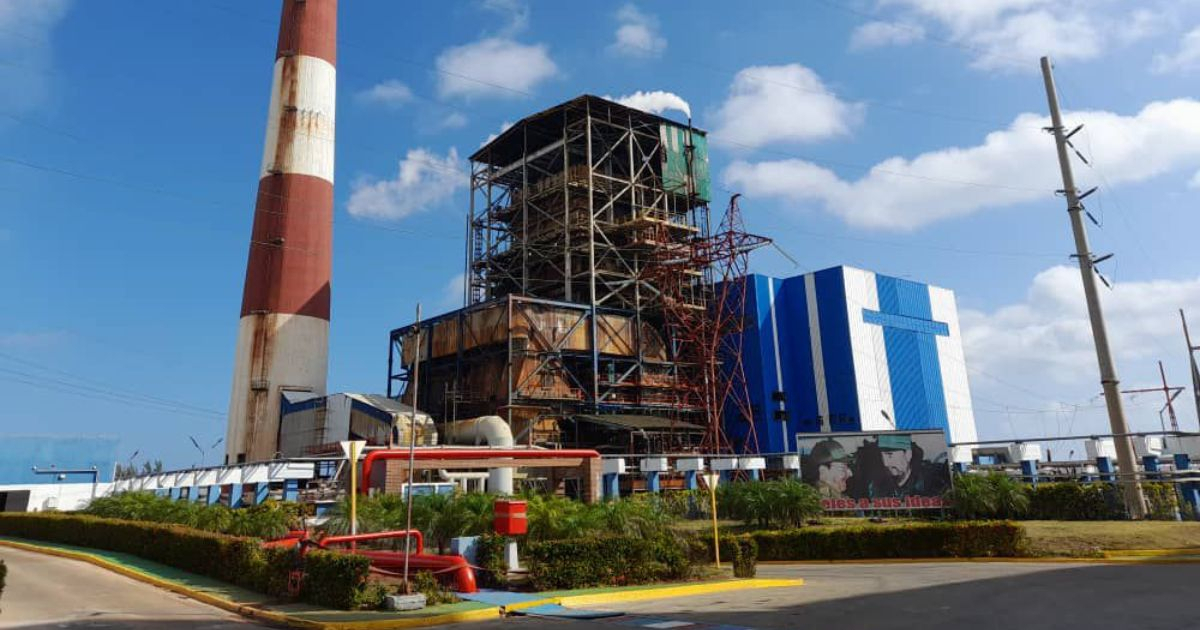
The Antonio Guiteras Thermoelectric Power Plant, the largest power generation facility in Cuba, is focusing its efforts this Friday on repairing three damaged pipes of the economizer, as the country is experiencing the worst electrical crisis in its recent history, with a record deficit exceeding 2,200 megawatts.
According to the general director of the plant, Román Pérez Castañeda, in an interview with the Cuban News Agency —a state media outlet— the cutting and welding work on the three damaged pipes began this afternoon, after the necessary technical conditions were established to intervene in the affected area.
Pérez Castañeda specified that by Saturday the 27th, the full extent of the repairs will be determined, assessing whether additional actions will be undertaken on the economizer itself "in order to minimize the risks of another outage due to similar causes," according to his statements reported by the official media.
La Guiteras went offline from the National Electroenergy System on Wednesday, the 24th at 5:48 PM due to a water loss in the boiler, just two days after returning to the system on Monday, the 22nd. This marks its sixteenth breakdown of the year, in a cycle of failures that the technicians themselves recognize as one of the most intense in the recent history of the facility.
The economizer has been the most problematic component of the plant in 2026. Between January and the end of May, this single component accumulated nearly 300 hours of downtime. In earlier repairs during the year, 544 weld beads were inspected, 172 were repaired, and thickness was measured at over 850 points. In the failure on June 17, the director announced the replacement of more than 100 defective weld beads, identified as the recurring source of failures.
The plant has accumulated over 38 years of operation without receiving capital maintenance since 2010. Pérez Castañeda himself has acknowledged that at least 180 days of downtime are needed for a comprehensive review, but that "the country's situation still does not allow it." The Minister of Energy and Mines, Vicente de la O Levy, promised that maintenance would be completed by the end of 2025, postponed it in December citing a "situational problem," and announced it again in April 2026 without a specific date.
The director emphasized that to tackle the repairs, they have the necessary material resources and specialized personnel from the Electric Central Maintenance Company, in addition to the plant's own workers.
The context in which these works are taking place is one of unprecedented energy collapse. On Thursday the 25th, Cuba recorded a record electric deficit of 2,208 MW, exceeding the previous maximum of 2,174 MW recorded on May 14th. For the peak on this Friday, the Electric Union projected only 1,065 MW available against a demand of 3,200 MW, with an estimated deficit of 2,245 MW.
Havana was without electricity for 24 hours on Thursday, the 25th, with a maximum impact of 640 MW. In Matanzas —the same province where Guiteras operates— communities experienced 85 consecutive hours without power. Additionally, 106 distributed generation plants remain shut down due to a lack of fuel, which accounts for 890 MW unavailable.
Power outages have overwhelmed the patience of the population. There were protests in Santiago de Cuba and demonstrations in Havana's Vedado, met with police response and internet outages in conflict areas. A Cuban woman who has been without electricity for more than a week expressed her desperation on social media, in a testimony that encapsulates the widespread exhaustion. The Cuban Conflict Observatory reported 1,311 protests, complaints, and civic actions just in May 2026, the highest monthly figure ever recorded.
The decision made on Saturday regarding the extent of repairs at Guiteras will be crucial: it will determine not only when the plant returns to the grid but also whether the regime is willing to undergo a longer shutdown to reduce the risk of further breakdowns, or if it will prioritize a quick reconnection amidst an unprecedented crisis.
Filed under: