
Related videos:
Amid one of the worst stages of the energy crisis in Ciego de Ávila, the provincial Electric Company began implementing a new strategy this Saturday aimed at supplying the territory exclusively with electricity generated by the photovoltaic solar parks installed in the province, between 10:00 AM and 4:00 PM, without drawing power from the National Electric System.
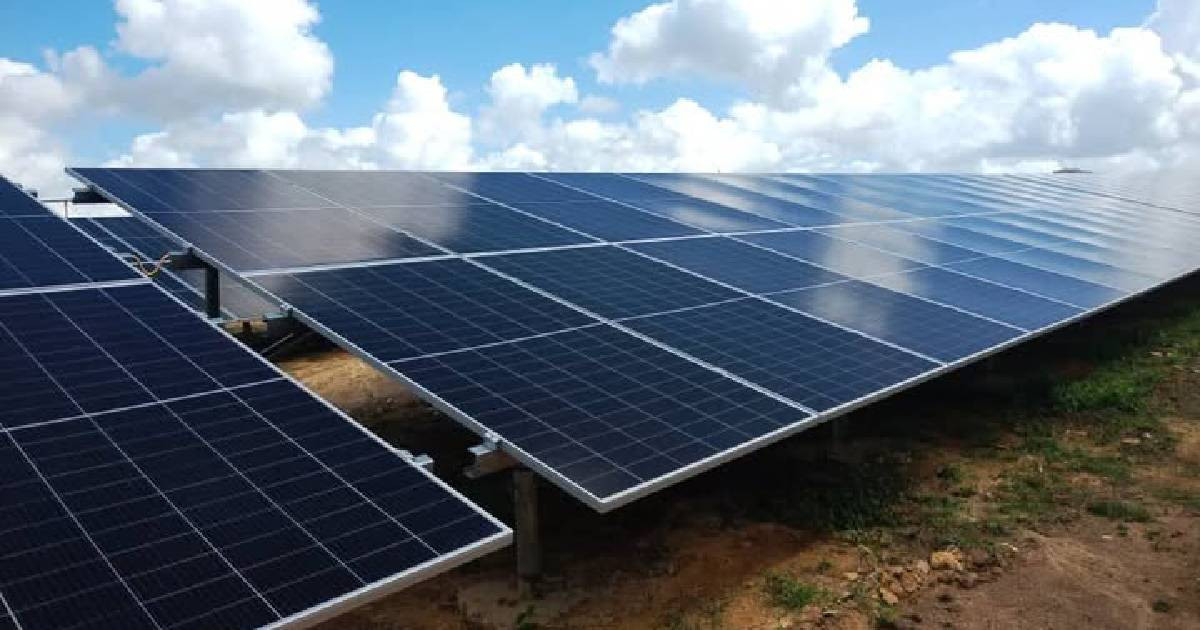
The measure reflects the limitations of the system, despite the expansion of photovoltaic infrastructure. Ciego de Ávila has nine solar parks with an installed capacity of up to 108 megawatts (MW), but this figure continues to be insufficient compared to a daily demand of around 130 MW, explained the technical director of the Electric Company, Carlos Luis Fernández Arencibia, in statements gathered this Sunday by the official newspaper Invasor.
Moreover, the installed capacity does not guarantee the expected generation either. During the day on Saturday, the parks contributed only 54.5 MW due to cloudiness, while the higher capacity facilities barely reached a production of 16 MW.
Four of the nine parks have a capacity of 21.8 MW and are located in Grego (the main municipality), Carolina (a municipality in Venezuela), the agricultural hub La Cuba, and Nereida, in Morón.
According to the official, all facilities are operating at full capacity, although last April, the director himself admitted that they were functioning with limitations to prevent a collapse of the National Electric System (SEN), and that the Cruce de la Trocha park in Grego was contributing only 10 MW.
Although the new strategy aims to partially alleviate the situation during peak solar generation hours, the outlook changes in the evening. During the night, the province will remain under the so-called "maximum load shedding," a condition it has been in for over a month.
As a result, the residents of Ciego de Ávila continue to endure power outages lasting over 20 hours a day, while the supply barely reaches an hour and a half daily. This reality highlights that the deployment of solar parks alone has not managed to reverse the deterioration of the electrical system or significantly alleviate the crisis affecting the population.
The contradiction between installed solar infrastructure and prolonged blackouts is not exclusive to Ciego de Ávila. Granma has four solar parks and recorded circuits with nearly 49 consecutive hours without electricity.
Meanwhile, Holguín has less than 30% of the electricity it needs while Sancti Spíritus experiences power outages of up to 50 continuous hours and around 60 transformers damaged so far in 2026.
The structural problem is that solar energy only meets daytime demand, and the inverters in the parks require a stable signal from the grid to start up.
When the National Electric System collapses or its frequency drops below minimum thresholds, photovoltaic parks automatically disconnect. Additionally, Cuba lacks operational large-scale battery storage systems that would allow for the storage of excess solar energy for nighttime hours.
Ciego de Ávila already experienced a cookware protest in March, when the Vista Alegre neighborhood protested after 29 hours without electricity or water. The new solar park measure comes months later, without any significant improvement in the situation.
Filed under: