
Related videos:
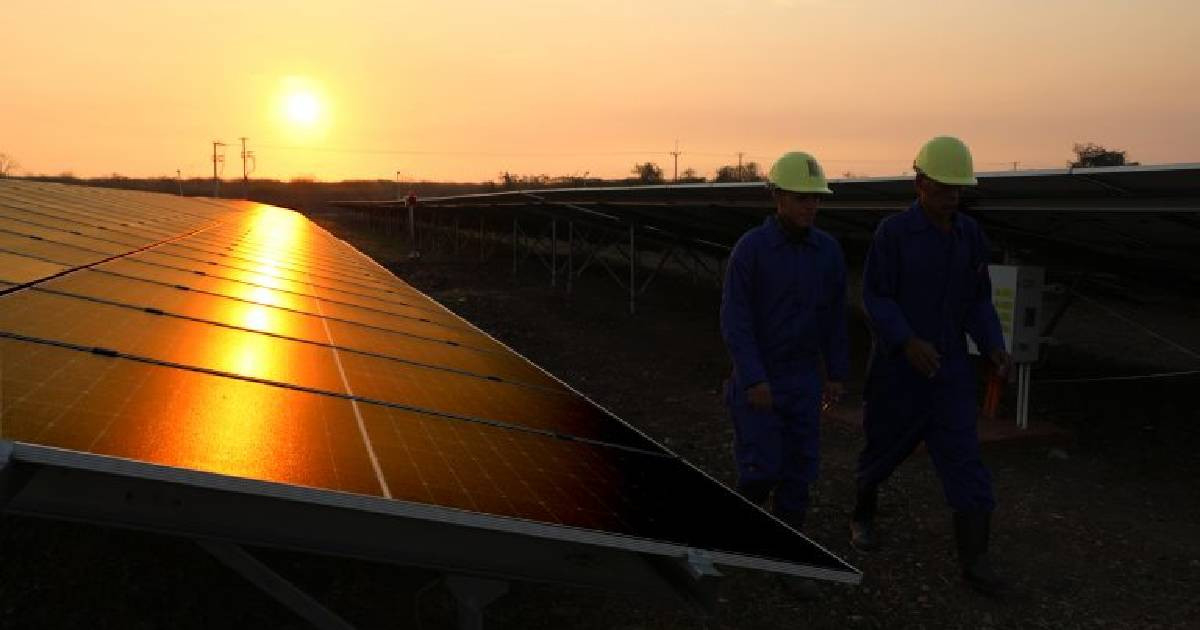
The province of Granma has four large photovoltaic solar parks connected to the National Electroenergetic System (SEN), yet its residents have experienced more than 30 consecutive hours without electricity, a paradox that the official newspaper La Demajagua attempted to explain this Saturday with technical arguments.
The eastern province has facilities with a capacity of 21.87 megawatts (MW) in the municipalities of Bayamo, Niquero, Río Cauto, and Manzanillo, all set to be commissioned between 2025 and the early months of 2026.
In addition, there are two smaller parks of less than five MW with battery storage in Guisa and Yara, which are part of the 120 MW program donated by China.
Despite this infrastructure, circuits in Jiguaní experienced nearly 49 consecutive hours without electricity by June 11, while areas such as Media Luna, Yara, and Las Novillas exceeded 46 hours of outage.
The explanation is technical: solar energy is inherently intermittent, and its inverters require an initial "spark" from the grid itself to start up, the outlet stated.
When the SEN collapses or its frequency falls below the minimum thresholds, a situation that occurs regularly during peak hours, photovoltaic parks automatically disconnect as a protective measure, precisely when they are needed the most.
On June 10, cloud cover and rain reduced solar production in Granma and forced the synchronization of only two plants to avoid instability in the system.
The next day, the entire province was temporarily disconnected from the SEN due to an emergency, with only six active circuits partially restored.
For this Sunday, the Electric Union reported a availability of just 1,245 MW at 6:00 am against a demand of 2,650 MW. For the peak night hours, the projected deficit exceeds 1,885 MW, which means leaving more than 60% of the country without electricity simultaneously.
The underlying problem is not solar: it's the thermal power plants. Energy expert Jorge Piñón from the University of Texas Energy Institute warned that nearly 60% of the generating units at the country's eight power plants were out of service and that the situation "cannot be resolved" in a short time if the same energy management model is maintained.
Cuba needs eight oil tankers per month, each carrying 100,000 tons of fuel, to keep its thermal power plants operational, a supply that is not being met.
As of June 14, 106 distributed generation plants were shut down due to lack of fuel, resulting in 890 MW of capacity unavailable for that reason alone.
Meanwhile, the political response in Granma generated outrage. On June 11, Yudelkis Ortiz Barceló, the First Secretary of the Communist Party in the province, posted a message on Facebook that romanticized the scene of neighbors cooking tamales in the street during power outages, calling it "resilience" and "humanism."
The publication contrasted with the testimony of residents: "We have no water, and the little food we have is spoiling due to lack of refrigeration. They are wiping out the population," denounced a neighbor from Conil and Bellavista.
Filed under: