
Related videos:
The nine-month-old baby who suffered severe burns in Santiago de Cuba days ago, while his family was cooking with charcoal during a blackout, has been discharged from the hospital.
The news was confirmed by the independent journalist Yosmany Mayeta Labrada through his profile on Facebook.
"The child who suffered burns in Santiago de Cuba in mid-June, when his parents were cooking with charcoal, has now been discharged. Thank you so much for your prayers."
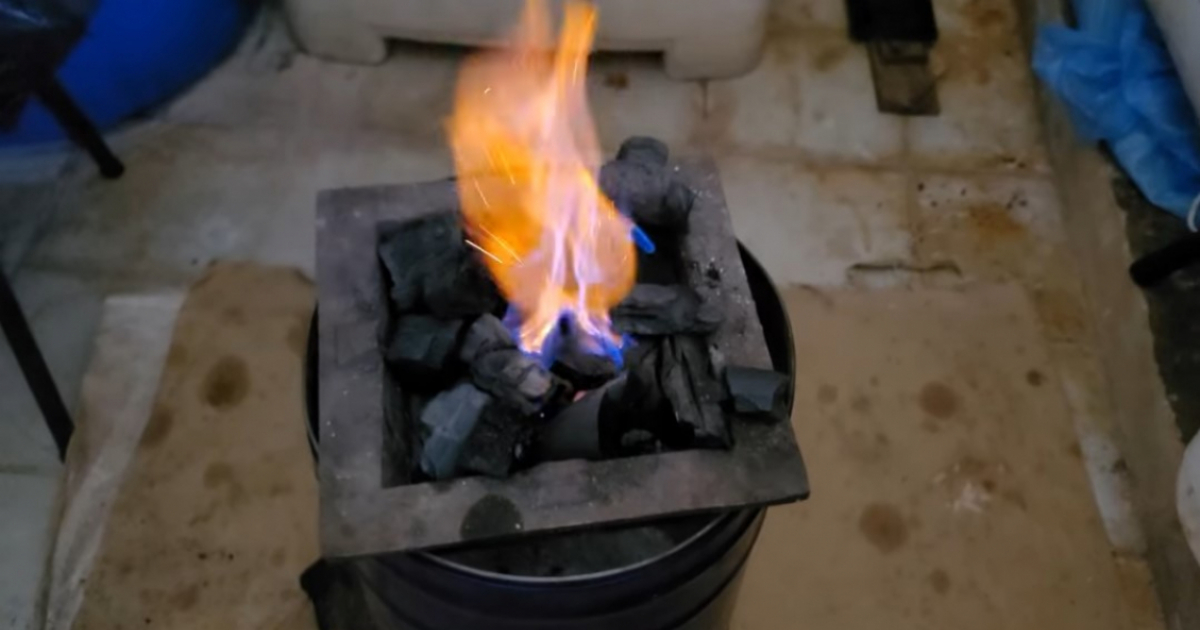
The accident occurred on June 13 on Vargas Street, between San Antonio and San Ricardo, in the center of Santiago de Cuba, when sparks from a rustic charcoal stove reached the chair where the minor was sitting.
The adults did not notice immediately, and by the time they reacted, the child was already showing significant injuries. It was the baby's grandfather who intervened to extinguish the fire before emergency services arrived.
The minor was initially transferred to the Children's Hospital Sur La Colonia Española and, according to unconfirmed reports, was later sent to the Burn Unit of the Juan Bruno Zayas Clinical Surgical Hospital, which operates without essential medical supplies, according to complaints from the family members.
From the very beginning, the case has been surrounded by institutional opacity. Mayeta Labrada reported that the family members were being pressured not to disclose the incident and that there was nothing at the hospital.
"I ask you to contact the father; there is nothing at the hospital and the pressure the family is under to keep the incident from being disclosed is immense. It is just a nine-month-old baby," wrote the journalist, even publishing the father's phone number so that the public could provide direct support.
The accident is not an isolated event, but rather a direct consequence of a government policy that has shifted the burden of the energy crisis onto Cuban families.
In March of last year, Miguel Díaz-Canel officially instructed to ensure cooking materials "from charcoal to firewood" as a state directive, turning the regression into public policy.
This order comes in the context of the worst energy crisis in decades: the electrical deficit reached a historic high of 2,174 MW in May, leaving 70% of the Island without electricity simultaneously.
The most brutal paradox of this crisis is that, while the regime instructs the population to cook with charcoal, a Cuban company exported over 150 tons of that fuel to Europe in the first quarter of 2026, generating more than $55,000.
In Santiago, the price of a can of charcoal has increased from 200 to 800 pesos, and a bag containing five cans costs up to 4,000 Cuban pesos, nearly double the monthly minimum wage.
The pattern of institutional silence in response to accidents related to the energy crisis is recurring. In May, officials from the Rescue and Salvage Corps publicly denied that there were any injuries in a fire in Santiago, which indeed left an elderly woman with severe burns, who was also sent to the Burns Unit at Juan Bruno Zayas.
On June 24, an animal activist from Mayabeque suffered burns on her hand while cooking with charcoal for her rescued dogs during a blackout that lasted over 24 hours.
The baby's discharge, approximately two weeks after the accident, is good news for his family. However, the crisis that caused his burns has not changed: Santiago de Cuba has seen at least six significant fires between February and May, several of which are directly linked to the use of alternative cooking methods, and Díaz-Canel himself admitted on June 18 that the slogan of “creative resistance” “is no longer sufficient.”
Filed under: