
Related videos:
The Cuban regime activated its propaganda machinery on Tuesday ahead of an extraordinary session of the UN General Assembly scheduled for July 7, where Havana plans to denounce the U.S. embargo before the international community.
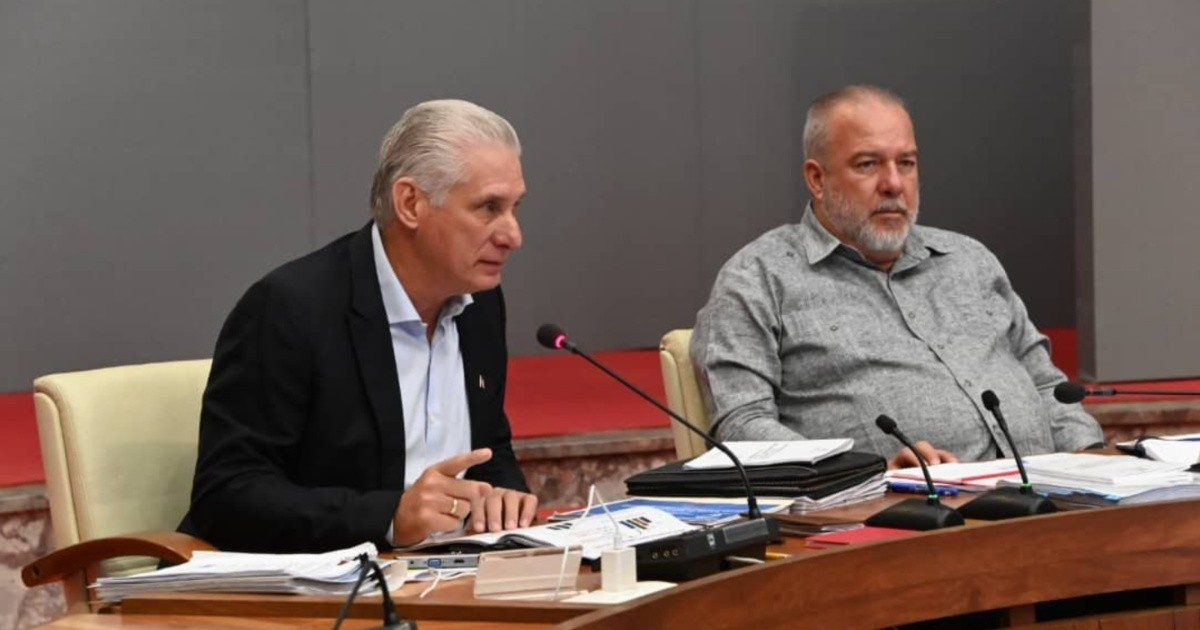
Miguel Díaz-Canel and Prime Minister Manuel Marrero Cruz amplified the announcement on their X accounts hours after Foreign Minister Bruno Rodríguez Parrilla previewed it in a press conference.
Díaz-Canel stated that Cuba will denounce "the growing threats and the consequences of the economic strangulation measures imposed by the U.S. government against the Cuban people."
Marrero Cruz went further and described Washington's actions as "an act of genocide," concluding with the slogan: "Cuba is not a threat. The blockade is."
Rodríguez convened the session under Agenda Item 38 of the UN: "Need to put an end to the economic, commercial, and financial blockade imposed by the United States of America against Cuba."
The session on July 7 is extraordinary and does not correspond to the usual annual cycle, whose next vote is scheduled for October 27, 2026, making it an unusual diplomatic move.
The chancellor also denounced that the U.S. mission to the UN and its embassies around the world are exerting "unprecedented pressures," with blackmail and threats, to prevent the General Assembly from considering the issue.
Since March 13, 2026, there have been exploratory bilateral contacts between Cuba and the U.S., but Rodríguez acknowledged this Tuesday that those conversations "show no progress."
Since January 2025, Washington has re-added Cuba to the list of state sponsors of terrorism, prohibited American tourism, and on May 1, 2026, signed a new executive order that expands restrictions on the energy, defense, and mining sectors, accumulating more than 240 sanctions in total.
The regime estimates the accumulated damages from the embargo at over 170 billion dollars, a figure that lacks independent verification.
The annual resolution on the embargo has been approved 33 consecutive times since 1992, but in the 2025 vote it received 165 votes in favor compared to 187 in 2024, with 12 abstentions from countries in the European Union and Latin America that had previously voted in favor. This signifies the growing international questioning of the Cuban regime, which undermines the very argument of diplomatic isolation that Havana seeks to project in New York.
Filed under: