
Related videos:
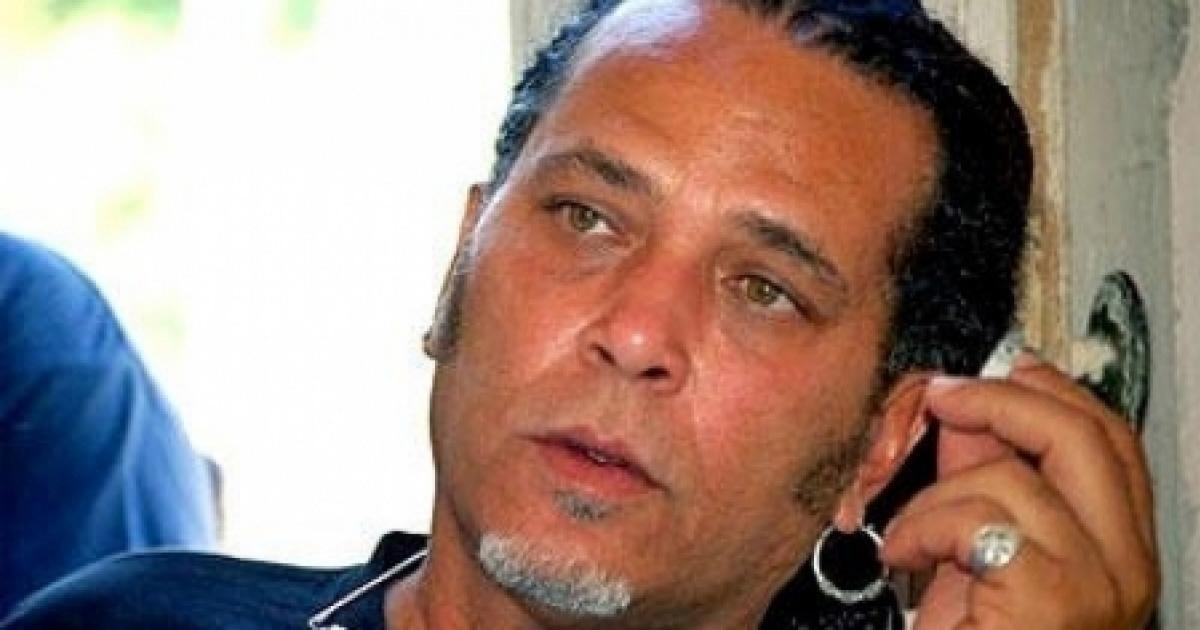
The Cuban actor Luis Alberto García Novoa published a striking post on Facebook, in which he denounces the alarming rise of violence and crime in Cuba, and directly questions the Police and the Ministry of the Interior (MININT) for prioritizing political repression over the fight against common crime.
Under the title "Where is Bukele?", the actor posed a question that encapsulates his main argument: "If the PNR and all of MININT focused more on combating common crimes and less on those who express their disagreements with the government's actions or with socialism, the citizens would have one less dilemma to deal with."
García Novoa warns that the situation could escalate to irreversible levels: "Will we have to wait for Cuban gangs to settle in and grow dangerously?"
The actor acknowledges that crime is not a new phenomenon on the Island, but emphasizes that the current magnitude is unprecedented: "Never before has it been like this, because the miserable living conditions bring out the worst and most twisted aspects of some humans."
He points out that the neighborhoods euphemistically referred to as "vulnerable" have been abandoned by the State for decades: "They had almost nothing of equality and social justice, but a great deal of overcrowding and acts of violence that were not addressed in any way."
In his post, he lists a wide range of reasons why people are assaulted and killed in Cuba: "For a motorcycle, an expensive chain or ring, a mobile phone, a cow, an attempt at illegal departure, a fit of jealousy, four pesos or four million, two solar panels, a pair of glasses, or anything that has some value, they injure and kill whoever it may be."
The actor also points to a concerning phenomenon among the youth: sometimes it is children or teenagers who commit crimes, and some do so to gain status, as García Novoa notes, "being incarcerated confers pedigree" in certain circles.
With irony, he questions decades of ideological indoctrination in Cuban schools: those who today commit crimes repeated revolutionary slogans for years and promised to be like Che. "Did the tiresome and soulless repetition of such slogans achieve anything? No," he himself replies.
The reference to Bukele alludes to the Salvadoran president Nayib Bukele, whose tough-on-crime policies against gangs drastically reduced crime in El Salvador, in contrast to the inaction of the Cuban regime in the face of crime.
"Will the relevant authorities take action on this matter, or will they wait for citizens to organize into lynch mobs?" she asks.
The text also reflects the actor's personal fear: "I refuse to let my daughters or my girlfriend go out at night unless I'm with them. I hate going to a beach, a massive concert, or a crowded party."
García Novoa's complaint comes at a time of increased citizen insecurity in Cuba: according to the Cuban Observatory of Citizen Auditing (OCAC), 2,833 verified crimes were reported in 2025, representing a 115% increase compared to 2024, with thefts being the predominant crime in 1,536 cases.
In June 2026, 141 criminal incidents were documented, including 27 deaths due to violence and at least 35 femicides so far this year, while 20% of the officers of the PNR have left the force, leaving large areas without police coverage.
The actor, who a few days earlier had criticized the regime's "sísepuedismo" and in June demanded that the Cuban leaders experience the same hardships as the people, concluded his post with a phrase that summarizes his stance: "This is my country. There is none other. I want what’s best for it."
Meanwhile, the regime has 1,281 active political prisoners, according to the organization Prisoners Defenders, illustrating the priority that Cuban security forces give to repressing dissent over combating common crime.
Filed under: