
Related videos:
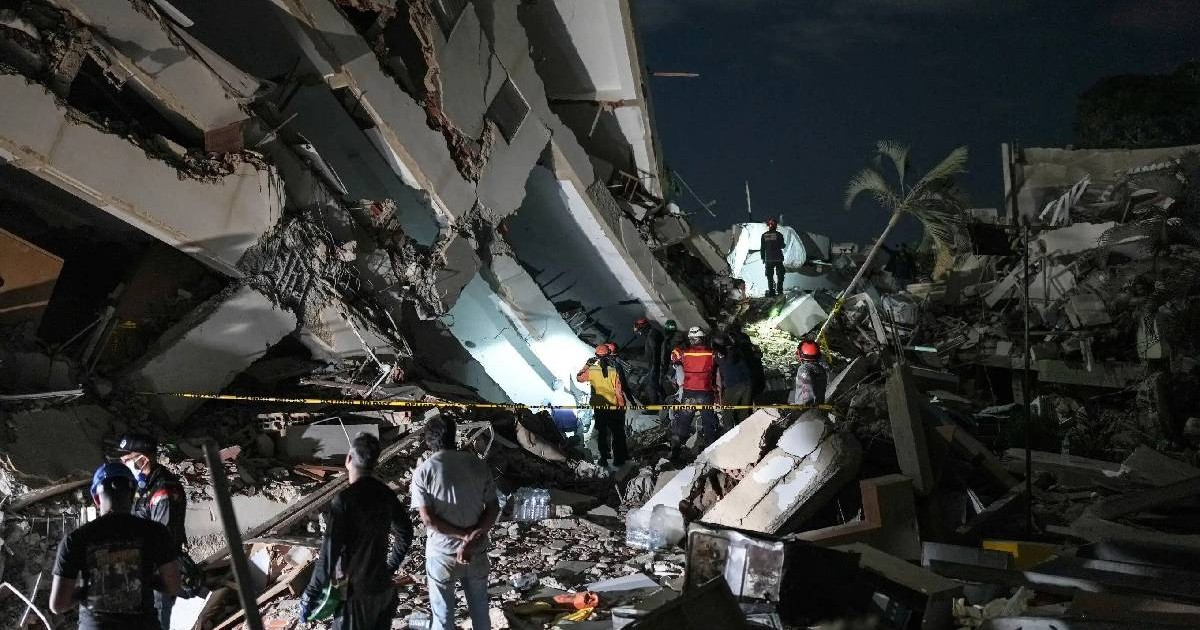
Wilmer Rodríguez, a resident of El Dorado in Vargas state, reported this Thursday that he is being asked for $9,000 to bring heavy machinery to rescue three relatives trapped under the rubble, eight days after the devastating double earthquake that struck northern Venezuela.
Her cousins—identified as Lesbia, her husband Juan Carlos, and Fabiana—remain buried under concrete slabs at the El Dorado residence without any official rescue team having arrived at the site.
"They are charging us 9,000 dollars to bring machinery. No one has arrived here... I need help to get my cousins out of there," Rodríguez stated in a testimony released by the opposition organization Vente Venezuela.
The man reported that the only assistance received came from friends who arrived from Caracas, who cleared stones with their hands and provided water.
"We are not receiving support from anyone; we are doing everything by hand. Just a floor and a shovel," he stated.
Rodríguez clarified that the daughter of one of his cousins, who managed to escape with her life, attempted to arrange access to specialized machinery, but was asked for that amount to mobilize it.
"Everyone is asking us for that amount of money in order to move a plate to get my cousins out who are there. They are human beings," she said with desperation.
At the time of the testimony, none of the three relatives had been located, and Rodríguez did not know if they were still alive.
"We need heavy machinery, electric hammers to be able to rescue my cousins who are trapped in there. We don’t know if they are [alive], nothing, none of the three of us have found them," he added.
The case illustrates the abandonment faced by hundreds of families in La Guaira, the area most devastated by the earthquakes of June 24, 2026, where 158 of the 189 buildings completely destroyed across the country are concentrated.
The double earthquake—measuring 7.2 and 7.5 in magnitude, occurring just 39 seconds apart—is considered the deadliest natural disaster that Venezuela has experienced in the last century.
The official balance of the regime of Nicolás Maduro reported as of July 1st 2,295 dead and over 11,267 injured, while the UN estimates up to 50,000 missing.
The response from the Venezuelan government has been widely criticized. The first official rescuers did not reach some areas until the fifth day of the disaster, according to testimonies from victims collected.
The regime deployed more than 14,000 military personnel in the affected areas, which restricted access for volunteers and independent civilian teams. A volunteer summed up the situation with the viral phrase: "there are more rifles here than shovels."
In addition, there are other reports of corruption: some rescuers were demanding food and drink in exchange for entering buildings with trapped individuals, and the government canceled a humanitarian flight from Miami sent on June 30, which was carrying six rescuers and a nurse.
In that context of state abandonment, the charge of $9,000 for rescue machinery represents, for families like the Rodríguez family, an insurmountable obstacle against the ticking clock in any hope of finding their loved ones alive.
Filed under: