
Related videos:
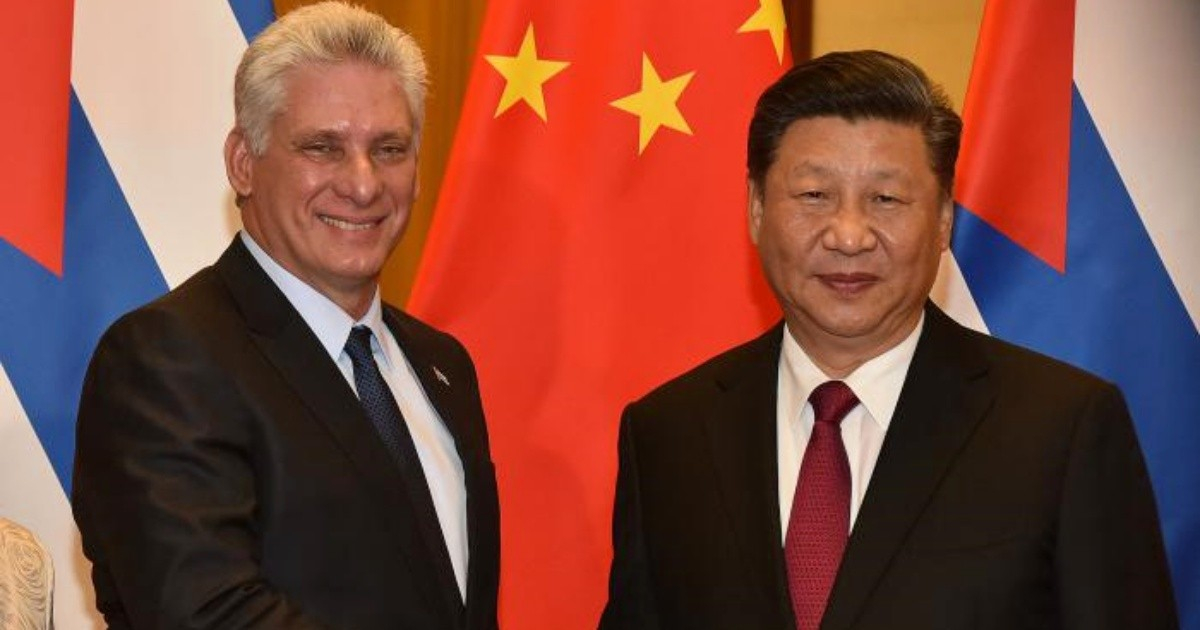
The Cuban regime presented its package of 176 economic and social transformations as an unprecedented opportunity to attract Chinese investment to the Island, at a time when the Cuban economy is experiencing its worst crisis in decades.
The chosen setting was the Conference on Cooperation between Latin America and the Caribbean and the Chinese province of Jiangsu, held on Friday in Yangzhou, reported Granma.
There, Albert Panton León, the Consul General of Cuba in Shanghai, presented to the business forum the advantages that, according to the regime, are offered by the new measures approved by the National Assembly on June 19.
The reforms that the regime promotes as an attractive investment opportunity
Among the measures that Panton León highlighted to the Chinese business community are the reduction of procedures, decentralization towards municipalities, greater participation of the private sector, tariff incentives, and the possibility of investing even in the banking and financial sector.
The reforms also allow surface rights of up to 99 years for foreign projects.
The consul invited the Chinese business community to explore sectors that utilize "both the country's natural resources and the high level of its human capital," beyond traditional areas such as biotechnology—where there are already five joint Cuba-China enterprises—tourism, tobacco, and nickel mining.
He explained to the Forum that the new measures could positively transform the trade relationship with companies and entities in China, Cuba's largest trading partner since 2017.
The package of 176 measures, organized into 23 thematic axes, includes the authorization of private banking, the removal of the limit of 100 workers for small and medium-sized enterprises, and the selective bankruptcy of non-viable state-owned companies.
The Prime Minister Manuel Marrero Cruz described the aim of the package as "recovering the economy and preserving the achievements of the Revolution."
China, economic shield against Washington's sanctions
The rationale behind the bet on China is an unprecedented crisis. CEPAL projects a contraction of the Cuban GDP of 6.5% for 2026, the worst in Latin America, while Cuba has experienced a total decline of nearly 26% since 2020.
This is compounded by blackouts lasting over 24 hours—with a record deficit of 2,208 MW recorded on June 25—and more than 240 sanctions imposed by the Trump administration since January, including secondary tariffs on countries that supply oil to Cuba. The Island has gone four consecutive months without Venezuelan crude.
In that context, Panton León argued that strengthening ties with China "would enhance the archipelago's ability to withstand the extreme siege it is under, while promoting the production of primary goods, sustaining basic services, and increasing the volume of trade."
China has financed 49 photovoltaic parks, and Ambassador Hua Xin committed to the construction of 92 solar parks by 2028, with a capacity of 2,000 MW.
The Cuban official expressed gratitude for the participation of Chinese businesspeople in transforming the electricity generation matrix in Cuba, stating, "one of the sectors most impacted by the U.S. blockade, and which most affects the population and the normal functioning of the national economy."
In January, Xi Jinping also approved an emergency donation of 80 million dollars and 60,000 tons of rice.
The Chinese model as a declared reference
Díaz-Canel acknowledged in October 2025 that the Chinese reform process "serves as a reference" for Cuba's economic strategy.
However, analysts and opponents have described the 176 measures as "belated Chinese reforms," pointing out a key difference: unlike China or Vietnam, the regime insists on maintaining state control as a central axis.
At the Yangzhou forum, Chinese official Xu Wei, Minister Counselor of the Department of Latin American and Caribbean Affairs, reaffirmed Beijing's stance: "In light of the accelerated evolution of unprecedented changes in a century and the profound adjustments in the international landscape, China and the countries of Latin America and the Caribbean consistently uphold the principles of mutual respect and equality in their relations."
While the regime promotes its reforms to the Chinese business community as a historic opportunity, Cuba ranks last in the economic ranking of Latin America for 2026, and Cubans respond with skepticism: "They download them and they eat and light themselves with the measures on paper," summarized a comment that went viral on social media following the announcement of the package.
Filed under: