
Related videos:
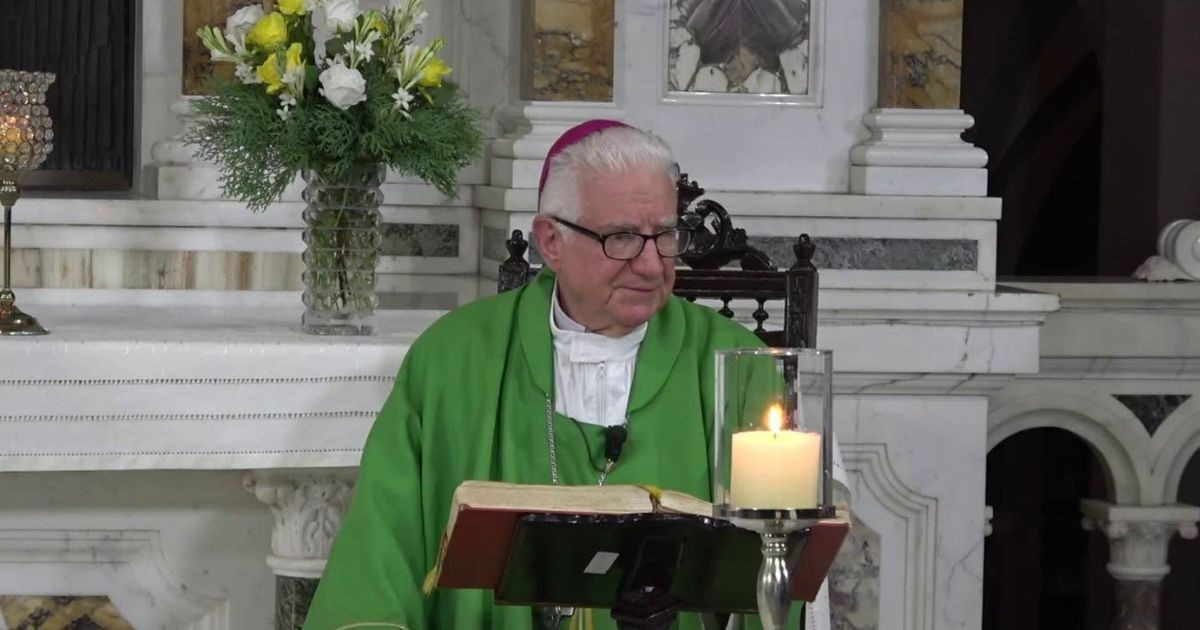
The Archbishop of Santiago de Cuba, Monsignor Dionisio G. García Ibáñez, delivered a homily this Sunday at the Basilica Shrine of Our Lady of Charity, where he openly acknowledged the suffering of the Cuban people: "There are so many people asking for help. And the help is not enough. The help that is coming is not enough."
The prelate used the verse from Matthew 11:28 —“Come to me, all you who are weary and burdened, and I will give you rest”— as a guiding thread to bridge the gap between the evangelical message and the reality faced by Cubans.
García Ibáñez described the anguish of those who wish to help others but lack sufficient resources to do so: "Many times we want to help, to give, and we are left in doubt, if I give it, then my family will be left..., but I know I have to do something."
In one of the most direct passages of his intervention, the archbishop appealed to spiritual strength as support in the face of the crisis: "The Lord comforts me with the Spirit of God that gives me strength to endure, strength to hope, and strength to fight."
In closing his homily, García Ibáñez urged his congregation to hold on to the gospel in the midst of difficulties: "In these hard times we are experiencing, let us keep this gospel in our minds, our foreheads, in our eyes. Sad are the burdens that life often places upon us."
The homily comes just two days after the U.S. State Department formally confirmed the 100 million dollars in humanitarian aid for Cuba, of which 60 million will be distributed through the Catholic Church and 40 million by non-governmental organizations.
The magnitude of the crisis described by the archbishop is supported by international figures: the UN requested 94 million dollars to assist two million Cubans, while more than 100,000 patients —including 11,000 children— are awaiting surgeries postponed due to blackouts and a lack of medical supplies.
This statement is part of an increasingly forceful series of declarations from the prelate.
On May 17, he stated that “Cuba must change” and demanded concrete measures; on May 24, he urged the leaders not to believe they are “owners of the world”; and on June 28, he warned against those who think that power allows them to do anything.
The Conference of Catholic Bishops of Cuba warned in January about the "risk of social chaos" and demanded "no more bloodshed or mourning," establishing the Church as the leading voice of civil society in the face of an unprecedented crisis in decades.
Cáritas Cuba had already utilized 82% of an initial donation of three million dollars, benefiting 8,800 families of elderly adults, single mothers, and people with disabilities, although the fuel shortage even halted that distribution logistics.
Filed under: