
Related videos:
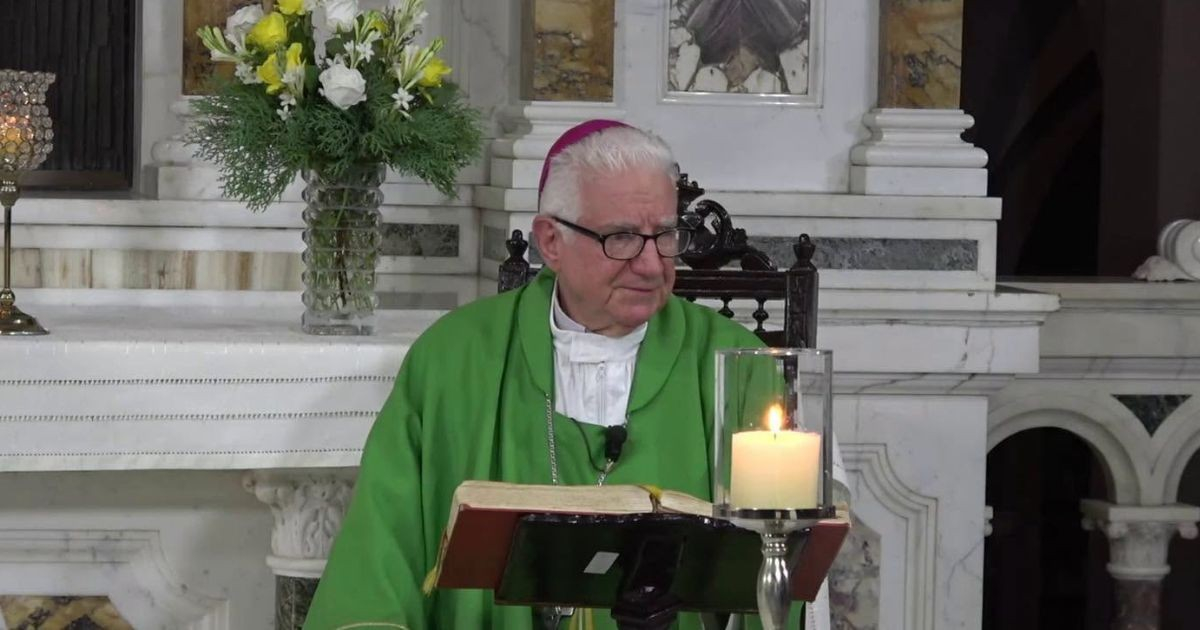
Monsignor Dionisio García Ibáñez, Archbishop of Santiago de Cuba, issued a warning of significant political resonance during his homily at the Basilica Sanctuary of Our Lady of Charity of El Cobre this Sunday: "There are people who place their trust in power, and they cause a lot of harm when, by virtue of that power, they believe they have the right to do anything."
The prelate spoke these words during the XIII Sunday of Ordinary Time, centering on the verse from Matthew 10:39: "Whoever loses his life for my sake will find it."
In his reflection, García Ibáñez contrasted worldly possessions—money, power, prestige—with the spiritual values that, according to the Gospel, endure beyond temporary life.
"How sad are those who only think about achieving everything here on earth, whether it be money, power, wisdom, or prestige," affirmed the archbishop before the faithful gathered in El Cobre.
One of the most symbolically significant passages in the Cuban context was its rejection of the promises of earthly utopias: "That paradise on earth has never been seen. We can have more justice or less justice, but to fully live the love of God, which is the greatest good, can only be found in the Lord Jesus."
The archbishop also denounced that at times faith has been used as a bargaining chip: “There are times when they have almost made it a condition to stop loving God in order to achieve paradise on earth,” a phrase that resonates directly with the official discourse of the revolutionary regime in Cuba.
García Ibáñez also urged the faithful to let go of selfishness, arrogance, and pride, and encouraged them not to be seduced by empty promises: "Let us not be swayed by the wonders that are often presented to us or by the promises that are made to us."
This homily is part of a progressive escalation of critical statements from the archbishop. On May 17, from the same sanctuary, he stated that "Cuba needs to change" and called for concrete measures.
A week later, on Pentecost, he urged the leaders to "not consider themselves owners of the world" and to prioritize truth, justice, and the common good.
In November 2025, the prelate had already called for the construction of a society where individual effort would be the foundation and no one would rely on others to "give" them what they need.
Other Cuban priests have also intensified their criticisms in recent months. Father Alberto Reyes Pías, from Camagüey, compared the country's situation to a "relentless concentration camp" and was summoned by State Security in January 2026 due to his criticisms of the regime.
The rector of the Sanctuary of El Cobre also called in June for a "new society" for Cuba, part of what is shaping up to be a chorus of ecclesiastical voices openly challenging political power from the island's pulpits.
The homily this Sunday concluded with an exhortation to Christian coherence: "You must die to selfishness. You must die to arrogance. You must die to pride."
Filed under: