
Related videos:
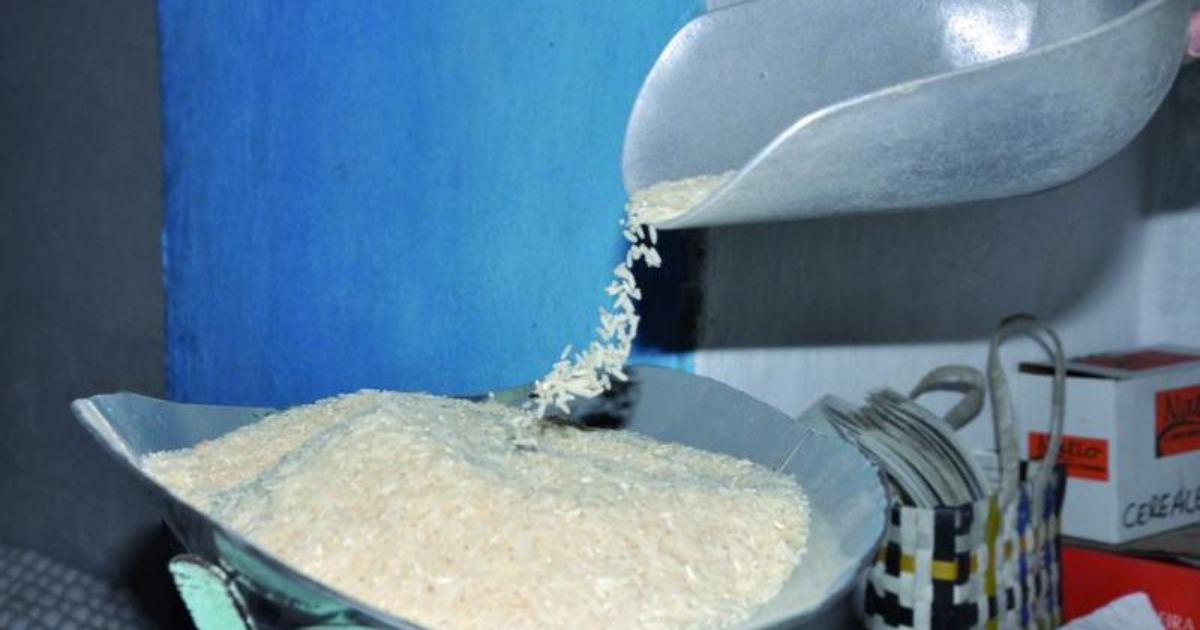
The Ministry of Domestic Trade announced on its Facebook page the distribution of five pounds of rice per consumer in Santiago de Cuba, corresponding to the donation from the People's Republic of China, along with ten ounces of beans, ten ounces of peas, and baby food for the month of May.
The announcement was made by Camilo Ernesto Machado, Provincial Director of Merchandise Sales at GECI Santiago, but the publication immediately sparked a flood of complaints from Cubans in virtually all provinces of the country, who reported not receiving anything or receiving lesser amounts.
From Matanzas, Holguín, Las Tunas, Camagüey, Pinar del Río, Ciego de Ávila, Villa Clara, Guantánamo, Granma, Artemisa, Mayabeque, and Quivicán, the comments on the official publication echoed a common demand: the Chinese rice has not arrived, or it arrived late and in smaller quantities.
"In Pilón, Granma, we haven't seen rice since December 2025," wrote Deisy Vázquez Díaz, who also noted that cigarettes in that municipality are sold for 600 pesos, despite being a state resource.
In Colón, Matanzas, the situation was even more irregular: "Here they gave two pounds per card at the store of the Frank País distribution center and charged 170 pesos for it. I didn't make it," reported Josefa Mendoza Romero, highlighting that the product not only arrived in smaller quantities but was also sold, contradicting the nature of the donation.
In Sagua la Grande, Villa Clara, only four pounds were reported, not five.
In Mayabeque, a citizen described the ration booklet as "a decorative figure," while in Ciego de Ávila, Carmen Campos reported that products "are kept in a warehouse waiting" and that an oil advertised two months ago has also yet to appear.
The delay in distribution was also the subject of criticism. "This will be for next year because the donation announced three months ago has just arrived. There is never any transportation, and it seems the cargo train has also disappeared," Fajardo Ramírez wrote.
The rice being distributed is part of a aid package approved by Xi Jinping in January 2026: 60,000 tons of rice and 80 million dollars in financial assistance.
The first shipment of 15,600 tons arrived at the port of Havana on March 26, 2026, aboard the vessel Loyalty Hong.
According to the regime, those initial 15,000 tons were distributed between March and April across all provinces, benefiting 9.6 million consumers.
However, citizen testimonies contradict that account: several provinces still have not received the product in July, months after that official distribution.
The logistical crisis is structural: a shortage of fuel for transportation, the collapse of the freight train system, and the concentration of products in provincial capitals without reaching the municipalities.
"September will arrive, and some wineries in the province won't even know what those products taste like. Everything stays in the provincial capital," warned Jose Enrique Rizo De Los Santos.
The background is a unprecedented food emergency in Cuba: national rice production fell from 304,000 tons in 2018 to just between 80,000 and 111,000 tons in the last two years, covering less than 20% of domestic demand.
96.91% of the population lacks adequate access to food, according to the Food Monitor Program, and 33.9% of households had at least one member who went to bed hungry in the last 30 days.
"Why don't they eliminate the ration book once and for all and spare us so many disrespectful situations?" summarized Anay Aday the widespread frustration with a rationing system that, since 1962, promised to ensure basic food supplies and today relies on international charity to survive.
Filed under: