
Related videos:
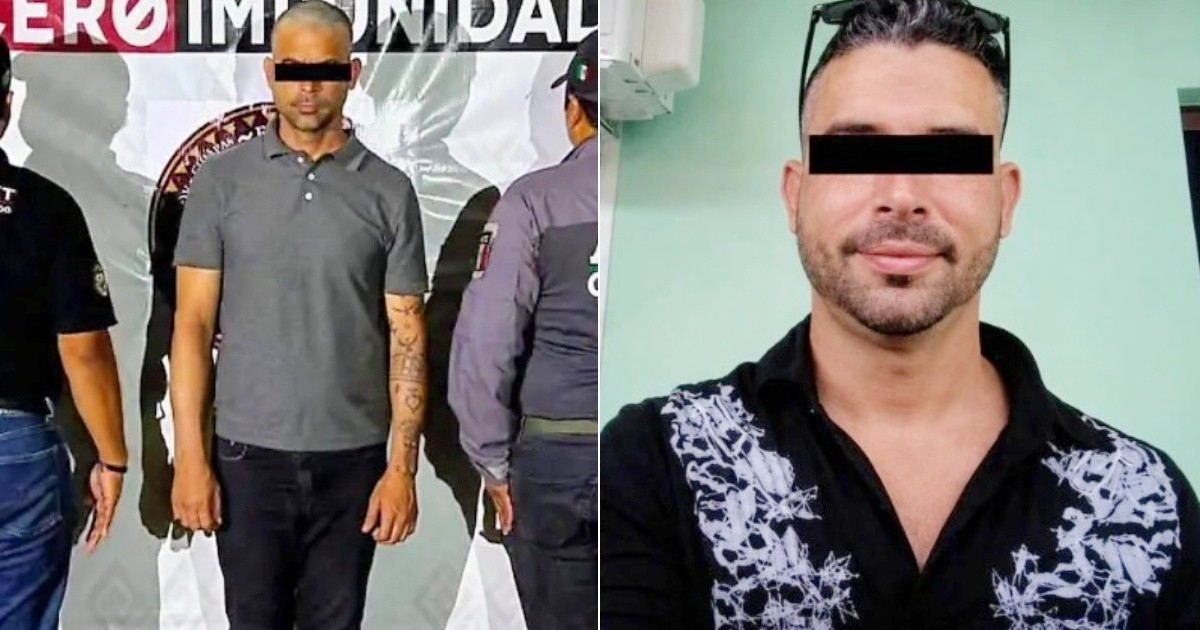
Yadriel Corona, a Cuban citizen identified as the alleged perpetrator of the femicide of Lizbeth Bustos Vera, was arrested in Tapachula, Chiapas, during the early hours of July 7, as he was reportedly attempting to leave Mexico heading to Central America.
He was apprehended with false documentation after being concealed in the border area with Guatemala, according to reports from local Mexican media.
The arrest occurred as a result of a coordinated operation between the Ministerial Police of Quintana Roo, the Immigrant Prosecutor's Office, and Chiapas authorities, following several days of intelligence and investigative work.
It was the authorities of Chiapas themselves who, upon checking the Plataforma México system, discovered that the Cuban was listed as wanted by the Attorney General's Office of the State (FGE) of Quintana Roo for the crime of femicide, as reported by Caribe Peninsular.
They immediately notified the prosecutor's office of that entity, which sent a collaboration order and dispatched agents to Chiapas to arrange for their transfer to Cancun.
Who was Lizbeth Bustos Vera?
Lizbeth was 43 years old, originated from Minatitlán, Veracruz, and held both Mexican and Canadian nationality.
She had traveled to Mexico with her two youngest children to handle matters related to an inheritance, while her husband stayed in Canada.
On June 16, he informed his relatives in Veracruz that he planned to return to Canada with his partner, but he never arrived.
Upon losing contact with her, her family members went to the house located on Bacalar Street, near the corner of Kohunlich Avenue, in Supermanzana 46 of Cancún, but did not find her.
On June 24, they filed a formal complaint with the FGE, which activated search file number 557/2026.
The discovery of the body
On the night of Saturday, July 5, agents from the Ministerial Police of the Femicide Unit inspected the victim's home and detected irregularities in the backyard.
With shovels and pickaxes, forensic experts and agents exhumed the body of Lizbeth, which was in an advanced state of decomposition, buried in a clandestine grave approximately 30 centimeters deep and two meters long, covered with concrete blocks, stones, cement, and sand.
During the operations, Lizbeth's family was present and was able to recover some personal belongings.
The FGE also seized a Volkswagen Vento car, allegedly belonging to the victim, as well as other evidence that was included in the case file.
Corona, who worked as a barber and was originally from the province of Cienfuegos, had been in a relationship with Lizbeth for about seven months and shared the home where the body was found.
How did the suspect behave after the crime?
According to the FGE of Quintana Roo, during the second half of June the accused allegedly assaulted the victim with blows and a sharp weapon following an argument between them, before burying the body in the grave he had dug in the yard of the home they shared.
After the crime, the suspect allegedly used Lizbeth's cell phone to send WhatsApp messages to her relatives, making them believe she was traveling back to Canada, which gave him time to escape from Quintana Roo.
Meanwhile, he allegedly withdrew money from the victim's bank accounts and attempted to eliminate evidence linking him to the crime, according to Caribe Peninsular.
The main line of investigation suggests that the motive was that Lizbeth planned to end the relationship to reunite with her husband in Canada.
It is also being investigated whether the suspect attempted to take possession of the property and access financial resources sent from Canada for the support of the victim's children.
What comes next in the criminal process?
Yadriel Corona will be placed at the disposal of a control judge in Cancún, who will determine his legal status.
According to Caribe Peninsular, “if found guilty of the crime of femicide, he could face a sentence of up to 55 years in prison.”
This case adds to a pattern of gender-based violence in which Cuban citizens have been involved in crimes against their partners in Mexico.
In May 2026, another Cuban, 50 years old, was formally charged with femicide for fatally stabbing his ex-partner in a bar in Cancun.
According to the independent observatories OGAT and YSTCC, in 2025 at least 12 Cuban women were victims of femicide outside the island, with Mexico being one of the countries with the highest incidence.
Filed under: