
Related videos:
The president of the National Assembly of People's Power, Juan Esteban Lazo Hernández, issued on Wednesday the of the X Legislature, published in Extraordinary Official Gazette No. 77 on Thursday.
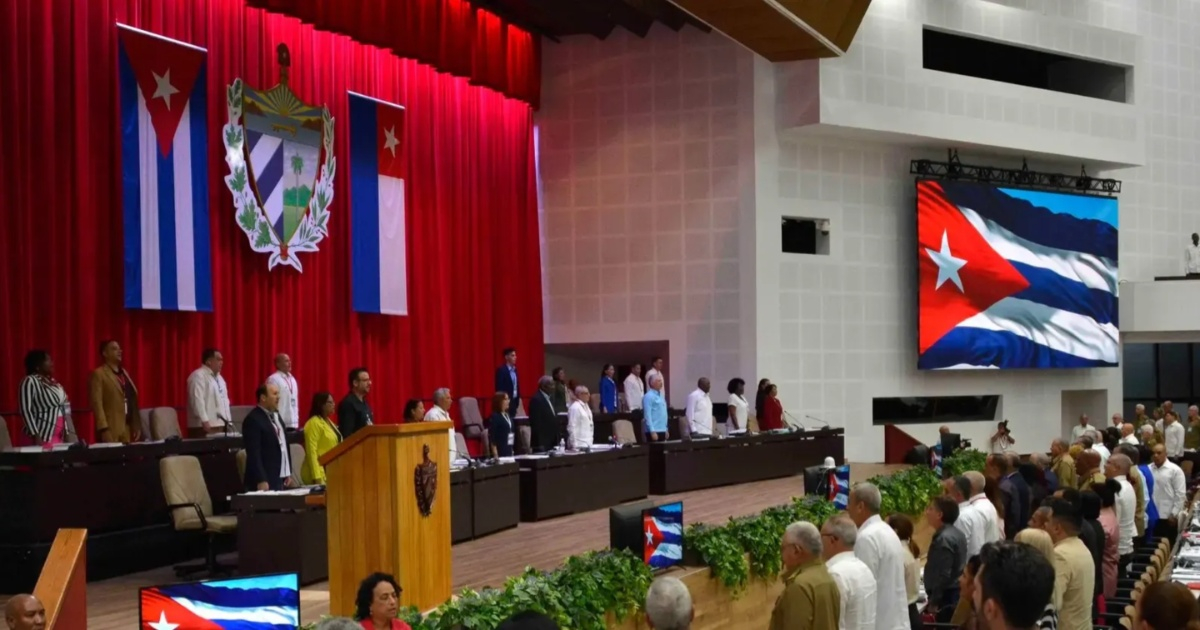
The session is scheduled for July 29, 2026 at 9:00 a.m. at the Palacio de Convenciones in Havana, according to the document with code GOC-2026-382-EX77.
Lazo Hernández signed the call for sessions under the protection of Article 111, section c) of the Cuban Constitution, and instructed the bodies of the Central State Administration and other authorities to notify the female and male deputies.
The document carries the official caption "Year of the Centenary of Commander-in-Chief Fidel Castro Ruz," a designation by the regime to identify the year 2026 in reference to the centenary of Fidel Castro's birth.
The session takes place after a period of intense legislative activity this year. On June 18, in an extraordinary session, the Assembly approved a package of 176 economic reforms that include the authorization of private banking, the removal of the 100-worker limit for micro, small, and medium enterprises (mipymes), and the opening up to foreign capital.
For the session on July 29, several significant bills remain outstanding, including the Agricultural and Forestry Land Law, the Labor Code, and the Housing Law.
A law is also in process for the reorganization of the Central State Administration that would reduce the number of agencies from 27 to 21, a measure that the regime presents as part of its structural reform process.
The previous session—the Sixth Ordinary Period—was held virtually via videoconference on December 18, 2025, a format adopted due to the "complex situation" in the country, as acknowledged by the regime itself.
On that day, Law 181 of the State Budget for 2026 was approved, Oscar Manuel Silvera Martínez was elected as president of the Supreme People's Tribunal, and the legislative schedule for 2026-2027 was updated through the .
The context in which this session is convened is one of deep crisis. The new minimum wage of 3,210 pesos came into effect on July 1, although workers will not receive it until August, while analysts warn that the approved reforms arrive too late for a country mired in a structural crisis that has lasted for decades.
The National Assembly of People's Power is, according to the 2019 Constitution, the highest organ of state power in Cuba, although in practice it acts as a body that ratifies the decisions of the Communist Party rather than functioning as an independent parliament.
Filed under: