
Related videos:
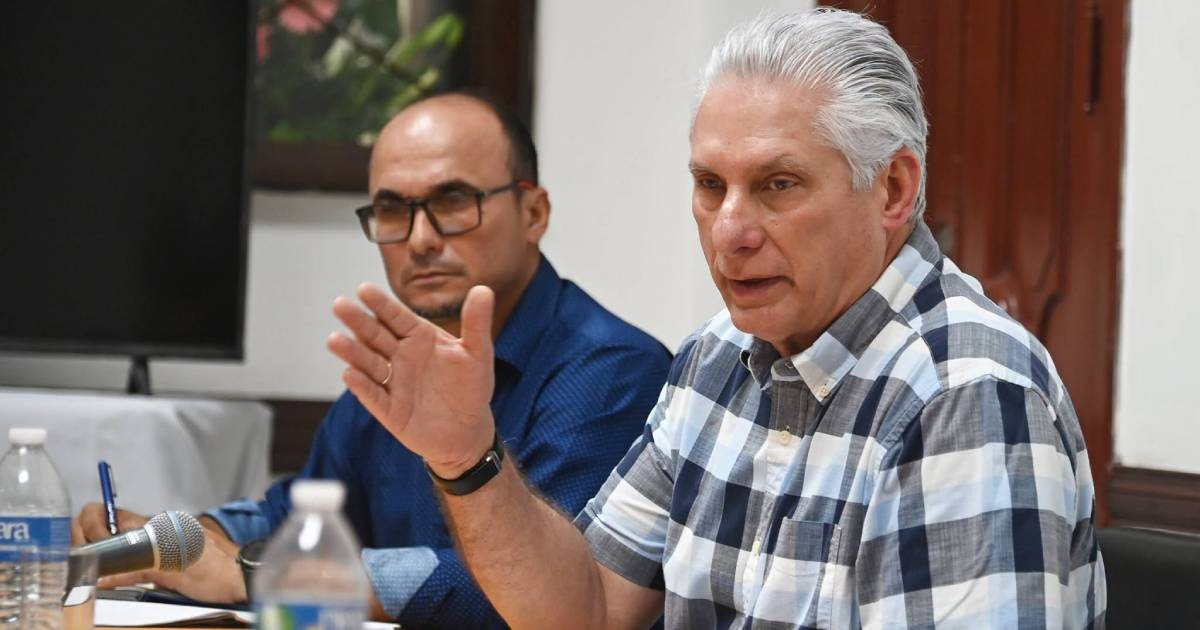
In the midst of the worst electrical crisis that Cuba has faced in decades, Miguel Díaz-Canel toured the Havana municipalities of Centro Habana and Plaza de la Revolución this Wednesday, where he urged local authorities to "better organize the scheduling of the outages" due to blackouts, as reported by the official website of the Presidency.
The main directive from the government was not aimed at increasing electricity generation but rather at managing service outages more efficiently. Among the proposed measures are the review of the so-called prioritized circuits—the 18 lines that supply hospitals, water pumping systems, tourist facilities, and some thermal power plants—as well as promoting the use of renewable energy sources in social centers, economic entities, and homes.
The official report itself acknowledged the impact of the crisis by admitting that the "long hours of blackouts" make it difficult to supply water and prepare food, a situation that thousands of Cubans endure daily. In Havana, power outages average about 15 hours a day, while in provinces like Matanzas, interruptions of up to 87 consecutive hours have been recorded.
Díaz-Canel's visit occurred just three days after the third national blackout of 2026, the seventh total collapse of the National Electric System in the last 18 months. The outage of Unit No. 6 of the thermoelectric plant in Nuevitas, Camagüey, triggered a cascading disconnection that left nearly the entire island without electricity.
Although the Electric Union technically restored the system during the early hours of Wednesday, the generation deficit continued to worsen. On the same day, the country recorded a new historic maximum of electrical deficit: 2,341 megawatts, surpassing the previous record of 2,208 MW reached at the end of June.
The magnitude of the problem reflects the structural deterioration of the Cuban energy system. While demand hovers around 3,100 MW, the available generation barely reaches 1,000 MW, forcing prolonged scheduled blackouts across almost the entire country.
This is compounded by the aging of thermoelectric plants, many of which have not undergone major maintenance for more than a decade. The Antonio Guiteras Thermoelectric Plant, the largest generator in the country, has gone offline 17 times during 2026.
The crisis is also characterized by a fuel shortage. Cuba needs about 110,000 barrels of oil daily, but produces around 40,000. In recent months, external supplies of crude have also decreased, worsening the challenges of maintaining electricity generation.
The Cuban government attributes the situation to the U.S. embargo and difficulties in accessing fuel, while various economists and specialists also point to the cumulative impact of years of disinvestment, the deterioration of infrastructure, and the lack of modernization of the electrical system. Various estimates place the necessary investment to recover the national energy grid between 8,000 and 10,000 million dollars.
The visit by the head of state is part of a tour through the municipalities of Havana to oversee the implementation of the 176 economic and social transformations approved by the government in June, a package of measures that includes changes to the functioning of small and medium-sized enterprises (mipymes), the banking system, and tax policy.
At the end of the meeting in Centro Habana, Díaz-Canel spoke with residents gathered in the area about the country's "tense energy situation." However, during the visit, he did not announce any new measures to increase electricity generation nor did he provide a timeline to indicate when the prolonged blackouts affecting millions of Cubans might decrease.
Filed under: